Bangsamoro Autonomous Region in Muslim Mindanao / Cotabato City
Cotabato City
Edited by Joshua S Bariñan
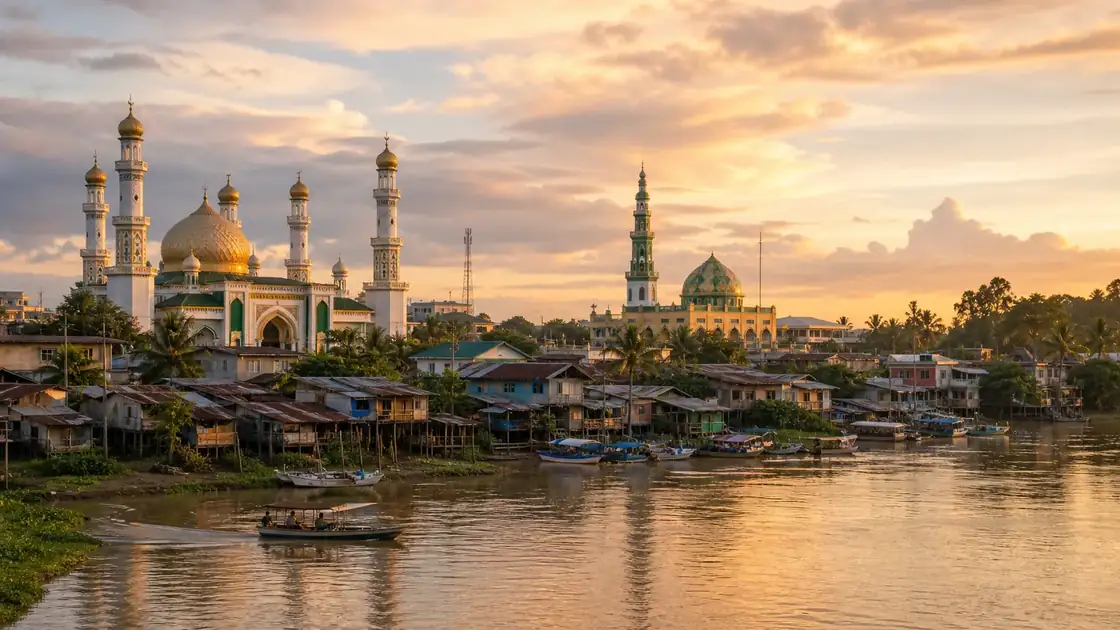
Cotabato City is the seat of the Bangsamoro government and sits along the Rio Grande de Mindanao. The Bangsamoro Government Center is located on Governor Gutierrez Avenue in Rosary Heights VII, where the Executive Building, the Regional Assembly Building (turned over in April 2026), and the Shariff Kabunsuan Cultural Complex housing the Bangsamoro Museum are all situated. Cotabato City transferred to BARMM governance on December 15, 2020, following the 2019 plebiscite, though it remains geographically surrounded by North Cotabato province within SOCCSKSARGEN. Cotabato City is not part of North Cotabato province. The provincial capital of North Cotabato is Kidapawan, a different city 90 or more kilometers away. The city sits six feet below sea level and functions as the natural catch basin for the Rio Grande de Mindanao, collecting floodwater draining from Bukidnon, North Cotabato, South Cotabato, and Davao del Sur before it reaches the Moro Gulf. Flooding affects low-lying neighborhoods regularly, particularly in Rosary Heights where several barangays have recorded floods during heavy rain events. The city has a 39.89 million peso riverbank protection project along the Cotabato-GenSan road and acquired a 41 million peso floating excavator for clearing clogged waterways. The Grand Mosque, officially the Sultan Haji Hassanal Bolkiah Masjid, is the largest mosque in the Philippines. It is located in Barangay Kalanganan II along Tamontaka Bubong Road and was built from 2006 to 2011 with funding from the Sultan of Brunei.
Quick answer
- Location:
- On the Rio Grande de Mindanao in central Mindanao, surrounded by Maguindanao del Norte and the wider SOCCSKSARGEN area
- Region:
- Governed under BARMM (Bangsamoro Autonomous Region in Muslim Mindanao) as the regional government seat, while sitting geographically inside SOCCSKSARGEN
- Mixed communities:
- Daily life mixes Muslim, Christian, Indigenous, and settler families, seen in mosques, churches, schools, and markets
- Festival:
- Shariff Kabunsuan Festival ties the city calendar to Moro history and the river corridor
- Flood risk:
- City sits six feet below sea level and collects floodwater from the entire Rio Grande de Mindanao watershed. Rosary Heights barangays (3, 6, 7, 8, 11) experience recurring floods during heavy rain events
- BARMM government center
- Grand Mosque of Cotabato
- Rio Grande de Mindanao
- Old Cotabato City Hall
Local context
Cotabato City's current mayor reference on this page is Mohammad Ali "Bruce" Matabalao. 2025 election coverage and October 2025 reporting identify Mohammad Ali "Bruce" Matabalao as Cotabato City mayor. Source label: PSA PSGC BARMM cities, 2024 POPCEN.
Cotabato City is linked to local place pages including Grand Mosque of Cotabato, BARMM government center, Rio Grande de Mindanao riverfront, Old Cotabato City Hall, Kutawato Cave. Those pages help separate the city guide from a generic location summary by giving readers concrete markets, parks, transport corridors, civic districts, and visitor routes to compare.
The city profile emphasizes BARMM government center, Grand Mosque of Cotabato, Rio Grande de Mindanao, Old Cotabato City Hall. These points give the page a practical local frame instead of treating the city as only a name on a regional map.
Landmarks and orientation points
- BARMM government center
- Grand Mosque of Cotabato
- Rio Grande de Mindanao
- Old Cotabato City Hall
- Kutawato Cave
FAQ
Is Cotabato City part of BARMM or Maguindanao?
Cotabato City is governed under BARMM and serves as the seat of the Bangsamoro government after the 2019 plebiscite. It is not part of Maguindanao del Norte, even though that province surrounds the city geographically. The city sits inside the wider central Mindanao and SOCCSKSARGEN area, which is why administrative context matters when reading anything about it.
Is Cotabato City a Muslim or Christian city?
It is mixed. Cotabato City is often linked to Islam because of its Bangsamoro government role, Moro history, and landmarks such as the Grand Mosque. In daily life it stays mixed, with Muslim, Christian, Indigenous, and settler community layers visible through mosques, churches, schools, markets, and civic offices. Tamontaka Church, old civic landmarks, and river settlements all sit beside the city’s Bangsamoro public image.
Why does Rosary Heights 8 flood in Cotabato City?
Cotabato City sits six feet below sea level and acts as the natural catch basin for the entire Rio Grande de Mindanao watershed. Floodwater from Bukidnon, North Cotabato, South Cotabato, and Davao del Sur drains through the river and into the low-lying urban areas. Rosary Heights is particularly vulnerable: barangays including Rosary Heights 3, 6, 7, 8, and 11 have recorded flood events tied to the Kakar River tributary and overloaded drainage systems. To mitigate floods, local authorities constructed a 39.89 million peso riverbank barrier along the highway and deployed a 41 million peso floating excavator to clear debris. Despite these investments, the geography makes flood risk difficult to eliminate entirely.
What can you visit in Cotabato City?
Cotabato City's main landmarks are the Grand Mosque, the BARMM Government Center, PC Hill, Tamontaka Church, and the Rio Grande de Mindanao riverfront. Also known as the Sultan Haji Hassanal Bolkiah Masjid, the Grand Mosque holds the record as the largest in the country and is located along Tamontaka Bubong Road. Constructed between 2006 and 2011, the landmark was financed by the Sultan of Brunei to reinforce bilateral ties. PC Hill features a cluster of kaleidoscope-colored houses visible from the road near the intersection of Sinsuat Avenue and Notre Dame Avenue. The administrative campus on Governor Gutierrez Avenue features the Executive Building, the newly completed Regional Assembly Building, and the Shariff Kabunsuan Cultural Complex. Tamontaka Church and older civic landmarks reflect the city's mixed Christian, Muslim, and settler history.
Why is the Rio Grande de Mindanao important to Cotabato City?
The Rio Grande de Mindanao explains why Cotabato became a trade and settlement center, but also why flooding and bridge access matter. The river shaped where people built homes and how goods moved. Kutawato Cave references add place name and geology context beside the city’s government and religious landmarks.
How do you travel from Cotabato City to other cities in Mindanao?
Cotabato City has two main bus terminals. Mindanao Star Bus Terminal is on Don Rufino Alonzo Street and Husky Bus Terminal is on Sinsuat Avenue. Husky Bus is the primary operator on the Cotabato City to General Santos route, departing hourly for a roughly four-hour journey with fares of approximately ₱300 to ₱500. To reach Koronadal from Cotabato City, travel via Isulan on Husky or Yellow Bus Line, taking about four hours and forty minutes total. A direct Zamboanga-Cotabato bus route added in 2024 connects residents from western Mindanao to the regional capital without routing through CDO or Davao. The city also has a domestic airport served by Cebu Pacific and Philippine Airlines with flights to Manila and Cebu.
Is Cotabato City the same as North Cotabato province?
No, they are distinct. Cotabato City historically served as the capital of what is now North Cotabato province until 1967. The city and province then separated administratively. Today, Cotabato City is an independent chartered city under BARMM governance, while North Cotabato province is a separate unit in SOCCSKSARGEN with its own capital at Kidapawan City, which is about 90 to 100 kilometers from Cotabato City. Confusion between the two is common in news coverage, government documents, and travel content.