Peace and faith
Mindanao's Cardinal Quevedo Named First Recipient of the Harmony in Diversity Award in Jakarta
July 15, 2026 · Joshua S Bariñan
Orlando Quevedo, the retired archbishop of Cotabato and the only cardinal from Mindanao, receives the first Harmony in Diversity Award in Jakarta on July 15. The prize honors people who build trust between cultures and faiths in Southeast Asia, and Quevedo was nominated by the same Muslim led transition body now steering the Bangsamoro region toward its first election.
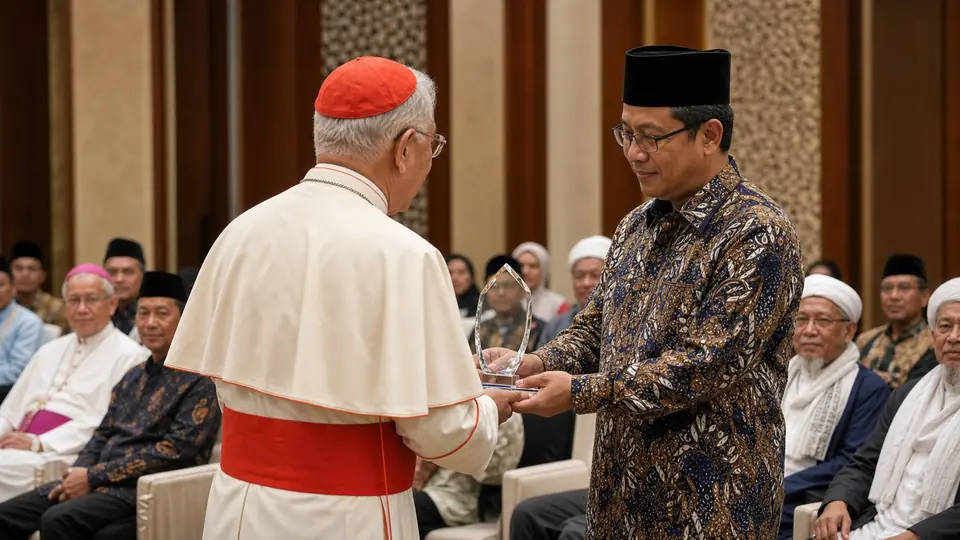
The 87 year old cardinal is honored for decades of interfaith work that helped shape the Bangsamoro peace process, and he receives a trophy and a 20,000 dollar prize at the inaugural ceremony.
What the award recognizes
The Harmony in Diversity Award is given by the Temasek Foundation of Singapore together with the 5P Global Movement to people who strengthen social trust across cultures in Southeast Asia. In its first year it drew more than 70 nominations from several countries.
The winner receives a trophy, a cash prize of 20,000 dollars, and a platform to share the work with peacebuilders, officials, and civic leaders. The July 15 ceremony in the Indonesian capital gathers government, civil society, and private sector figures from across the region, framing the honor as regional rather than national.
Why Quevedo was chosen
Quevedo is a member of the Oblates of Mary Immaculate and served for decades in Mindanao before becoming the first cardinal from the island, elevated by Pope Francis in 2014. Now 87, he holds the title archbishop emeritus of Cotabato after leading that archdiocese through some of the peace process's most fragile years.
He built his reputation on what he called a dialogue of life, the ordinary daily contact between Christians and Muslims that he argued does more to ease suspicion than formal negotiations alone.
His nomination came from the Bangsamoro Transition Authority, the mostly Muslim body that has governed the region since 2019. That a Muslim led government put forward a Catholic cardinal for a regional peace honor is itself a measure of the trust he earned across religious lines.
His role in the Bangsamoro peace process
In 1996 he helped form the Bishops Ulama Conference, which brought Catholic bishops, Protestant pastors, and Muslim ulama to one table for steady cooperation that has outlasted many political shifts.
He treated the long conflict in the region as a political and social problem rooted in unfair treatment, the loss of ancestral land, and old injustices, rather than a purely religious fight. That framing shaped how church leaders engaged the peace talks.
His voice carried weight during the drafting and defense of the Bangsamoro Basic Law, which stalled in Congress after outbreaks of violence. He pressed lawmakers and the public to protect freedom of worship and the right of communities to govern themselves.
The track he supported produced the 2014 Comprehensive Agreement on the Bangsamoro between the government and the Moro Islamic Liberation Front. The region that grew from it, the Bangsamoro Autonomous Region in Muslim Mindanao, was formally established in 2019 after a two part plebiscite, replacing the older autonomous region with a stronger form of self government.
Who leads the award
The award is led by Halimah Yacob, the former president of Singapore and now chancellor of the Singapore University of Social Sciences, as its patron. Former Indonesian foreign minister Retno Marsudi served among the jurors who screened the nominations.
Organizers describe the honor as a way to lift up figures whose quiet work holds diverse communities together, and they plan to make it an annual recognition across Southeast Asia.
What it means for Mindanao now
The award arrives as the Bangsamoro region prepares for its first regular parliamentary election on September 14, the political milestone the 2014 peace agreement was built toward. For many in Mindanao, honoring the cardinal is also a nod to the slow, unglamorous work that made that vote possible, years of meetings between clergy and ulama and steady insistence that Christians and Muslims share one home.
Quevedo has often warned against judging a whole community by the violence of a few, a message tested repeatedly through the region's hardest years. His recognition abroad places a Mindanao peacebuilder on a regional stage at a moment when the island's own experiment in self government is about to be put to the ballot.
Church and Muslim leaders in Cotabato have long credited the conference he founded with keeping lines open even when talks in Manila broke down, a role that mattered during flashpoints like the 2015 Mamasapano clash that nearly derailed the peace law.
Sources and verification
Reader response
- Views
- 5
- Shares
- 0
- Rating
- Not rated
- Comments
- 0