BARMM elections
BARMM Voters Face a Steep Awareness Gap Before the September Vote
July 24, 2026 · Joshua S Bariñan
The Commission on Elections and Rappler brought a mock election and public forum to Notre Dame University in Cotabato City in June, testing how ready Bangsamoro voters are for the region's first parliamentary election on September 14. The exercise exposed how many residents still do not understand the ballot in front of them, even as Comelec insists preparations for the historic vote remain on schedule.
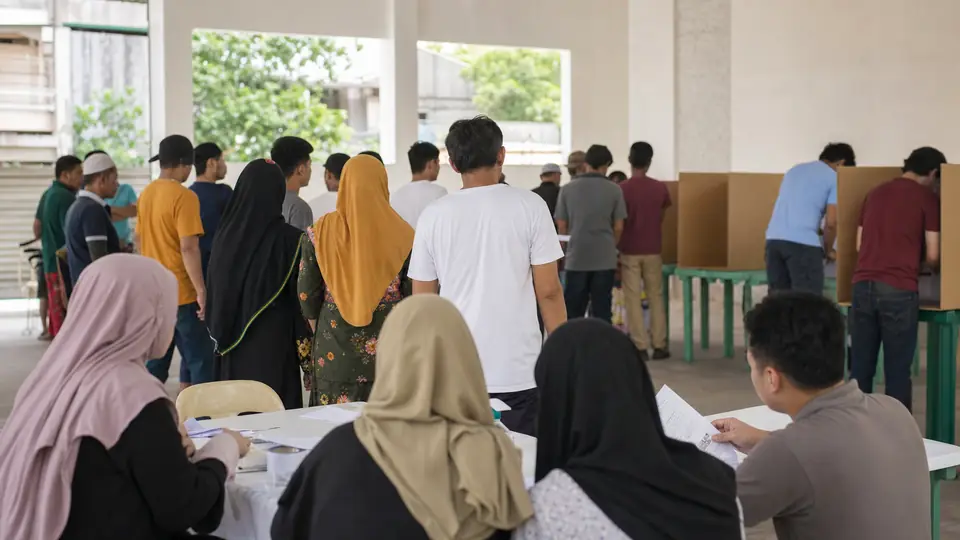
The Bangsamoro Parliament's first regular election is set for September 14, 2026, and it is now cleared to proceed after the Supreme Court declined to halt it, with about 8,300 police to be deployed and campaigning opening July 30, though a survey found most BARMM voters still do not understand how the parliamentary ballot works.
A Historic Vote Three Months Away
The Bangsamoro Autonomous Region in Muslim Mindanao is set to hold its first regular parliamentary election on September 14, 2026. The vote will replace the interim Bangsamoro Transition Authority Parliament that has governed the region since the Bangsamoro Organic Law took effect in 2019.
Getting to this date took years longer than planned. The election was originally meant to happen in 2022, then pushed to May 2025, then to October 2025. The Supreme Court later ordered it held no later than March 31, 2026, and Comelec pushed it back again in January, saying there was not enough time to organize the ballot properly. Comelec now says no bill seeking another delay is pending in Congress, and it considers the September date highly likely to hold.
The stakes go beyond a calendar date. This is the vote meant to prove the Bangsamoro Organic Law can produce a functioning, elected government rather than an appointed one. Tensions between Manila and Bangsamoro leaders flared in March 2025 when the national government replaced the region's interim chief minister with someone the Moro Islamic Liberation Front leadership saw as more pliant, a move that still colors how closely the September vote is being watched.
Cleared to Proceed, With Security and a Campaign Timeline Set
In the weeks after the Cotabato City forum, the vote moved from likely to certain. At a sendoff at Camp Salipada K. Pendatun in Parang, Maguindanao del Norte, on July 14, Comelec BARMM regional director Ray Sumalipao said there is no turning back, pointing to the Supreme Court's refusal to issue a temporary restraining order against pending petitions as the clearance to proceed.
Brigadier General Christopher Abecia, who heads the police regional office in the Bangsamoro, said about 8,300 officers will secure the region on election day, including 2,000 from the four surrounding regions and 1,300 from national police units, backed by soldiers and the Coast Guard. Of 93 places being watched for trouble, 10 fall under the red category, with Lanao del Sur holding the most. The election period opened July 16 with a gun ban, candidates may campaign from July 30 to September 12, and Comelec has readied 1,208 standby special electoral boards in case teachers step back over safety fears.
Testing Readiness in Cotabato City
Rappler, working with the Embassy of Switzerland in the Philippines, Notre Dame University, the Institute for Autonomy and Governance, BALAOD Mindanaw, and Comelec, ran a public forum and mock election at Notre Dame University from June 7 to 9. More than 100 participants took part, drawn from students, teachers, civil society groups, journalists, and community leaders across the region.
Comelec spokesperson John Rex Laudiangco walked participants through the voting process during the mock poll, treating the exercise as a dry run for a ballot most attendees had never seen before.
What the Survey Found
Laudiangco cited survey data showing that 89.1 percent of the BARMM population does not understand the voting process, particularly how parliamentary districts work. An even more basic gap surfaced too: 85.9 percent of those surveyed did not know they are electing parliament members rather than a chief minister.
That confusion follows directly from how the system is built. Under the Bangsamoro Organic Law, voters do not choose a chief minister directly. Parliament members elected in September will choose the chief minister themselves, a break from the governor and mayor elections most residents are used to.
The Logistics Comelec Has Locked In
Comelec told forum attendees it plans to deploy 6,440 automated counting machines across 5,212 voting precincts in the region. Printing of the roughly 2.3 million ballots needed for the election was already underway as of the Cotabato City forum.
Officials framed this as evidence the timeline is realistic despite the region's history of postponement. Whether that logistical readiness reaches ordinary voters, given the awareness numbers from the same forum, remains the open question. Comelec's parliament wing has also been active on the legislative side, moving bills to amend the Bangsamoro Electoral Code and the Local Governance Code ahead of the vote, alongside a separate proposal to regulate forest land management.
Minority Representation Concerns
A separate panel at the forum raised a different worry: whether the new parliament will genuinely represent groups long underrepresented in Bangsamoro politics, including women and non Moro indigenous communities. One panelist described the region's political culture as fragmented and personality driven, saying voters tend to back individual leaders and rival camps rather than platforms, a pattern the panelist called crayon politics.
The electorate casting these votes is also smaller than it once was. Sulu, one of BARMM's five original provinces, left the region after a Supreme Court ruling in late 2024. President Marcos signed Executive Order 91 on July 30, 2025, formally reverting Sulu to the Zamboanga Peninsula, a decision that still unsettles some former MNLF members who argue it weakens the Bangsamoro project the 2014 peace agreement was built on.
Ballots printed and leaders sign a peace covenant
In the days after the July forum, more of the machinery fell into place. Comelec said it completed the printing of the roughly 2.3 million ballots needed for the September 14 vote, moving that task from underway to finished, and reported that its counting machines and precincts were being readied across the region.
Traditional leaders from across the region signed a peace covenant in Cotabato City on July 16, pledging to help keep the campaign and the balloting calm. President Marcos, at a convergence event in Datu Odin Sinsuat on July 22, said again that the election would push through on the second Monday of September, closing the door on talk of another delay.
Sources and verification
Reader response
- Views
- 12
- Shares
- 0
- Rating
- Not rated
- Comments
- 0