Davao waste politics
Davao's Garbage Crisis: A City Caught Between Regulations and Reality
Davao City's landfill suspension after the May 20 trash slide exposed a fragile waste system, a public standoff with DENR, and a race to open a new disposal facility before garbage piles become a wider health crisis.
Frequently Asked Questions
How much garbage does Davao City generate daily?
City figures and reporting describe Davao City as producing roughly 700 to 800 tons of waste per day, with reported averages around 753 tons daily in 2025.
Is garbage collection still operating in Davao City?
Yes. Collection operations continue, but disposal capacity remains constrained while the landfill suspension is in effect.
The garbage problem became political fast
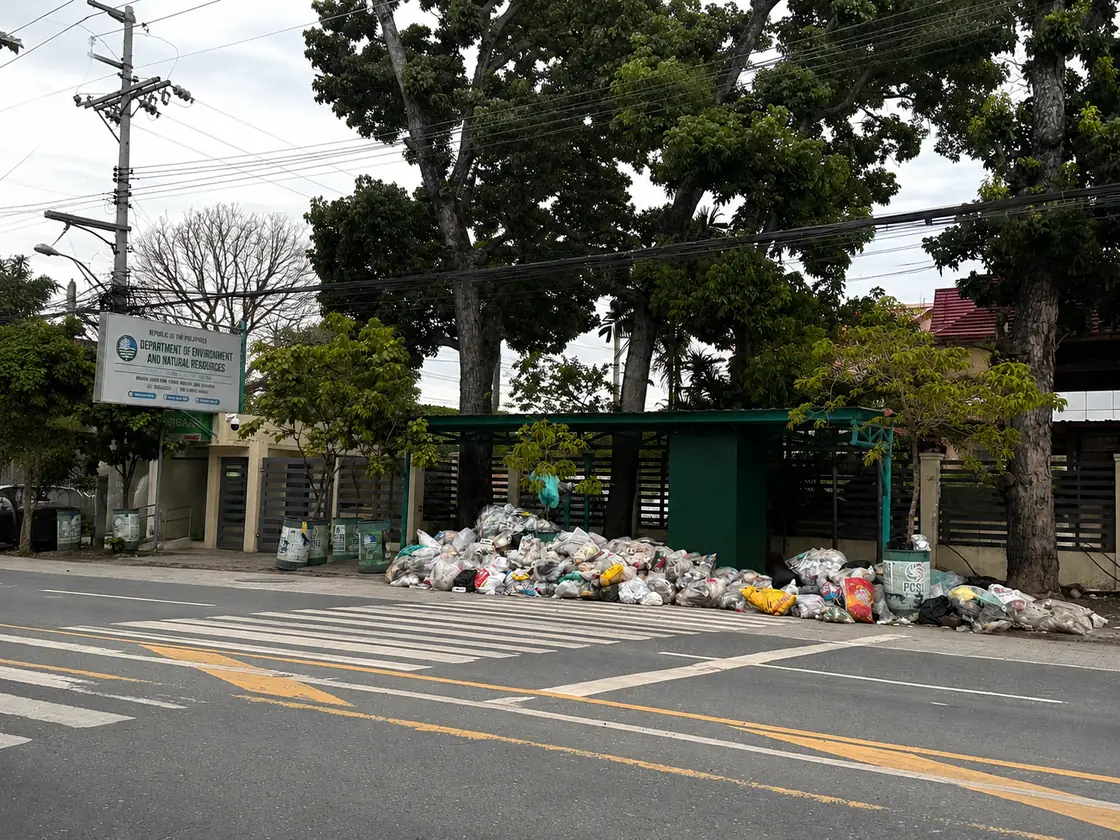
For nearly two weeks, garbage has been piling up across parts of Davao City. Streets that were once kept relatively clean are now lined with uncollected waste, residents are growing impatient, and the smell is becoming hard to ignore.
The immediate trigger was the May 20, 2026 trash slide at the New Carmen Sanitary Landfill in Barangay New Carmen. DENR Region XI and EMB XI suspended waste disposal at the site after the incident, citing safety, slope stabilization, corrective measures, and compliance with the landfill Environmental Compliance Certificate and solid waste rules.
On paper, the safety concern is clear. On the ground, the city still generates hundreds of tons of waste every day. That is where a regulatory order became a public service crisis.
What the city wants DENR to allow
The city government filed a motion for reconsideration on May 26, arguing that operations should be allowed to resume with corrective measures in place. Davao officials have said surrounding communities near the landfill were evacuated and that remaining safety work could proceed while waste disposal continued under controls.
Mayor Sebastian "Baste" Duterte went public on June 5, World Environment Day, with a sharper version of that argument. His complaint was not that DENR had no safety role. It was that shutting down the entire disposal operation without a clear reopening timeline left the city to manage roughly 750 tons of garbage a day with no legal destination ready to absorb it.
That frustration turned into political theater when the city identified additional collection points, including one in front of the DENR XI office. The mayor framed it as a way for DENR officials to personally see what happens when an essential public service is halted indefinitely.
DENR says the suspension was about safety
DENR has pushed back against viral claims that the garbage halt was ordered by President Ferdinand Marcos Jr., saying the suspension flowed from the May 20 incident at the landfill. The agency has also said the pause was meant to protect workers, nearby communities, and the landfill area while corrective action was underway.
DENR Region XI and EMB XI have pointed to temporary disposal alternatives, co processing arrangements, and dialogue with the city. The city's position is that those alternatives have not solved the immediate volume problem quickly enough.
This is the core of the dispute: DENR is defending the closure as a safety and compliance action; the city is arguing that the closure itself is now producing a public health and sanitation risk.
The new landfill is the real deadline
The one development that could lower the temperature is the new sanitary landfill being developed beside the existing New Carmen site. City statements and earlier reporting describe the new facility as already under development, with the Environmental Compliance Certificate obtained and remaining works focused on completing final operational components.
The city has pointed to June 16, 2026 as the target for completing the loading bay. If that timetable holds, the new facility could start absorbing waste soon enough to end the most visible part of the crisis.
If the target slips, Davao City faces another stretch of uncollected garbage, rising health concerns, and a louder fight over whether the primary failure is regulatory rigidity, city planning, or years of dependence on one strained landfill.
The Cuna context people are bringing up
The dispute is also being read through national politics because DENR is now led by Acting Secretary Juan Miguel Cuna, appointed in February 2026. Cuna's name has appeared before in the long running Canadian waste controversy from the 2013 to 2014 shipments of garbage into the Philippines.
The history needs precision. The Ombudsman previously found probable cause and ordered a suspension over alleged mishandling of the Canadian waste issue, but later reporting also noted that the Department of Justice dismissed the complaint against Cuna and other DENR officials for lack of probable cause while pursuing other personnel.
For Davao residents dealing with garbage on the street, that history does not answer the immediate landfill question. But it explains why the public argument over waste, DENR authority, and political trust is carrying more baggage than an ordinary permitting dispute.
What residents are left with
On the ground, the City Environment and Natural Resources Office has continued collection runs and has asked residents to segregate waste to reduce landfill bound volume. Segregation helps, but only up to a point when the main disposal destination is closed.
Public reaction is split. Some residents say the mayor is right to push hard because garbage piling up in Davao heat cannot wait for slow bureaucracy. Others say the city should have had better contingency sites and should not have depended so heavily on a single landfill.
Both views carry truth. Davao City is home to nearly two million people, and the landfill suspension exposed how thin the city's waste management margin had become. The immediate issue is getting garbage off the streets. The longer issue is whether the city builds a system that does not break this visibly the next time one facility is forced offline.