Northern Mindanao / Misamis Oriental / El Salvador City
El Salvador city center and Macajalar Bay corridor
Best for
- Bay corridor
- El Salvador City
Map address
Place guide
Updated June 2026
The Divine Mercy Shrine Pilgrimage
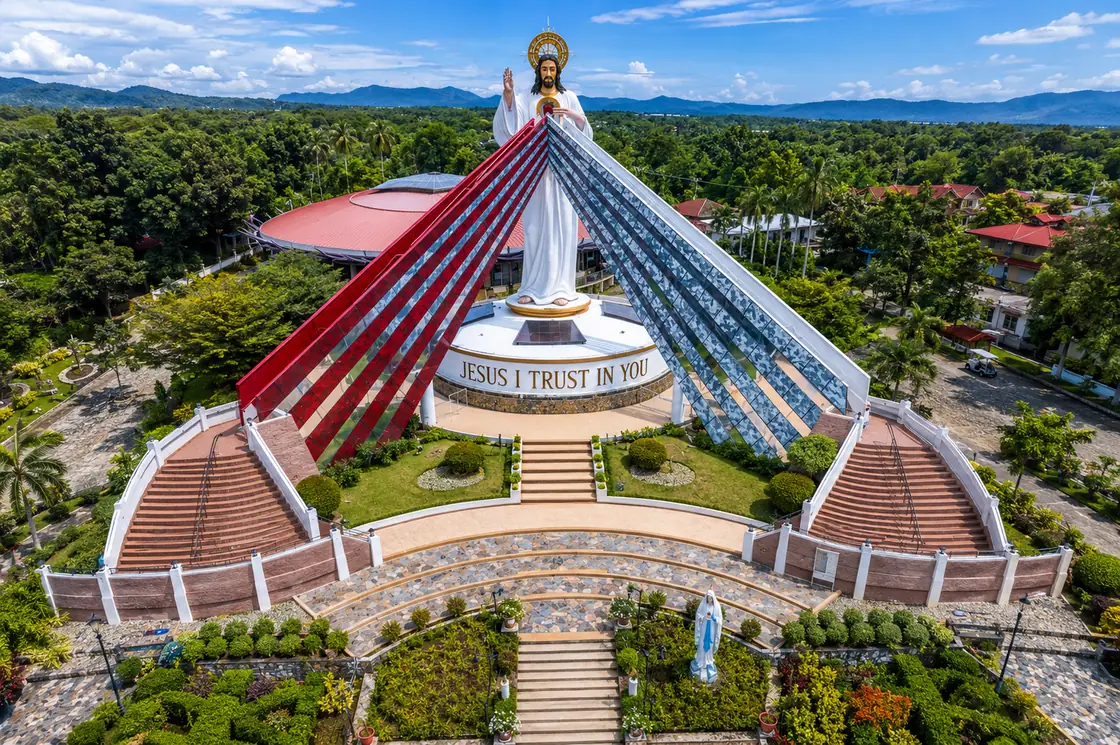
The 50-foot Divine Mercy Statue is the city's major landmark. It stands on a hill in Divine Mercy Hills, overlooking Macajalar Bay. Pilgrims climb the stairs to the heart of the statue, which contains a small chapel. During the Feast of Divine Mercy, thousands of visitors arrive from CDO and nearby provinces. Early morning visits are recommended to avoid heat and large crowds.
Local Life on Macajalar Bay
Below the shrine, the coastal barangays of El Salvador maintain a quiet, fishing based economy. The public market near the highway is busiest between 5:00 AM and 8:00 AM, where fresh catch from Macajalar Bay is sold.
It is a functional market serving local residents, with low prices and no tourist markup. Its position along Macajalar Bay gives the city coastal access and a fishing linked local economy.
Getting There and Back
El Salvador is about 15 kilometers west of Cagayan de Oro City. Public vans running the CDO-Laguindingan route drop passengers along the National Highway for ₱30 to ₱50. From the highway, local tricycles carry visitors to the shrine for ₱15 to ₱30. Most shops close by 6:00 PM.
What makes it worth stopping rather than passing through
El Salvador sits close enough to Cagayan de Oro to feel like a suburb from the highway, but once you're off the national road and into the city proper, it has its own pace. The market area near the center is small, functional, and genuinely local. It is the kind of wet market where you find seafood that came in that morning from the bay and produce from the hillside barangays behind the city. There's nothing performative about it.
Access and Practical Notes
The Divine Mercy Shrine area draws pilgrimage visitors throughout the year, with peaks during Holy Week and the feast day in April. If you're not there for the pilgrimage, visiting on a quiet weekday gives you the place almost to yourself. The setting above the highway, with views toward Macajalar Bay on clear days, is good. Transport from CDO takes about twenty to thirty minutes by van or bus along the national highway, and tricycles handle the last few kilometers from the highway into the shrine or the city center.
Food, Market, and Local Rhythm
The bay facing barangays have fishing activity in the early morning and late afternoon that's worth seeing if you're already staying in the area. Seafood is cheaper and fresher here than in CDO, though the restaurant options are simpler. El Salvador works best as a half day side trip from CDO or a first or last stop on a longer Misamis Oriental route. It is complete enough to be interesting but small enough that you won't feel the need to rush through it.
Frequently Asked Questions
How much is the entrance fee to the Divine Mercy Shrine?
Entrance to the shrine is free, but visitors must follow a strict dress code (shoulders and knees covered; wraps are available for rent at the entrance).
How far is El Salvador from Cagayan de Oro?
It is about 15 kilometers west of Cagayan de Oro, taking roughly 30 minutes by van or car depending on highway traffic.