Davao city guide
Davao City Guide: Travel, Culture, Economy, and Civic Context
May 28, 2026 · Joshua S Bariñan
A practical guide to Davao City as a Mindanao gateway, covering transport, festivals, local economy, civic context, safety notes, and nearby routes without crowding the main city page.
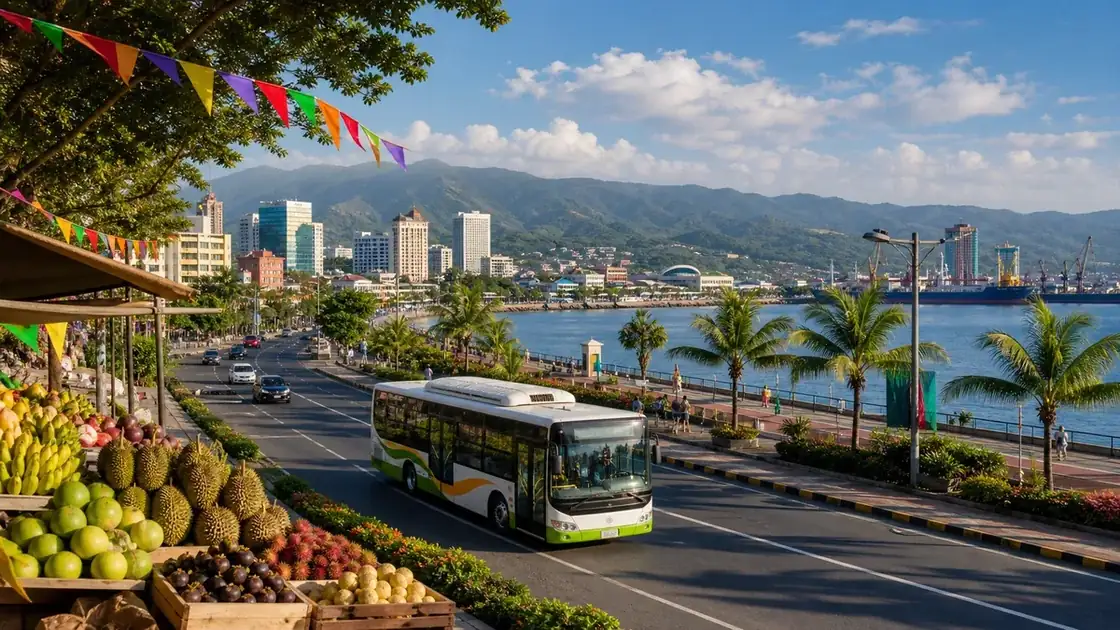
Use this guide to understand where Davao City fits in a trip or civic reading list: airport access, district choices, Samal links, Kadayawan culture, local economy, and the basic safety context a visitor should know.
Key Takeaways
- Davao is easier to plan when you choose a base by route: Lanang and Bajada for airport access, downtown for civic landmarks, and Ecoland or Matina for southbound travel.
How Davao City works as a gateway
Davao City is the main urban gateway of southeastern Mindanao. Francisco Bangoy International Airport connects the city to major Philippine routes such as Manila, Cebu, Clark, Iloilo, Cagayan de Oro, and Zamboanga. Most visitors continue by taxi or jeepney toward Buhangin, Lanang, Bajada, downtown, Matina, and Ecoland.
Taxi flag down rates start at ₱50 as of June 2026. A ride from the airport to the city center usually costs between ₱250 and ₱350 depending on traffic. This first decision matters because Davao is geographically wide. Where you stay changes how the city feels.
Getting around the city
Inside the city, movement is still mostly road based. Traditional jeepneys have a base fare of ₱14 for the first four kilometers while modern blue buses and beeps start at ₱17. These carry daily traffic across long corridors such as J.P. Laurel Avenue, McArthur Highway, and Quimpo Boulevard.
The Davao Coastal Road has added a major bypass and public recreation edge along Davao Gulf. Ecoland remains important for buses heading toward Digos, General Santos, Cotabato, Kidapawan, Tagum, Mati, and other Mindanao destinations.
Choosing where to stay
Davao does not work like a compact city break. Lanang and Bajada are convenient for airport access, malls, and hotels. Downtown is useful for San Pedro, City Hall, and Roxas Night Market. A budget transient room or dormitel can cost between ₱600 and ₱1,200 per night while mid range hotels usually fall between ₱2,500 and ₱4,500.
Matina and Ecoland make sense for travelers connecting to terminals or southbound roads. If Samal is the plan, stay close to the ferry side or budget extra time for traffic. Many visitors add a buffer of at least ₱1,000 to their daily budget if they plan on frequent boat transfers and island dining.
Planning your travel budget
A daily budget for a backpacker usually stays around ₱1,500 to ₱2,000 including a dorm bed, jeepney rides, and street food. Mid range travelers spending on private rooms, taxis, and air conditioned restaurants should plan for ₱4,500 to ₱6,500 per day.
Street food meals like those at Roxas Night Market often cost between ₱80 and ₱150 per person. Eating at mall restaurants or local favorites usually brings the bill to ₱300 or ₱600 for a single meal. Always carry small bills like ₱20 and ₱50 for jeepneys because drivers often run out of change for larger notes.
Samal and regional routes
The easiest nearby add on is Samal. Short ferry and barge crossings link Davao City with the Island Garden City of Samal. This makes beaches, resorts, Talicud routes, and Monfort Bat Sanctuary part of the wider Davao travel map.
Southbound travelers can continue to Digos, Kapatagan, Camp Sabros, and Mount Apo approaches. Northbound trips lead toward Panabo, Tagum, and Davao del Norte. Eastbound routes eventually reach Mati, Dahican Beach, Pujada Bay, and the Pacific facing side of Davao Oriental.
Languages, culture, and festivals
Cebuano is widely used in everyday Davao conversation, while Filipino and English are common in schools, offices, media, and government. Davawenyo identity also includes Indigenous communities, Muslim communities, Chinese Filipino families, Visayan settlers, and newer migrants drawn by work, education, and business.
Kadayawan is the city’s signature festival and the clearest public expression of harvest, Indigenous culture, flowers, fruit, and civic identity. Durian, pomelo, cacao, orchids, night markets, food parks, churches, mosques, malls, and upland conservation sites all belong in the same city story.
Economy and geography
Davao City handles services, trade, health care, logistics, and agribusiness for a region known for bananas, cacao, coconut, durian, and fisheries. It is also a political and media center for Mindanao, so regional issues often get attention here before they reach Manila.
Geographically, the city stretches from Davao Gulf through dense urban districts and into upland barangays toward Mount Apo’s wider landscape. That creates several different Davaos: coastal infrastructure, downtown civic corridors, suburban malls, business districts, agricultural edges, conservation sites, and upland communities.
Civic context and safety
Davao City is nationally important because it is the home base of the Duterte family and a reference point for debates about local order, policing, federalism, Mindanao identity, and national succession politics. In 2026, city leadership also carried unusual context after Rodrigo Duterte, the 2025 mayor elect, did not assume office while detained at The Hague, and Sebastian Duterte succeeded as mayor.
Confirm transport late at night, watch belongings in crowds, follow airport and ferry advisories, check weather before island or upland trips, and respect local rules at parks, churches, mosques, markets, and conservation sites.
Frequently Asked Questions
What local context should travelers keep in mind?
Davao is geographically wide, politically important, and culturally mixed. Transport timing, district choice, local rules, and respect for churches, mosques, markets, and conservation sites all matter.
Reader response
- Views
- 16
- Shares
- 0
- Rating
- Not rated
- Comments
- 0