Transport and safety
Landslides and Road Cracks Disrupt Three Bukidnon Davao Corridors
July 19, 2026 · Joshua S Bariñan
Heavy rain has disrupted three road links between Northern Mindanao and the Davao Region. A July 17 road slip in Marilog collapsed two lanes of the Davao Bukidnon highway and damaged 11 houses. The next day, officials kept a cracked section in Damulog open under controlled single lane traffic while the earlier San Fernando to Talaingod route remained part of an already strained detour network.
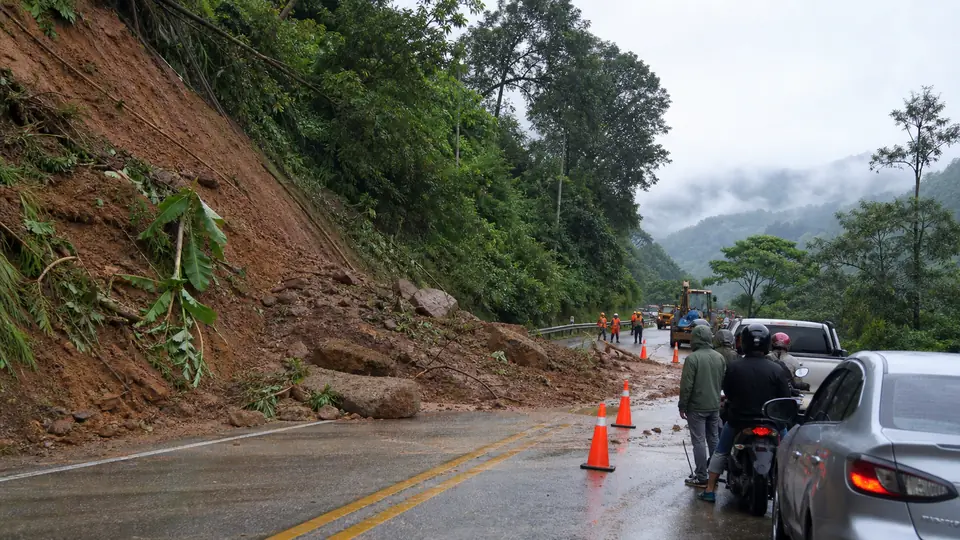
Marilog road slip closes the main highway
The ground gave way on the night of July 17 in Purok 39, Lower West Marahan, Marilog District, Davao City. The slip collapsed two lanes of the Davao Bukidnon highway, and the Department of Public Works and Highways in the Davao Region closed the affected section to traffic while engineers assessed the slope.
Davao City's social welfare office counted 11 damaged houses. Five were destroyed or left at immediate risk of falling, while six others were damaged and no longer considered safe to occupy.
Damulog keeps one lane open
Heavy rain also opened a crack along about 100 meters of highway in Barangay Pocopoco, Damulog, Bukidnon. The route matters because traffic diverted from Marilog can pass through Carmen, Cotabato, to reach Bukidnon.
DPWH engineers initially recommended closing the damaged section. After meeting local officials, they allowed vehicles, including cargo trucks, to use the undamaged lane in alternating directions under supervision. That arrangement reduces a complete cutoff, but it also creates delays and depends on the remaining pavement staying stable.
The earlier San Fernando to Talaingod failures
The new damage followed two slides on July 5 and 6 along the Kapalong to Talaingod to Valencia corridor. The first buried a section in Sitio Cabadiangan, Talaingod, Davao del Norte, before crews reopened it. The second covered about 228 meters of a road widening project in Sitio Balacayo, Barangay Kalagangan, San Fernando, Bukidnon. No casualties were reported in either slide.
That route crosses steep, rain soaked terrain used by passengers and trucks moving between Bukidnon and Davao del Norte. Its closure earlier in July pushed more vehicles toward the same Marilog and Damulog roads now showing damage.
Why repeated closures cost more than travel time
DEPDev Region 10 warned that recurring road failures raise fuel, freight, and handling costs across Mindanao. After the October 2025 collapse in Quezon, Bukidnon, the agency estimated daily economic losses of ₱187 million, including added logistics expenses and damage to vegetables delayed in transit.
That estimate belongs to the Quezon collapse and should not be treated as a measured loss for the July incidents. It shows the scale of exposure when several alternative roads fail at the same time.
What motorists should confirm before leaving
Road status can change quickly while rain continues. Drivers should check the latest advisories from DPWH Regions 10 and 11 and the affected local disaster offices before choosing a route, especially if traveling in a bus, cargo truck, or other heavy vehicle.
People near slopes should move away from fresh cracks, tilting trees or posts, falling soil, and new water seepage. These signs do not predict the exact time of a collapse, but they are reasons to leave the immediate area and alert local responders.
Sources and verification
Reader response
- Views
- 5
- Shares
- 0
- Rating
- Not rated
- Comments
- 0