Impeachment
Sara Duterte Impeachment Trial: What the First Three Days Established
July 14, 2026 · Joshua S Bariñan
The Senate opened Vice President Sara Duterte's impeachment trial on July 6 with competing arguments about public accountability and political persecution. Over the next two sitting days, prosecutors began with the article on alleged grave threats and called NBI Senior Agent John Mark Calilung to authenticate video from Duterte's November 2024 press briefing. The defense challenged the witness, the investigation, and the prosecution's use of selected clips. The first three days put evidence before the court, but they did not decide whether Duterte committed an impeachable offense.
Day 1: Both Sides Define the Case
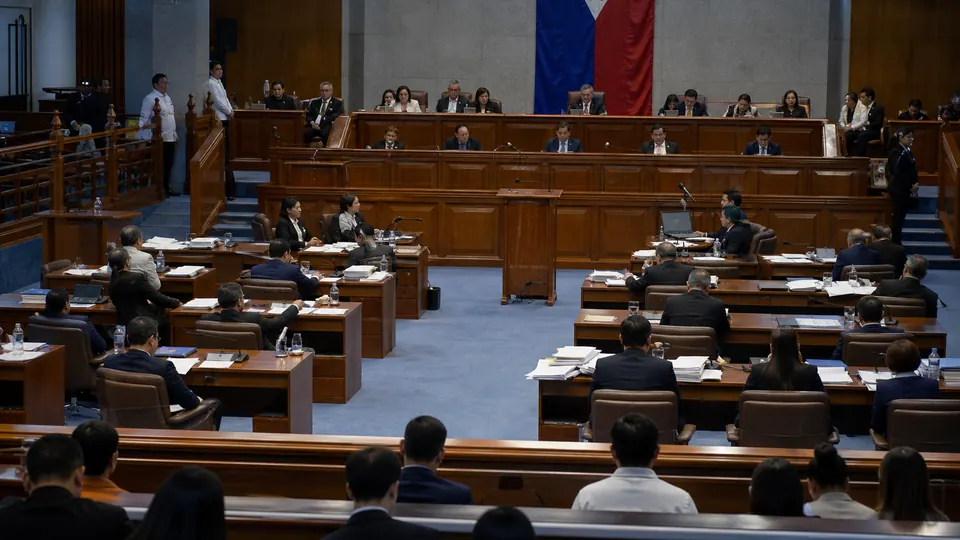
The Senate convened as an impeachment court on Monday, July 6. Duterte did not sit in the chamber and was represented by her lawyers. In a statement released before the session, she said appearing through counsel did not reduce accountability and that prosecutors still carried the burden of proving the charges.
Lead prosecutor Gerville Luistro told the senator judges that the four articles formed one account of public trust allegedly betrayed. The charges concern alleged misuse of confidential funds, unexplained wealth, bribery and corruption, and threats against President Ferdinand Marcos Jr., First Lady Liza Araneta Marcos, and former House Speaker Martin Romualdez. Duterte denies wrongdoing and describes the case as politically driven.
Lead defense counsel Sheila Sison argued that the trial was an attempt to overturn the choice of more than 32 million voters. The prosecution answered that electoral support does not place a public official beyond constitutional accountability. Conviction requires at least 16 votes in the 24-member Senate.
Day 2: The Court Hears the Recorded Statements
Duterte went to the Senate on Tuesday morning to meet her defense team but did not attend the court session. She gave reporters one sentence: "In this bloodbath and bludgeoning, I will be bloodied but unbowed." The last phrase echoes William Ernest Henley's poem Invictus, which members of the Duterte family have cited before.
House prosecutor Terry Ridon replied that Duterte could not describe the trial as a bloodbath while taking part through representatives. His response was an argument from the prosecution, not a ruling by the impeachment court.
Inside the chamber, prosecutors began with Article IV on alleged grave threats and acts of sedition. Their first witness was NBI Senior Agent John Mark Calilung, a member of the bureau's digital forensics unit. Prosecutors played a two minute and 18-second excerpt from Duterte's November 23, 2024 online press briefing, along with clips from earlier statements. Calilung testified about the NBI's recording, examination, transcription, and authentication of the material.
Defense counsel Carlo Narvasa objected to Calilung because he was not attached to the complaints that led to the impeachment and challenged the use of an excerpt from a much longer briefing. Presiding officer Francis Escudero overruled most objections and allowed the testimony to continue.
Day 3: The Defense Tests the Video Trail
Narvasa cross examined Calilung on Wednesday, July 8. The questions covered who initiated the NBI inquiry, the witness's digital forensics training, the affidavits he signed, and the chain of work behind the video and transcript. Calilung said the NBI can investigate a threat against senior officials without a complaint from the people named when evidence warrants an inquiry.
The defense also showed a longer portion of the November 2024 briefing involving Duterte's chief of staff, Zuleika Lopez. It argued that the statements should be viewed against what it described as pressure from House investigations. Senator judge Risa Hontiveros asked whether that context could excuse an alleged threat. Escudero cautioned the court against drawing a legal conclusion before all evidence was heard.
Calilung maintained that the video and the transcript he signed were authentic. When asked whether he knew of an actual hired assassin, however, his evidence did not establish personal knowledge of one. That distinction matters: his role in the first week was to authenticate recorded material and explain the NBI inquiry, not to prove every element of Article IV by himself.
What the Opening Week Did and Did Not Prove
By the end of the third day, prosecutors had placed Duterte's recorded words and the NBI's handling of them into the trial record. They said Calilung remained consistent under questioning. The defense exposed issues it can return to, including the source and scope of the investigation, the witness's training, and whether selected clips conveyed the full setting of the press briefing.
The testimony did not amount to a verdict on Article IV. Authentication can support admission of a recording, but senator judges must still decide what the statements meant, whether the surrounding circumstances change their meaning, and whether the proven conduct reaches the constitutional standard for conviction. The remaining articles require separate evidence.
The court ended its first week after Calilung's cross examination and resumed hearings on July 13. This article covers only the first three sitting days, from July 6 to July 8.
Why the Trial Matters in Mindanao
Duterte's national political career grew from Davao City, where she served as mayor and where her family remains the dominant political force. Her impeachment therefore carries a regional question as well as a national one: whether Mindanao lawmakers and voters continue to treat the case mainly as a legal test, a political attack, or both.
The Senate's handling of evidence will shape that judgment. A process seen as careful and even handed will carry more legitimacy in Davao and elsewhere in Mindanao, whatever the eventual result. A process driven by slogans or selective claims would deepen the divide already visible when the House voted to impeach her.
Sources and verification
Reader response
- Views
- 21
- Shares
- 0
- Rating
- Not rated
- Comments
- 0