Public health
BARMM Activates Nutrition Commission as Child Stunting Hits 33.6 Percent
July 10, 2026 · Joshua S Bariñan
Officials activated the Bangsamoro Nutrition Commission on July 9, giving the region a standalone body to plan and coordinate nutrition programs across all five BARMM provinces. Health Minister Kadil Sinolinding Jr. said the latest survey puts child stunting in the region at 33.6 percent, the highest of the country's 17 regions, and the commission starts with a 15 million peso budget to address it.
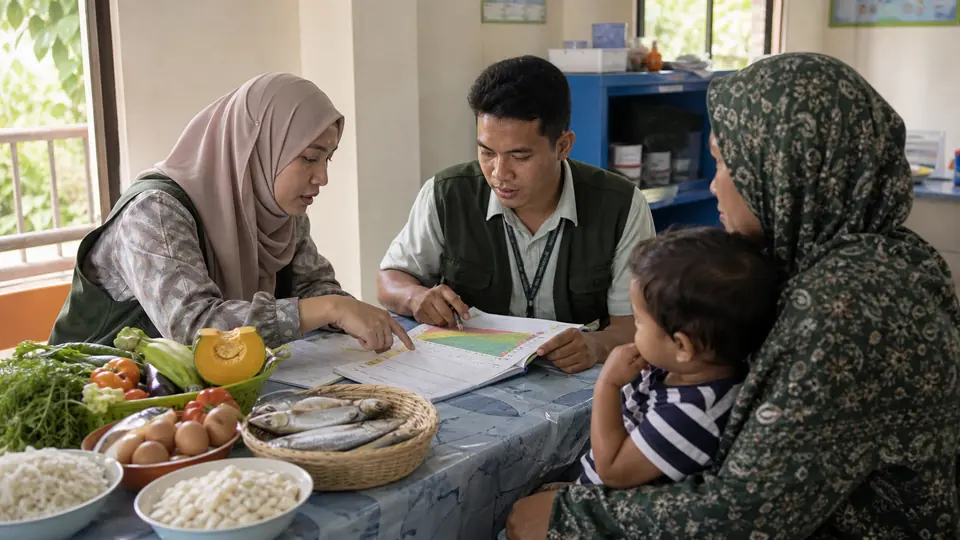
Commission goes live in all five provinces
Officials activated the Bangsamoro Nutrition Commission on Thursday, July 9, in a ceremony marking its full operationalization across all five Bangsamoro provinces, Maguindanao del Sur, Maguindanao del Norte, Lanao del Sur, Basilan, and Tawi Tawi, along with the cities of Lamitan, Marawi, and Cotabato. The commission is attached to the Office of the Chief Minister and is now the region's central body for planning, policy making, and monitoring of nutrition and food security programs.
The Bangsamoro Transition Authority Parliament approved the enabling law creating the commission on November 19, 2025, and Chief Minister Abdulrauf Macacua signed it the same day. Health Minister Kadil Sinolinding Jr., a physician who co authored the bill with fellow lawmaker Amilbahar Mawallil, described the commission's role as three pronged. 'It is a policy making body, it is a coordinating office, as well as partly implementing with partnerships sa different agencies,' he said.
Three years from a bill to a working office
The measure took three years to become law. Sinolinding and Mawallil first filed it on September 26, 2022, as a bill for a Bangsamoro Nutrition Council. Lawmakers later amended it during deliberations to create a full commission with expanded powers rather than an advisory council, before the 80 seat parliament passed it and Macacua signed it into law in November 2025.
The commission starts with a 15 million peso budget for its first year, covering staffing, planning, research, and coordination of nutrition and food security programs across the region. Parliament and the Office of the Chief Minister said the funding is meant to give the commission an independent operating base rather than relying solely on the Ministry of Health's existing budget.
A stunting rate the country's highest
The commission's activation follows years of survey data showing Bangsamoro children face the country's worst stunting rates. The 2023 National Nutrition Survey put the region's stunting rate among children under five at 34.3 percent. Sinolinding said the latest Food and Nutrition Research Institute survey now places the figure at 33.6 percent, meaning roughly three in every 10 Bangsamoro children are stunted, still the highest rate of the country's 17 regions.
The region has made gradual progress. The former Autonomous Region in Muslim Mindanao posted the country's worst stunting rate of 45.2 percent in 2015. Seven years of nutrition programs brought that down to 36.6 percent by 2021, when an estimated 240,000 children remained at risk. Sinolinding said BARMM also ranks among the regions with the highest rates of household food insecurity, a factor tied directly to childhood stunting.
What the commission does next
The Ministry of Health has deployed about 2,600 Bangsamoro nutrition workers to strengthen services at the community level, alongside existing programs for prenatal care, exclusive breastfeeding promotion, complementary feeding, vitamin supplementation, deworming, treatment of malnutrition, and school based feeding. The Bangsamoro Food and Nutrition Plan remains the region's broader strategic framework, with the new commission now responsible for coordinating how local government units carry it out.
The government's stated target is to cut the region's malnutrition rate by 10 percent by 2028. Sinolinding said the commission will now track that goal directly, calling child malnutrition one of the biggest challenges facing the region today. 'Even one malnourished child is one too many,' he said. 'Every hungry child is a future at risk, and every nourished child is a future secured.'
Sources and verification
Reader response
- Views
- 10
- Shares
- 0
- Rating
- Not rated
- Comments
- 0