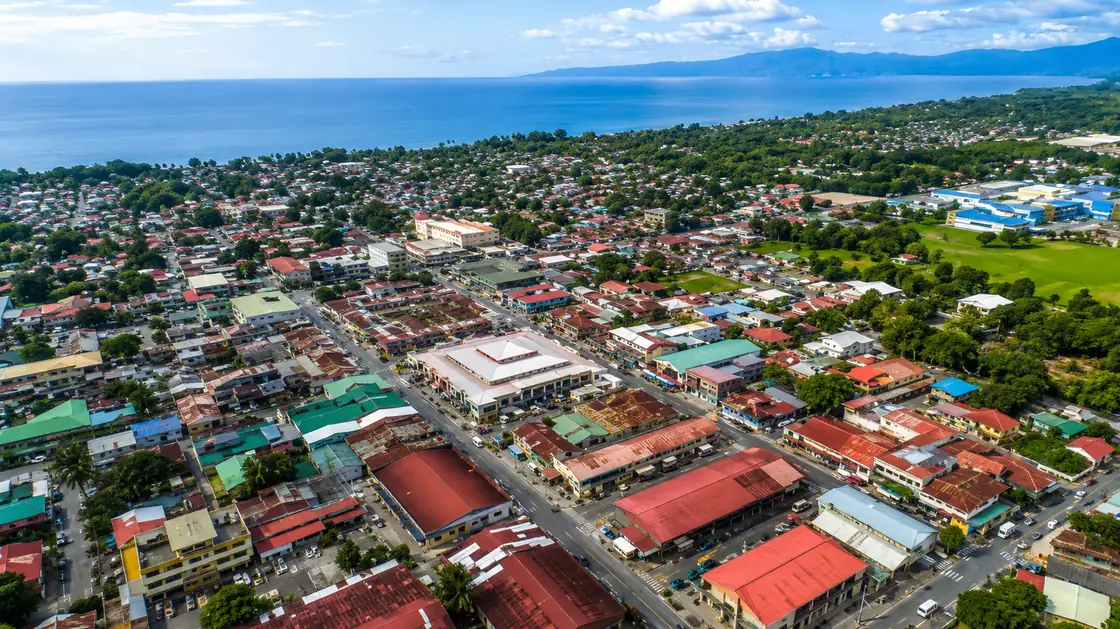
The city name comes from Hingoog, a Manobo word meaning good luck. DPWH completed a ₱191 million revetment along the Gingoog River in 2024 and 2025, providing flood protection for riverside communities. Tropical Storm Basyang in February 2026 forced more than 4,000 people to evacuate when three rivers swelled; Mayor Erick Cañosa placed the city on red alert. DPWH temporarily closed the Gingoog to Claveria to Villanueva highway during the same event due to landslide risk. Gingoog is 122 kilometers east of Cagayan de Oro and 74 kilometers west of Butuan. The city has coastal fishing barangays along Gingoog Bay and agricultural barangays in the interior that produce copra and other crops. Balingoan Port, the departure point for ferries to Camiguin Island, is about 25 to 30 kilometers west of Gingoog. Barangay Kalagonoy has the country's only commercial oolong tea plantation. Spicy chicken halang-halang is a local dish associated with the city.
Quick answer
- Location:
- Eastern Misamis Oriental, facing Gingoog Bay on the road toward Butuan and Caraga
- Province:
- Misamis Oriental, Region X
- Mayor:
- Erick G. Cañosa
- Highlights:
- Gingoog Bay, east coast fishing communities, the Inug-og Festival, and waterfall routes
- Barangays:
- 79
- Gingoog Bay
- Eastern Misamis Oriental coast
- Waterfall and upland route context
Local context
Gingoog City's current mayor reference on this page is Erick G. Cañosa. Philippine News Agency coverage in October 2025 identifies Erick Cañosa as Gingoog City mayor. Source label: Rappler city summary / PSA 2020 Census.
Gingoog City is linked to local place pages including Gingoog Bay city route. Those pages help separate the city guide from a generic location summary by giving readers concrete markets, parks, transport corridors, civic districts, and visitor routes to compare.
The city profile emphasizes Gingoog Bay, Eastern Misamis Oriental coast, Waterfall and upland route context. These points give the page a practical local frame instead of treating the city as only a name on a regional map.
Landmarks and orientation points
- Gingoog Bay
- Eastern Misamis Oriental coast
- Waterfall and upland route context
FAQ
What is Gingoog City known for?
Fishing communities in the coastal barangays have worked Gingoog Bay for generations, while the interior barangays grow copra, corn, and other crops.
How do you get from Cagayan de Oro to Gingoog City?
Buses and vans from Cagayan de Oro travel east along the coast road through Balingoan and several municipalities before reaching Gingoog. The trip takes approximately 2 to 2.5 hours depending on conditions and stops along the way. Gingoog has its own terminal that connects westbound to CDO and eastbound to Butuan. Long-distance buses from Davao or Butuan heading to CDO also pass through the city on the same national highway.
Are there waterfalls in Gingoog City?
Gingoog’s highland barangays in the interior have waterfalls accessible by unpaved roads. A local guide or prior coordination is needed because access roads vary by season, and the dry months are generally the better time to attempt upland routes. For current sites and directions, the city tourism office or local guides at the terminal can provide current information. The coastal and highway areas of the city do not have waterfalls.
What festival does Gingoog City celebrate?
The Inug-og Festival is Gingoog’s annual celebration marking the city’s founding anniversary. It features street dancing, cultural presentations from highland and coastal communities, trade fairs, and sporting events. The festival draws participation from across the city’s 79 barangays and is the main civic event of the year.
How is Gingoog different from Cagayan de Oro?
CDO is a major regional center with large commercial districts and heavy daily traffic. Gingoog is a smaller city with a pace tied to fishing, copra farming, and the highway trade. While CDO faces Macajalar Bay on the western side of Misamis Oriental, Gingoog faces Gingoog Bay on the eastern end near the Caraga boundary. Travelers heading from CDO to Butuan pass through Gingoog, which gives the city highway passenger movement, though most people stop only for a meal or fuel.
Is there local food worth stopping for in Gingoog?
Halang-halang is cooked with chili and local aromatics and is commonly recommended by locals as the dish most identified with the city. Restaurants in the city center serve it, and Gastronomy Restobar is one of the noted spots. Visiting the Kalagonoy oolong tea operation typically requires prior arrangements with the operator.