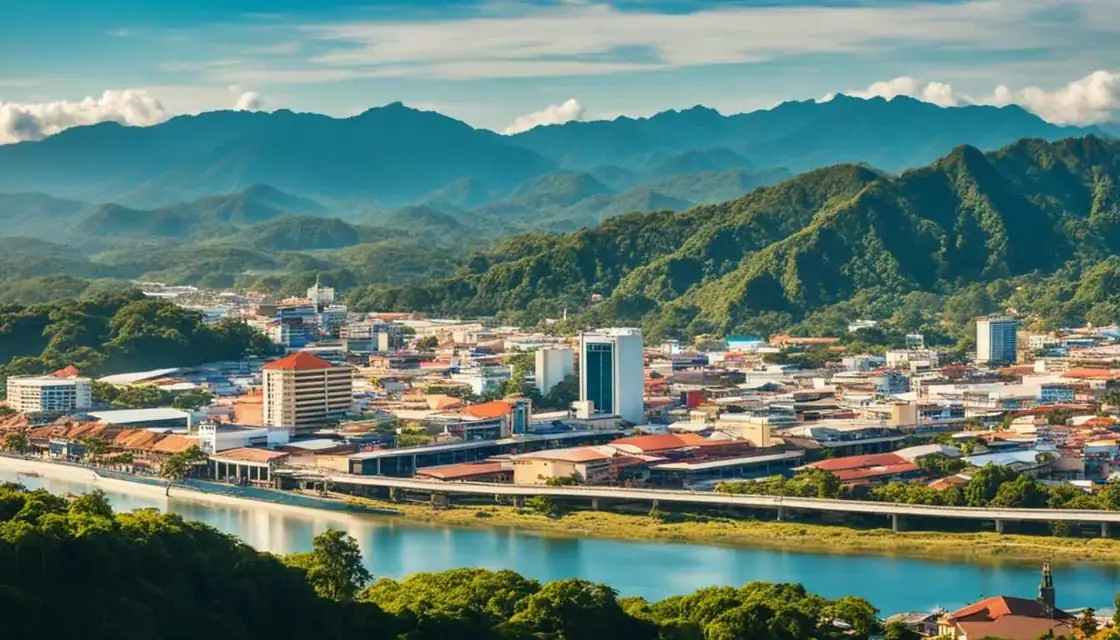
Cagayan de Oro is Northern Mindanao’s everyday hub, with rafting on the Cagayan River, Xavier University, Divisoria, Macabalan port traffic, Laguindingan airport access, and road links to Bukidnon, Iligan, Camiguin, and Butuan.
Quick answer
- Region:
- Northern Mindanao (Region X), highly urbanized city independent of Misamis Oriental
- Population:
- 741,617 (PSA POPCEN 2024)
- Income class:
- 1st class
- Known for:
- City of Golden Friendship; white water rafting on CDO River; Higalaay Festival; Xavier University; Divisoria market district; regional logistics and education hub
- River rafting:
- CDO River runs Grade III to IV rapids on a 13-kilometer course. Multiple licensed operators are based near El Camino road.
- Major university:
- Xavier University – Ateneo de Cagayan (XU), one of Mindanao’s most respected Catholic universities
- Festival:
- Higalaay Festival (August 28), the citywide celebration of CDO’s founding and the feast of San Agustin
- Flood history:
- Typhoon Sendong (Washi, December 2011) caused catastrophic flash flooding that killed over 600 people in CDO; river safety during typhoon season is a serious concern
- How to reach:
- Laguindingan Airport is 31 to 46 km from CDO city center (about 1 hour). Seven shuttle operators: Magnum Express from Limketkai (₱50-199), Rural Transit, Super Five, JK Line Transport, Odyssey Airport Express, Star Express, The Lord's Transport Services
- Ports:
- Macabalan Port: passengers and inter-island RORO to Cebu and Visayas. Phividec Industrial Estate/Tagoloan Port (17 km south): containerized cargo only via Mindanao Container Terminal
- Bus terminals:
- Agora Terminal: eastbound routes to Butuan, Iligan, Davao. Bulua Terminal: westbound to Iligan, Ozamiz, Zamboanga, and airport vans
- Cagayan de Oro River
- Divisoria area
- MacArthur Marker
- Macajalar Bay routes
Local context
Cagayan de Oro's current mayor reference on this page is Rolando "Klarex" A. Uy. Cagayan de Oro city government coverage and 2025 election reporting identify Rolando "Klarex" Uy as mayor. Source label: PSA PSGC Region X cities, 2024 POPCEN.
Cagayan de Oro is linked to local place pages including Cagayan de Oro River, Divisoria area, Gaston Park and St. Augustine Cathedral, Macajalar Bay routes, High Ridge viewpoint. Those pages help separate the city guide from a generic location summary by giving readers concrete markets, parks, transport corridors, civic districts, and visitor routes to compare.
The city profile emphasizes Cagayan de Oro River, Divisoria area, MacArthur Marker, Macajalar Bay routes. These points give the page a practical local frame instead of treating the city as only a name on a regional map.
Landmarks and orientation points
- Cagayan de Oro River
- Divisoria area
- MacArthur Marker
- Macajalar Bay routes
- Gaston Park
- St. Augustine Cathedral
- High Ridge viewpoint
FAQ
What is Cagayan de Oro known for?
Cagayan de Oro is famous as the City of Golden Friendship and is the regional center of Northern Mindanao (Region X). It is widely recognized for white water river rafting on the Cagayan de Oro River, which draws adventure tourists year round with Grade III to IV rapids on a 13-kilometer course. The city is also known for Xavier University (one of Mindanao’s top universities), Divisoria market district, Higalaay Festival each August, and as the main logistics and education hub for the Misamis, Bukidnon, and Lanao corridor.
What region is Cagayan de Oro in?
Cagayan de Oro is a highly urbanized city and the regional center of Northern Mindanao, also called Region X. Although it sits within Misamis Oriental geographically, it is a legally independent city and is not counted within the province. The Northern Mindanao region includes Misamis Oriental, Misamis Occidental, Bukidnon, Camiguin, and Lanao del Norte.
What is the population of Cagayan de Oro?
Cagayan de Oro had a population of 741,617 as of the 2024 Census of Population conducted by the Philippine Statistics Authority. It is the largest city in Northern Mindanao and the third most populous city in Mindanao after Davao City and Zamboanga City.
Is Cagayan de Oro safe for visitors?
Cagayan de Oro is generally considered safe for visitors by Philippine urban standards. Crime rates in commercial and tourist areas are moderate. The city’s main safety concern is flooding during strong tropical cyclones. Typhoon Sendong (Washi) in December 2011 caused catastrophic flash flooding from the CDO and Iponan rivers, killing over 600 people in the city. Visitors should monitor weather advisories during typhoon season (July–November) and avoid riverside areas during heavy rain events.
How do you get to Cagayan de Oro?
To reach the city by air, travelers use Laguindingan Airport, situated 31 to 46 kilometers away in Misamis Oriental (about an hour's drive). Shuttles are run by seven different providers: Magnum Express, Rural Transit, Super Five, JK Line, Odyssey, Star Express, and Lord's Transport. Magnum Express operates hourly trips from Limketkai Mall's east concourse beginning at 4 AM (prices between ₱50 and ₱199), with additional stops at major terminals like Agora, Bulua, and SM CDO Downtown. Daily flights to Manila and Cebu are operated by Cebu Pacific and Philippine Airlines. By sea, passenger and cargo vessels use Macabalan Port to connect with Visayas and Cebu, while Tagoloan Port handles large cargo operations. For bus travel, Agora Terminal is the eastern hub (for Butuan, Iligan, and Davao), and Bulua Terminal is the western gateway (for Ozamiz, Pagadian, and Zamboanga).
What is white water rafting in Cagayan de Oro like?
White water rafting on the Cagayan de Oro River is one of Mindanao’s most popular adventure activities. The main run is approximately 13 kilometers with Grade III to IV rapids, manageable for first-timers with guide supervision. Current operators near El Camino road include 1st Rafting Adventure Philippines and Kagay Outdoors. Pricing in 2025 and 2026 runs from ₱1,200 per person for the beginner three-hour course to ₱1,800 for intermediate and ₱2,500 for the advanced course. Private tours for groups of six or more cost ₱1,300 to ₱1,400 per person. All packages include transport, helmets, life jackets, and a certified river guide. River conditions vary by season, and operators adjust difficulty based on water level.
What is Higalaay Festival?
Higalaay Festival is the major annual celebration of Cagayan de Oro City, held on August 28 each year. The name comes from the Cebuano word for friendship, reflecting the city’s identity as the City of Golden Friendship. The festival marks the feast day of San Agustin and the city’s founding anniversary with street dancing, floral parades, cultural performances, and commercial events. It is one of the largest festivals in Northern Mindanao and draws visitors from across the region.
How do you get from Cagayan de Oro to Camiguin?
The usual route is by bus or van from Cagayan de Oro to Balingoan Port in Misamis Oriental, then ferry to Benoni Port in Camiguin. Check the ferry operator and weather status before leaving because sea conditions can affect trips.
Can you visit Bukidnon from Cagayan de Oro?
Yes. Cagayan de Oro is the main jump off for Manolo Fortich, Dahilayan, Malaybalay, and other Bukidnon highland routes. Travel time depends on destination, traffic near the city edge, and weather on the plateau road.
Why do people call Cagayan de Oro the commercial hub of Northern Mindanao?
Cagayan de Oro is the working center of Northern Mindanao. People pass through the city for university classes, hospital visits, mall errands, port travel, government offices, and bus connections to Bukidnon, Iligan, Butuan, Camiguin, and Davao routes. It is where the north central Mindanao transport grid meets daily commerce, which is why it is more than a rafting stop. Getting around takes local patience: Laguindingan Airport is outside the city, and the Divisoria, Cogon, Agora, Bulua, Limketkai, Uptown, and Macabalan areas each pull traffic in different directions. A booked ride is usually easiest when carrying bags or moving at night.
Where can you eat and go out at night in Cagayan de Oro?
CDO food is centered on movement. Students, office workers, port passengers, vendors, and families all eat around Divisoria, Cogon, Limketkai, Uptown, and Puerto. You will find pastel from nearby Camiguin, local siopao, barbecue, carinderia meals, coffee shops, and late night food stops. Divisoria is more than a night food strip; it is the old downtown public space, with plazas, monuments, schools, churches, market access, and weekend street activity in a walkable core. Uptown has newer cafes and dining near the subdivision areas, while Puerto works for travelers coming from the eastern highway. The best plan depends on where you are sleeping and what route you need the next morning.
What are CDO's main traffic areas and how do people get around the city?
CDO traffic concentrates in several predictable places. The Cogon area has unsignalized intersections at Yacapin, Borja, and Osmeña streets, with vendor activity narrowing road space during peak hours. Bugo Public Market along the national highway creates pedestrian and trisikad crossings that back up quickly during market mornings. Divisoria, Limketkai, and the highway through Macabalan all get congested during school dismissal and evening hours. A 3.963 billion peso flyover project in Barangay Gusa is under construction to relieve one of the more significant highway bottlenecks. Jeepneys and multicabs cover most city routes for ₱7 to ₱9 per trip, and Grab is available for direct routing. Bulua Terminal is where westbound transport, Iligan vans, and airport shuttles depart. Agora Terminal handles eastbound routes.
What is the BPO sector in Cagayan de Oro and how big is it?
CDO's office market reached 54,000 square meters by the first half of 2025, with major business process outsourcing firms operating across Limketkai, Uptown, and the SM CDO Downtown tower. Companies including Teleperformance, Concentrix, SupportZebra, Qualfon, and Outsource Access have operations in the city. Office vacancy fell to 22.7 percent in the first quarter of 2025, its lowest level since 2023. CDO's position as a BPO secondary city comes from a consistent university graduate supply, lower operating costs than Cebu, and existing IT park infrastructure along the Limketkai and Uptown corridors. Graduates from Xavier University, Liceo de Cagayan, and Mindanao University of Science and Technology supply much of the local BPO workforce.