BARMM elections
How the September 14 BARMM Parliament Election Is Being Secured
August 9, 2026 · Joshua S Bariñan
The Bangsamoro region holds its first regular parliamentary election on September 14, and the government has moved thousands of police and soldiers into place to guard it. Comelec has flagged 27 areas as high risk, deployed contingency electoral boards, and insisted the vote will push through after the Supreme Court declined to stop it. A conflict monitor counts hundreds of violent incidents during the campaign, but the military and Comelec say the bulk are personal disputes rather than attacks on the polls.
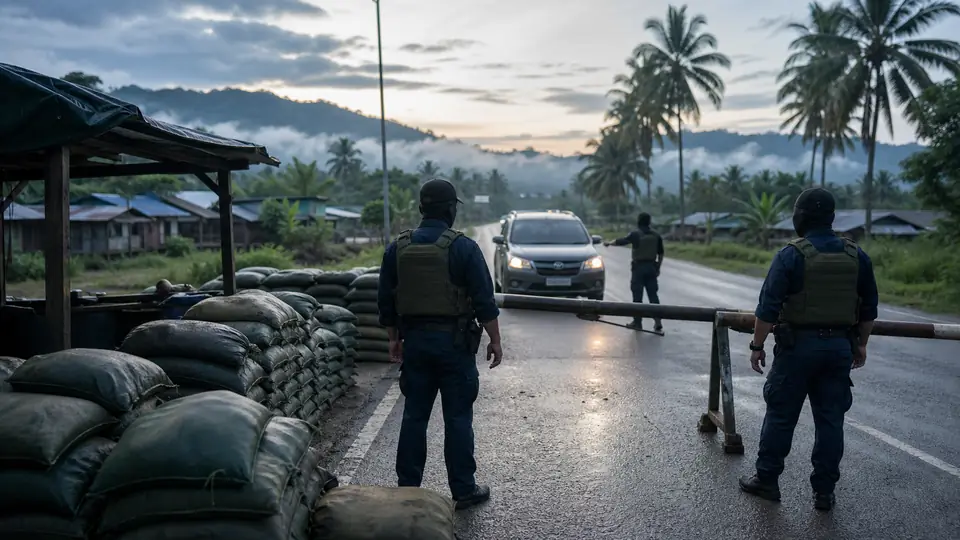
The security plan combines a region wide police deployment with military and coast guard support, heavier coverage in 27 red category areas, and 1,208 backup electoral boards. Pending legal challenges have not changed the September 14 schedule.
How many forces are guarding the vote
About 8,300 police officers will be posted across the Bangsamoro region on election day, backed by soldiers from the Armed Forces of the Philippines and personnel from the Philippine Coast Guard. President Ferdinand Marcos Jr. agreed to a Commission on Elections request to deputize the police, the military, and other agencies to run the security operation.
The Army has already reinforced the region. At least 1,500 additional soldiers were sent in by early August to help enforce the election gun ban and hold positions before polling day. Police Chief General Jose Melencio Nartatez Jr. said officers would raise their visibility, expand intelligence work, and use a managed operations approach in the places judged most dangerous.
As of early August, authorities said 12 people had been arrested for carrying firearms in violation of the gun ban that runs through the election period.
Which areas Comelec calls high risk
The poll body has placed 27 areas under its red category, its label for places facing serious security threats. These sit in Basilan, Lanao del Sur, Maguindanao del Norte, Maguindanao del Sur, and the Special Geographic Area, the cluster of towns that voted to join the region in 2019.
Comelec attributes the risk in those areas to armed groups still operating in the region. The police response there is heavier than in the rest of the Bangsamoro, with more checkpoints and a larger standing presence meant to deter movement of weapons and armed men before and during the count.
Is the violence tied to the election
This is where official accounts and independent monitors part ways. A conflict monitoring group recorded more than 600 violent incidents during the campaign period, a figure that has circulated widely and fed worry about the vote.
The Army says it has not tracked any incident it considers connected to the election. Comelec reached a similar conclusion, telling reporters that the violence it reviewed came mostly from personal and clan disputes rather than attacks on candidates, voters, or the process. One official put it plainly in early August, saying there were no recorded incidents related to the polls in the region with roughly six weeks left before voting.
The gap matters for how the result will be read. If most of the bloodshed is clan feuding that predates the campaign, the poll can still be called clean. If any of it turns out to target the vote, the same numbers become an argument that the region was not ready.
Will the election push through
Comelec Chairman George Erwin Garcia has said there is no turning back and the election will proceed on schedule. Petitions were filed at the Supreme Court seeking to block the vote, but the court did not issue a restraining order, which the poll body treats as clearance to continue.
To keep voting running even if problems hit a precinct, Comelec has prepared 1,208 contingency electoral boards it can send in on short notice, including cases where teachers assigned to serve back out over safety fears. Ballots are set to move to regional hubs from the last week of August into the first week of September. Garcia has asked the police to give full protection to voters, the electoral boards, commission staff, and journalists covering the count.
What is at stake in the first regular vote
The September ballot fills all 80 seats of the Bangsamoro Parliament, made up of 40 party representatives, 32 district representatives, and reserved seats for sectoral, settler, and indigenous groups. It is held under the Bangsamoro Organic Law as amended, and it ends the appointed transition authority that has governed the region since it was formed.
For the rest of Mindanao, the vote is a test of whether the peace settlement that created the region can carry an ordinary election, not just an appointed government. A count that finishes without a security breakdown strengthens the case that the arrangement is durable. A disrupted or disputed vote would hand ammunition to those who argue the region cannot yet run itself through the ballot.
Sources and verification
Reader response
- Views
- 4
- Shares
- 0
- Rating
- Not rated
- Comments
- 0