Impeachment
Sara Duterte Impeachment Trial: What Days 7, 8 and 9 Established
July 23, 2026 · Joshua S Bariñan
The third week of Vice President Sara Duterte's impeachment trial opened the money front. The court granted the prosecution access to her bank, tax, and anti money laundering records, then heard the last NBI witness on the threats case before closing that article. This recap covers Days 7 to 9, July 20 to 22, with Duterte following the proceedings from The Hague.
Key Takeaways
- The subpoena ruling moves the unexplained wealth charge from argument toward records, although the banks and agencies must still produce evidence the court can use.
Day 7: The Court Opens the Money Trail
The court reconvened on Monday, July 20, and issued the ruling both sides had waited a week for. Presiding officer Francis Escudero granted the prosecution's two requests to subpoena the bank, tax, and Anti Money Laundering Council records of Duterte, her husband Manases Carpio, and businesses linked to them, covering 2007 to 2025. The order ties to Article II, which alleges unexplained wealth.
Escudero anchored the ruling on the 2012 impeachment trial of Chief Justice Renato Corona. He said the records were prima facie relevant and not the fishing expedition the defense described. The court did not grant everything: it excluded foreign currency deposits and two firms it found had no clear link to the couple.
Prosecutor Chel Diokno argued the requests met the legal test for a subpoena and that the Senate can weigh acts committed before a person became an impeachable official. He also argued against applying a July 2025 Supreme Court ruling that had voided an earlier impeachment attempt against Duterte. The defense, which opposed the request on due process and bank secrecy grounds, played down the loss afterward and called the ruling expected rather than a major setback. Escudero cautioned that a subpoena to the Bureau of Internal Revenue does not guarantee the records will be released.
Two side matters touched the senator judges themselves. Detained Senator Rodante Marcoleta submitted a letter asking the court to recognize his vote, citing the Estrada trial. Senator judge Robin Padilla denied that he had snubbed a summons from the Ombudsman in a separate case.
Day 8: The NBI Director and the '100 Percent' Answer
On Tuesday, July 21, the prosecution called its third and final witness on Article IV, NBI Director Melvin Matibag. Escudero admonished him as he took his oath, reminding him to avoid statements aimed at particular senator judges.
Matibag testified that the bureau considered a possible conspiracy between the vice president and her brother, Davao City Mayor Sebastian Duterte, noting that both had made remarks referring to President Ferdinand Marcos Jr.'s head. He said threats against the president also threaten national security.
The line that traveled came under questioning by Senator judge Bam Aquino, who asked how likely it was that Duterte had spoken to a hired killer. Matibag said that based on her own statements, he was 100 percent certain she had spoken to someone. He still named no confirmed assassin, the same gap the defense had pressed in earlier weeks.
The court granted a defense motion for more time to study documents introduced during the testimony, moving Matibag's cross examination to the next day. Escudero announced that the fourth week would run for a single session day to make room for Marcos's State of the Nation Address on July 27 and the opposition Kontra Sona on July 28.
Day 9: The Threats Case Closes, and an Empty Chair
On Wednesday, July 22, the defense finished its cross examination of Matibag and the prosecution rested its case on Article IV. It had used six of the eleven trial days allotted for the threats charge.
On the stand, Matibag said the search for Duterte's alleged assassin had been narrowed to fewer than 20 people and that the bureau was close to identifying who was involved. The court also began sending the approved subpoenas to six banks, the Bureau of Internal Revenue, and the Anti Money Laundering Council.
The ruling drew a quiet protest from within the court. Five senator judges, Alan Peter Cayetano, Pia Cayetano, Loren Legarda, Imee Marcos, and Camille Villar, filed separate manifestations expressing reservations about opening the records as far back as 2007.
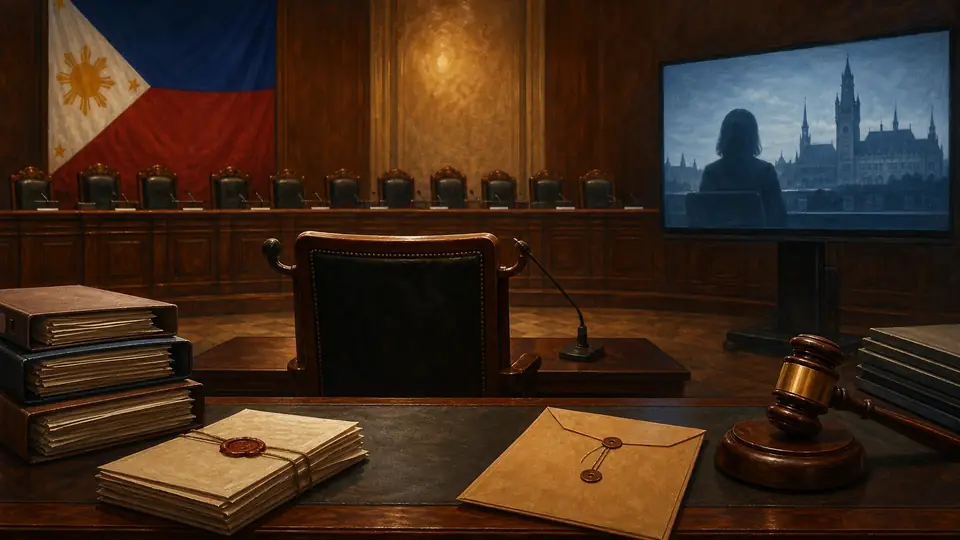
Duterte followed all of this from The Hague. Her defense confirmed she was abroad on an approved trip and said she had no reaction to the subpoena. The detail that stood out was the setting: she was in the city where her father is held by the International Criminal Court while her own trial ran in Manila.
What Went Viral, and the Arguments Splitting Your Feed
The clip that spread fastest was Matibag's 100 percent answer. Anti Duterte pages ran it as an admission that she had spoken to a killer. Pro Duterte pages ran the same exchange to argue the opposite, that after weeks of testimony the NBI still could not name a hitman. Both captions used the same words to reach opposite conclusions.
The subpoena win gave the prosecution's supporters their own material, with many posts crediting Diokno's arguments and framing the ruling as the moment the money trail opened. Pro Duterte pages leaned on the reservations of five senator judges and on the vice president's absence, casting the case as a political operation. The busiest image, though, was not from the Senate floor at all. It was the optics of the vice president at The Hague, near her detained father, while her trial proceeded without her.
For readers, the useful line this week is a narrow one. Authenticating what a witness believes about intent is not the same as proving a plot, and a subpoena granted is not yet a record produced. The two rarely matched in the captions.
What the Third Week Settled and What It Did Not
With Article IV closed, the senator judges now hold a full record on the threats charge but no verdict. They must still decide whether recorded words, without a proven plot, meet the constitutional bar to convict.
The larger shift is on Article II. The subpoena opens Duterte's finances to documentary scrutiny, a harder front for the defense than a disputed video, but only if the banks and agencies actually turn over usable records. Conviction on any single article still needs at least 16 of the 24 senator judges.
Why Mindanao Is Watching
The week pulled the Davao family deeper into the case. Matibag's conspiracy theory now names Sebastian Duterte, the sitting Davao City mayor, alongside his sister, keeping the trial tied to a base that remains firmly in Mindanao. The vice president's stop in The Hague also links the fight in Manila to her father's ICC case, a subject that still moves opinion across the region.
How the court handles the records it just subpoenaed will shape the regional read. A process seen as evenhanded will carry weight in Davao whatever the result. One seen as reaching too far, back to 2007 and into accounts the defense says are unrelated, will feed the argument already loud in Mindanao that the trial is politics dressed as law. This article covers only the third week, Days 7 to 9, from July 20 to 22.
Frequently Asked Questions
Was Sara Duterte in the country during Days 7 to 9?
No. Her office and defense confirmed she left on July 16 for an approved trip running to July 31, with stops that included Qatar, the United Kingdom, and the Netherlands. By Day 8 she was in The Hague, the same city where her father, former president Rodrigo Duterte, is detained by the International Criminal Court. Her defense said she had no reaction to the subpoena ruling and followed the sessions from abroad.
Sources and verification
Reader response
- Views
- 5
- Shares
- 0
- Rating
- Not rated
- Comments
- 0