Election integrity
Poll Watchdog PPCRV to Run Parallel Count and Audit for First Bangsamoro Election
August 21, 2026 · Joshua S Bariñan
The Parish Pastoral Council for Responsible Voting said it will monitor and audit the first regular Bangsamoro parliamentary election on September 14. The group plans an unofficial parallel count, thousands of volunteers, and desks in polling centers across the region to check the accuracy of the transmitted results.
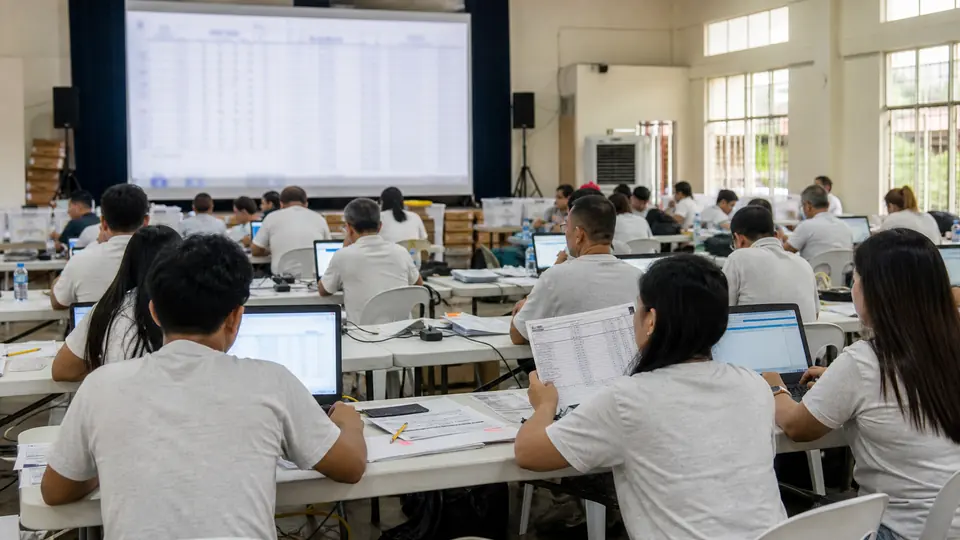
The PPCRV will observe and audit the September 14 Bangsamoro parliamentary election, running an unofficial parallel count from September 17 and comparing paper election returns against transmitted results to verify accuracy.
What the watchdog plans to do
The Parish Pastoral Council for Responsible Voting, one of the country's best known election watchdogs, announced that it will cover and audit the first regular election of the Bangsamoro Parliament. Spokesperson Ana Singson laid out the plan in a message to reporters.
The group will place monitoring desks in polling centers across the Bangsamoro Autonomous Region in Muslim Mindanao. Reports from the field will be sent back on a running basis so the group can track how voting and counting move through the day.
An unofficial parallel count will start on September 17 or 18 and run until September 20. The count gives the public an independent tally to compare against the official numbers released by the Commission on Elections.
How the audit checks the machines
The watchdog also takes part in the random manual audit, which tests whether the vote counting machines read ballots correctly. Election returns from Bangsamoro polling centers are manually scanned and then matched against the transmitted results as an integrity check.
Singson said transmitted results will reach the group through a Comelec server granted to the watchdog. The group will pass on the figures from its command center as they arrive on election day and afterward.
The command center will open on September 8 at a school building in Makati City. From there the group will consolidate the field reports and the parallel count for release to the public and to media.
Volunteers and support behind the effort
The watchdog is aiming for at least 7,000 volunteers for the regional polls, with more needed for Cotabato City, which votes separately. The effort builds on a local coalition that grew from 15 groups that first worked together in the region in 2007.
Telecommunications firm PLDT is providing connectivity and data center space for the servers that receive results from the automated counting machines. The company said the support is meant to keep the flow of election data secure during the historic vote.
The election fills 72 of the 80 seats in the parliament, and voters will shade only eight circles on their ballots. Comelec has said it is about 95 percent ready, with more than 2 million voters expected to take part in a vote that has been postponed several times since 2022.
What the parallel count can show
The unofficial tally does not replace the canvass conducted by the Commission on Elections. Its value is comparison. If copies of paper election returns match the figures transmitted from counting machines, the watchdog can give voters an independent view of whether results moved accurately from precincts into the central system. Any difference can be documented and referred to election officials for review.
Timing also explains why the parallel count begins several days after voting. Volunteers first have to collect, organize, and scan returns from polling centers spread across the autonomous region. The command center then checks those records against the data received through the Comelec server. A slower public audit can test the electronic result without competing with the official count on election night.
The random manual audit answers a narrower question. It checks selected paper ballots against machine totals to see whether the equipment interpreted voter marks correctly. Field observation covers a different layer, including whether precincts open, whether voters can cast ballots, and whether counting proceeds without disruption. Taken together, the desk reports, manual checks, and parallel tally give the public several independent points of comparison rather than a single headline number.
Why volunteer coverage matters in the region
The Bangsamoro vote covers provinces, cities, island communities, and the Special Geographic Area, so a command center in Makati depends on reports from people near the precincts. The target of at least 7,000 volunteers reflects that geography and the need to move physical election returns into the audit. Cotabato City requires additional coverage because its voting arrangements are handled separately.
This is also the first regular election for a parliament created through the Bangsamoro peace process. Voters are choosing among regional parties, district candidates, and reserved sectoral representation under a system that differs from ordinary national and local elections. Independent observation cannot decide disputes by itself, but a documented trail of precinct reports and return comparisons can make later questions more specific and easier for election authorities to answer.
Sources and verification
Reader response
- Views
- 6
- Shares
- 0
- Rating
- Not rated
- Comments
- 0