City Council
Davao City Councilor Pushes Task Force El Niño as PAGASA Sees Rain Falling From November
October 9, 2026 · Joshua S Bariñan
Agriculture committee chair Ralph Abella has drafted a resolution asking Mayor Sebastian Duterte to convene a Task Force El Niño for the city's farms and water supply. The push follows a PAGASA advisory that the current strong El Niño will become very strong before the end of 2026, and a warning from the agency's Davao office that the city could be in a dry spell by February 2027.
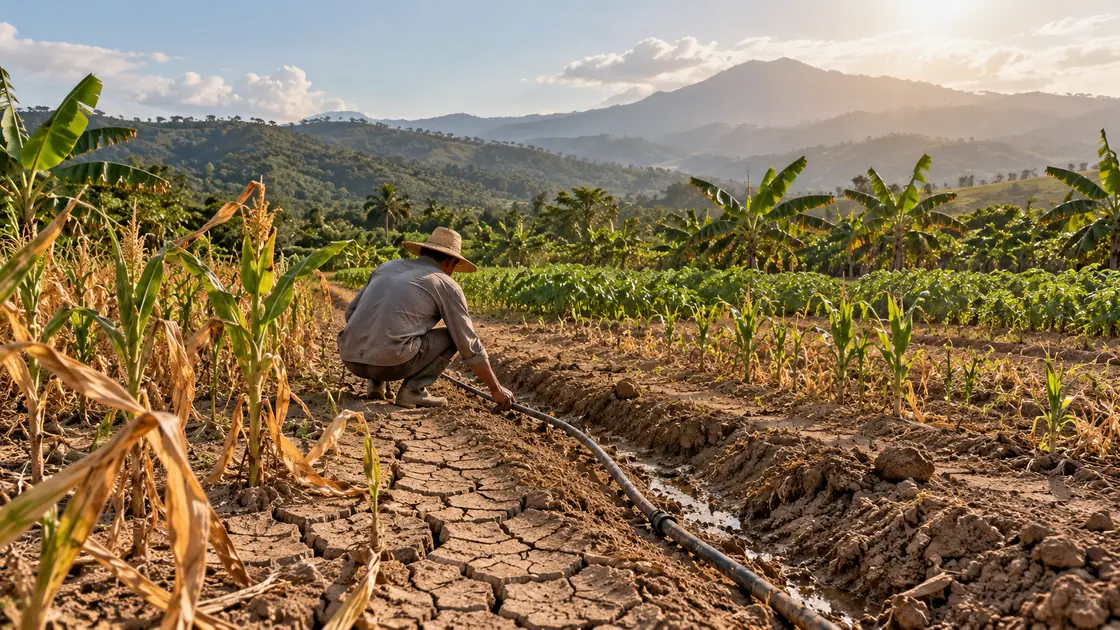
The resolution has not been adopted yet. It asks the City Planning and Development Office and the City Agriculturist's Office to lead planning, with no budget attached until the task force says what is needed. Paquibato District is the area officials expect to suffer most.
What Abella is proposing
Councilor Ralph Abella, who chairs the 21st City Council's agriculture committee, described the draft at the Pulong Pulong sa Dabawenyos media forum on Tuesday, October 6, 2026. The resolution is addressed to the mayor through the City Planning and Development Office and names the City Agriculturist's Office to convene a working group with barangays, farmer and fisher representatives, and technical agencies.
The group would be asked to set priorities, a timetable, office responsibilities, resource needs, and monitoring arrangements, and to revise them as forecasts change. Abella said plans would rest on PAGASA advisories, local climate data, and field checks. An annex lists seven areas for the planning: risk assessment, water availability and conservation, crop production and farmer support, livestock and fisheries preparedness, advisories and community coordination, resources and implementation, and monitoring and review.
Abella called the annex a set of suggestions for the planning office. It does not prescribe specific measures or commit funds. Asked whether the proposed 2027 budget contains anything for El Niño, he said there is nothing yet and that the amount and the source of money are up to the mayor once the task force reports.
Offices he wants at the table include PAGASA, the City Disaster Risk Reduction and Management Office, the City Agriculturist's Office, the City Veterinarian's Office, and bulk water supplier Apo Agua. The committee still has to finalize the resolution before the council votes on it and the planning office sends it to the mayor.
The forecast behind it
The draft cites the climate advisory PAGASA issued on September 23, 2026. The agency said a strong El Niño is active in the tropical Pacific and is expected to become a very strong one during the September to December season, lasting through the first half of 2027. It warned of agricultural dry spells, drought, and stress on water supply, energy production, and public health, while noting that the monsoon and tropical cyclones could still bring short bursts of heavy rain, mainly to the western Philippines.
Science Secretary Renato Solidum urged local governments to adjust farming schedules and prepare infrastructure before the impact is felt, and pointed to the agency's CliMap tool, which gives projections down to the municipal level. PAGASA declared the end of the southwest monsoon on October 5.
Alan Ray Ribo, weather specialist at the PAGASA Davao office, briefed the council at a regular session. He said October rainfall in the city is still near normal because of localized thunderstorms, but that rainfall is projected to drop sharply from November. He expects Davao City to enter a dry spell by February 2027 as the decline reaches water sources including the Panigan Tamugan watershed, which supplies most of the city's drinking water.
Ribo added that a dry spell does not mean no rain at all. The city spans several microclimates, and isolated thunderstorms driven by easterlies will keep bringing rain to inland and upland districts such as Marilog, Calinan, and Paquibato even as coastal and lowland areas dry out.
Which parts of the city are most exposed
Abella said the city will not be affected evenly. Citing PAGASA data, he said the third district is relatively secure because of its forest cover and water sources. The second district, and Paquibato in particular, is more exposed because it borders Davao del Norte and has lost much of its forest.
He said the task force's first job would be getting water to barangays and farmers. Paquibato has sources that have never been tapped or piped, he said, naming sites inspected in Sitio Alon in Barangay Malabog and in Barangay Mapula. Building distribution systems from those sources to surrounding farm communities is the main early measure in the proposal.
Abella also flagged a current pattern of hot mornings followed by evening rain. He said the swings are causing fruit trees to drop their flowers before setting fruit, a problem for growers before the dry months even begin. Fisherfolk are generally less affected than upland farmers, he said, but would still be included.
He said the city has reason to believe it will not run out of food or water because the drought will not reach every district at the same strength.
What neighbors and national agencies are doing
Davao Oriental moved a month earlier. Governor Nelson Dayanghirang said on September 8 that an executive order creating a provincial El Niño task force was coming and told municipal mayors to use their calamity funds because the provincial budget was nearly spent. The province also bought a geo resistivity scanner, due September 14, to find aquifers before drilling wells, after past projects laid pipes where there was no water underneath.
The Office of Civil Defense in Region 11 has reported local governments across the Davao Region activating El Niño task forces, and the Philippine Information Agency carried the PAGASA alert that the region faces a long dry spell.
At the national level, Economy Secretary Arsenio Balisacan has listed cloud seeding in drought affected areas and added palay storage among the government's current responses to food price pressure, alongside fuel tax suspensions and a power price cap for the Visayas and Mindanao grids.
The environmental group IDIS has tied its own El Niño asks to the city's land use review. Executive director Mark Peñalver called for the Comprehensive Land Use Plan update to include nature based measures, protection of urban wetlands and green space, enforcement of the Rainwater Harvesting Ordinance, and limits on plantations and clearing in the Panigan Tamugan watershed.
What happens next
The resolution goes to the full council once the agriculture committee signs off. If adopted it is a request, not an order. The mayor decides whether to create the task force, who sits on it, and where any money comes from.
The timing matters because the 2027 budget is being prepared now without an El Niño line. Any funding the task force recommends would have to be added by supplemental budget or drawn from the city's calamity fund, the route Davao Oriental's governor has already told his mayors to take.
Farmers in Paquibato, Marilog, and Calinan should watch for PAGASA's monthly rainfall outlooks and for any notice from the City Agriculturist's Office on planting schedules for the November to February window.
Sources and verification
Reader response
- Views
- 6
- Shares
- 0
- Rating
- Not rated
- Comments
- 0