City Council
Cagayan de Oro Council Clears Mayor Uy to Negotiate an 8.5 Billion Peso Loan for a New City Hall Complex
October 9, 2026 · Joshua S Bariñan
The vote on October 5 ended more than two years of back and forth over how Cagayan de Oro should pay for a government complex in Upper Carmen. The loan now on the table is more than three times the amount first floated in 2023, and the three councilors who voted against it pointed to Commission on Audit findings, unfinished city projects and the cost that the next two administrations will carry.
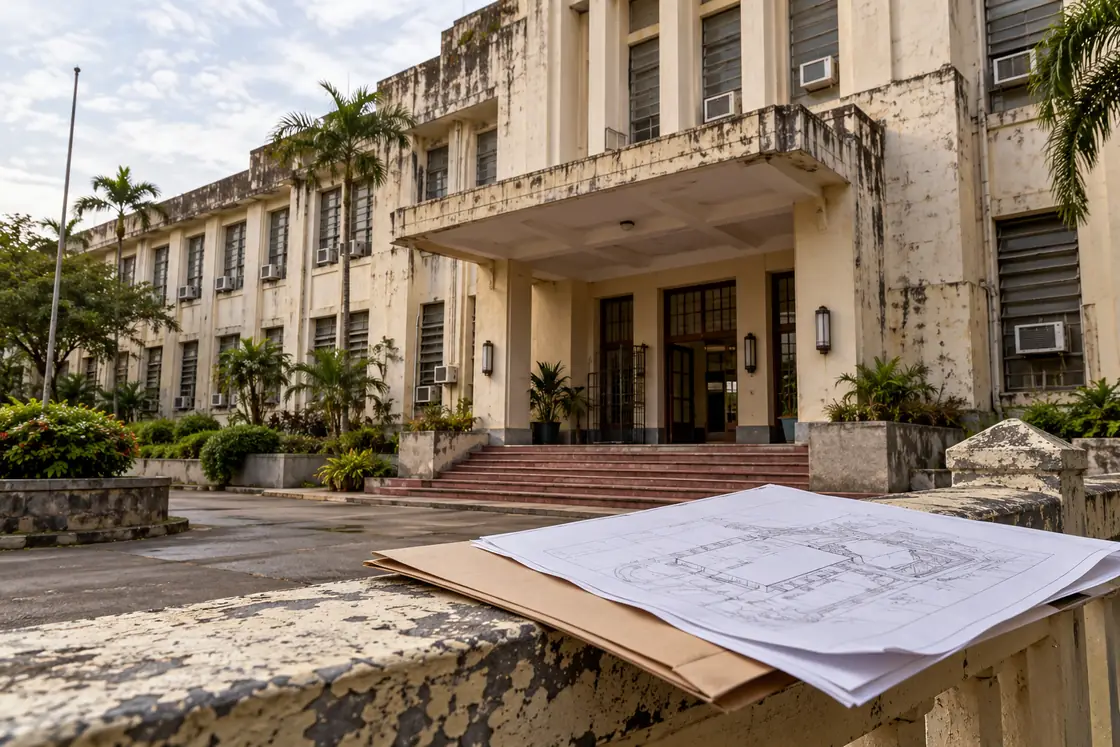
On October 5, 2026 the Cagayan de Oro City Council authorized Mayor Rolando Uy to negotiate with banks for a loan of up to 8.5 billion pesos to acquire land and build the Cagayan de Oro City Government Complex on 22.9 hectares in Barangay Carmen. The vote was 15 in favor, 3 against and 1 abstention. The authority covers negotiation only; a signed loan still needs Bureau of Local Government Finance certification and a favorable opinion from the Bangko Sentral.
What the council approved
The request came to the 21st City Council as an urgent matter from the mayor's office and was taken up at the regular session on Monday, October 5, with Vice Mayor Bebot Rodriguez presiding. It asks for authority to negotiate with banks and other financial institutions for a loan to fund the acquisition, construction and completion of a new seat of government.
The site is a 22.9 hectare property in Upper Carmen, in the uptown district across from the CDO Eco Park. The 8.5 billion peso figure comes from a feasibility study prepared by a technical working group. The plan calls for an eight storey executive building, a four storey legislative building, sports facilities, parking and commercial spaces.
Majority Floor Leader Edgar Cabanlas and Councilor Alam Lim carried the argument for the majority. Both said the complex would bring city offices now scattered across rented and aging buildings into one location, which would cut rent and make services easier to reach.
Who voted no and why
Councilors Yvy Emano, Imee Rose Moreno and Aga Suan voted against. Emano built her objection on the Commission on Audit's reports. She cited the jump from the initial 2.7 billion peso proposal, unpaid contracts and roughly 3 billion pesos of city projects still incomplete, including delayed public markets and the Macanhan Super Health Center. She said the loan would burden future administrations.
Moreno put the question plainly: can the city afford it? She said the audit report should be the basis for any borrowing decision and warned that spending on health, education, honoraria and salaries could be squeezed by debt service.
Councilor Jonjon Rodriguez abstained. "Nag abstain ko kay dili kompleto akong facts and information," he said after the vote. He said he does not oppose the development but wanted the committee to lay out the details before he could support it.
The majority's case for the building
Councilor Jing Daba described the conditions inside the current City Hall, which is 85 years old. She listed failing air conditioning and uneven stairs among the hazards faced by employees and the public. She asked that the loan be released in phases tied to construction milestones rather than drawn down at once.
Councilor Roger Abaday walked the council through the legal limits. Section 324 of the Local Government Code caps a city's annual debt service at 20 percent of its regular income. Before any loan can be signed, the Bureau of Local Government Finance must certify the city's borrowing capacity and the Bangko Sentral ng Pilipinas must issue a favorable monetary board opinion.
Abaday also set out the plan for the old building. Once offices move uptown, the current City Hall along the Cagayan River would be preserved as a heritage center and City Museum rather than demolished or sold.
How the price grew
The council first took up the idea in October 2023, when it passed Resolution 2023-151 backing a 2.5 billion peso loan for the complex. The figure cited by Emano as the initial proposal, 2.7 billion pesos, dates from the same period of early planning.
The mayor's office sent a fresh letter to the council on March 19, 2026 with the larger amount. Representative Lordan Suan of the first district came out against it the same month, warning that the city would be paying for the building for up to two decades.
The October 5 vote came after the Commission on Audit flagged unliquidated cash advances and a backlog of unfinished projects in its latest report on the city. On October 9 the mayor's spokesperson defended the decision to pursue the loan despite the audit findings, according to Bombo Radyo Cagayan de Oro.
What happens next
The authority allows the mayor to open talks with lenders but not to sign. Any loan agreement that emerges will return to the council for approval, and the BLGF and Bangko Sentral steps described by Abaday will have to be completed first.
The minority has signaled that it will press for the audit findings to be addressed before the city takes on new debt. Whether the phased release that Daba proposed becomes a condition of the final agreement is the next question the council will have to answer.
No timeline has been set for the start of construction. The feasibility study and the technical working group's cost breakdown have not been published in full.
Sources and verification
Reader response
- Views
- 4
- Shares
- 0
- Rating
- Not rated
- Comments
- 0