Bangsamoro elections
BARMM Holds Its First Regular Parliamentary Election on September 14
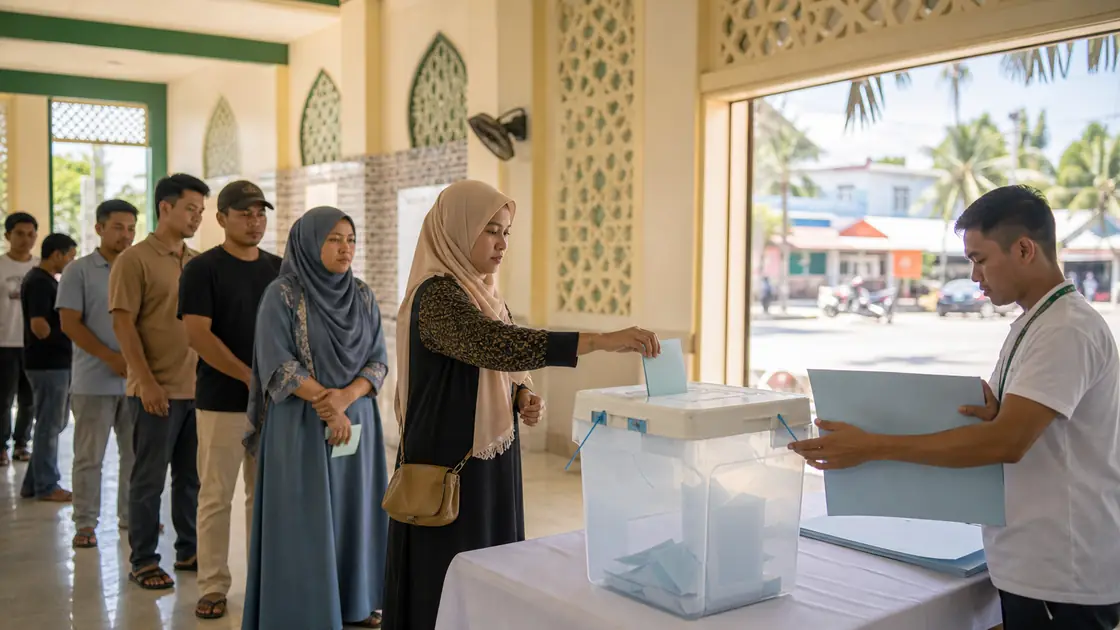
On September 14, voters across the Bangsamoro Autonomous Region in Muslim Mindanao choose the region's first regularly elected parliament. The vote fills 80 seats held since 2019 by an appointed transition body, and it comes after four postponements and a heavy security buildup that followed an ambush on the chief minister's convoy in mid August. About 2.4 million voters are registered across the region's five provinces and its cities.
Frequently Asked Questions
Why is this the first regular Bangsamoro election?
Previous regional leaders served through a temporary transition arrangement. The new poll gives residents their first opportunity to replace that interim structure with representatives carrying a direct electoral mandate.
What the September 14 vote decides
Voters choose all 80 members of the Bangsamoro Parliament, the law making body of the five province region. Of the seats, 40 go to political parties, 32 to district representatives, and 8 to reserved and sectoral seats filled under separate rules. A party or coalition needs 41 seats to hold a majority and select the next chief minister, who leads the regional government.
The region has been governed since 2019 by the Bangsamoro Transition Authority, a body whose members were appointed rather than elected. The vote carries out a step promised under the 2018 Bangsamoro Organic Law and set in motion by Republic Act 12317, signed in March 2026 after the schedule slipped four times. Officials elected that day take office at noon on October 30 and serve until June 30, 2031.
How many voters and where
The Commission on Elections listed about 2.4 million registered voters, and it had printed roughly 2.39 million ballots by late July. Voting covers 105 municipalities and two cities across Lanao del Sur, Maguindanao del Sur, Maguindanao del Norte, Basilan, and Tawi Tawi.
Lanao del Sur holds the largest share of voters at more than 727,000, close to a third of the total, followed by Maguindanao del Sur and Maguindanao del Norte. More than 600 candidates filed for the contested seats, running as parties, district hopefuls, and independents.
The security buildup
The military and police moved thousands of personnel into the region. The Armed Forces of the Philippines said it deployed more than 10,000 soldiers, while the national police added about 8,300 officers. On August 30, the Army's 10th Infantry Division sent off an infantry battalion and a reconnaissance company from its headquarters in Mawab, Davao de Oro, to reinforce units in central Mindanao and Basilan.
Election officials placed 108 areas under watch, grouped by risk level. They stressed that a red label points to a history of election violence rather than active fighting. Poll chairman George Garcia said the period had been peaceful and orderly, with no recorded violation and no arrests at more than 160 checkpoints since the election period opened in mid July.
The ambush that raised the stakes
Security tightened after gunmen ambushed the convoy of Chief Minister Abdulraof Macacua on August 15 along a national highway in Datu Odin Sinsuat, Maguindanao del Norte. Three vehicles were hit, but Macacua and his companions were not hurt. He had taken over a regional party that same day and later filed to run as an independent in a Maguindanao del Norte district.
The contest lines up the United Bangsamoro Justice Party, the political arm of the Moro Islamic Liberation Front led by former chief minister Murad Ebrahim, against a field of regional parties and independents. The result decides whether the former rebel movement that signed the 2014 peace deal can turn its transition role into an elected mandate, a question that runs through the whole exercise.