Bangsamoro election
BARMM Chief Minister Macacua Survives Convoy Ambush Weeks Before Bangsamoro Election
August 21, 2026 · Joshua S Bariñan
Gunmen ambushed the convoy of Bangsamoro interim chief minister Abdulraof Macacua on a national highway in Maguindanao del Norte on August 15. He and his escorts were not hurt. The attack came less than a month before the first regular election of the Bangsamoro Parliament, and both Malacanang and regional leaders said the vote will still go ahead on September 14.
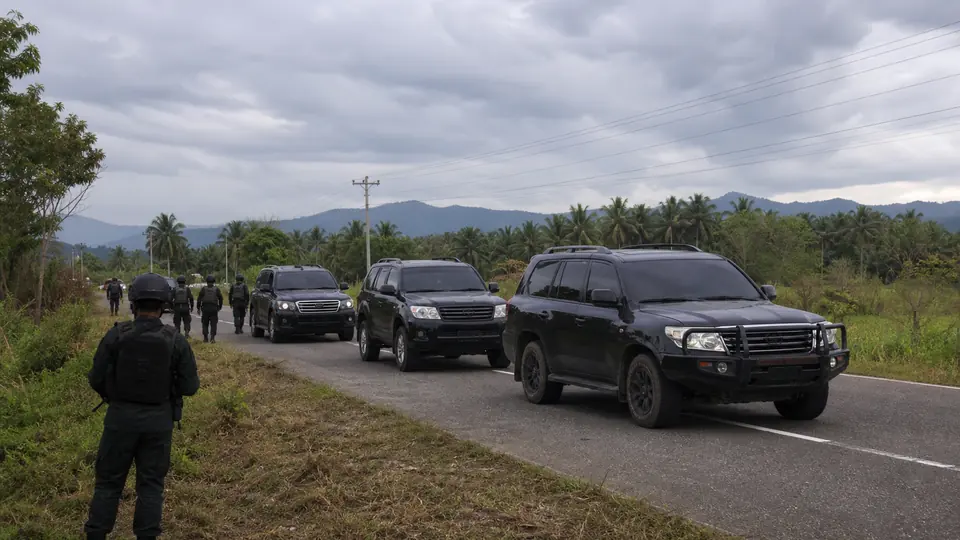
Bangsamoro interim chief minister Abdulraof Macacua survived an ambush on his convoy in Datu Odin Sinsuat on August 15. Nobody in the convoy was hurt, and officials say the September 14 parliamentary election will still proceed.
What happened on the highway
Armed men opened fire on the three vehicle convoy of Bangsamoro interim chief minister Abdulraof Macacua at about 4:50 in the afternoon of August 15 in Barangay Bitu, Datu Odin Sinsuat, Maguindanao del Norte. The attack took place along the General Santos to Cotabato national highway.
The armored Toyota Land Cruiser that Macacua was riding, along with the two other vehicles, was struck by rifle fire. He and his security escorts were not wounded. The convoy did not stop and continued until it reached the Bangsamoro Government Center in Cotabato City.
Macacua was on his way back from Barangay Gambar in Mother Kabuntalan, his home village, where he had joined a proclamation rally of the Bangsamoro Federalist Party. No suspects have been named, and the police and military are still tracing the gunmen.
Who Macacua is and why the timing matters
Macacua heads the interim government of the Bangsamoro Autonomous Region in Muslim Mindanao. He was recently installed as chairman of the Bangsamoro Federalist Party after earlier moving to run as an independent, and he is seeking the seat for the third district of Maguindanao del Norte.
That seat is on the ballot in the first regular election of the Bangsamoro Parliament, set for September 14. The attack on a sitting chief minister who is also a candidate raised immediate worry about how safe the campaign period will be in the region.
Macacua called the attack a cowardly act. He said it does not weaken his resolve to hold the vote and that the voice of the people, rather than the force of arms, should decide the future of the region.
How the government and rival leaders responded
President Ferdinand Marcos Jr. condemned the attack and ordered agencies to tighten security across the region and to identify who was behind it. He assured the public that the incident will not stop the election from pushing through.
Commission on Elections chairman George Erwin Garcia directed the Philippine National Police and the Armed Forces of the Philippines to find the attackers and bring them to court. Muslimin Sema, who chairs a faction of the Moro National Liberation Front, described the assault as a direct blow to regional stability and to gains from the peace process that took decades of sacrifice.
Security going into the September vote
The police and the army are running a joint investigation, and no group has claimed responsibility. Officials have not confirmed a motive, though the attack fits a pattern of election related violence that has shadowed past polls in the area.
About 8,299 police personnel have already been sent to secure the Bangsamoro polls. The election will fill 72 of the 80 seats in the parliament, with roughly 2.3 million registered voters and 13 regional parties in the contest. It is the first time voters in the region will choose their own parliament rather than have an appointed transition body govern them.
What investigators and election officials face next
The immediate criminal investigation and the broader election security effort now run on separate tracks. Police and military investigators must identify the shooters, establish how they approached and left the highway, and determine whether the attack was connected to the campaign. Election officials, meanwhile, must plan for voting in the same communities without treating an unproven motive as settled fact.
That distinction matters because Macacua holds three roles at once: interim chief minister, regional party leader, and district candidate. An attack on his convoy therefore touches public security, the administration of the regional government, and confidence in the contest. Officials have promised tighter protection, but they have not announced a suspect or presented evidence that assigns responsibility to a political rival or armed organization.
The test before September 14 is whether the security response can protect candidates, voters, election workers, and journalists while keeping the campaign open. The vote is intended to replace an appointed transition authority with an elected parliament. A credible investigation and an orderly poll would support that transition; unanswered questions or further attacks would deepen public concern even if voting proceeds on schedule.
Sources and verification
Reader response
- Views
- 9
- Shares
- 0
- Rating
- Not rated
- Comments
- 0