National Security
Army Pivots to Territorial Defense in Northern Mindanao
September 30, 2026 · Joshua S Bariñan
Military leaders say Northern Mindanao and Caraga have cleared enough of their communist insurgent threat that the Army can now shift its main mission toward territorial defense, community security, and support for local governments. The change follows a national push from the Armed Forces of the Philippines and comes with a wave of new battalion commanders across the region.
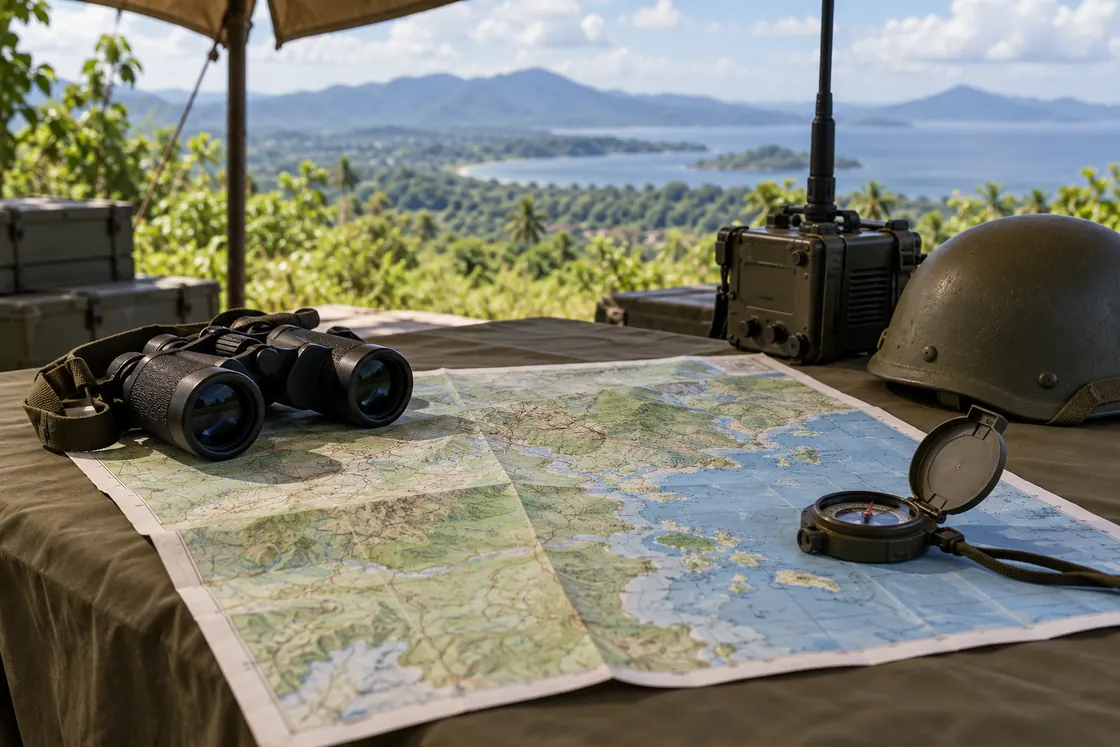
The announcement marks a transition from counterinsurgency toward coastline and territorial readiness while retaining support for local governments. The practical timetable for changing deployments has not yet been published.
Military Priorities Shift in Northern Mindanao
Armed Forces of the Philippines Chief of Staff General Antonio Nafarrete said the military will focus more on territorial defense, community security, and support for local governments in Northern Mindanao and Caraga, after seven guerrilla fronts in the area were reportedly dismantled.
The statement was made during a visit to a military facility in the region, with an accompanying image placing the announcement at Camp Evangelista, headquarters of the Army's 4th Infantry Division in Cagayan de Oro City.
The shift reflects years of counterinsurgency operations across Northern Mindanao and Caraga, where the Army has reported a steady decline in active guerrilla fronts since the region was first declared largely clear of organized insurgent units.
New Commanders Reinforce the Shift
The 4th Infantry Division, under Major General Marion Angcao, has installed new leadership across several battalions in Northern Mindanao and Caraga in recent weeks to carry the new focus forward.
On September 12, Lieutenant Colonel Emmanuel Aranas Jr. took over the 58th Infantry Battalion in Claveria, Misamis Oriental, from Lieutenant Colonel Leoncito Grezula Jr.
On September 28 at Camp Edilberto Evangelista, Lieutenant Colonel Rodulfo Cordero Jr. assumed command of the 29th Infantry Battalion in Cabadbaran, Agusan del Norte, taking over from Lieutenant Colonel Mark Tabon, whose unit was credited with dismantling the North Eastern Mindanao Regional Committee. The same day, Lieutenant Colonel Jaime Mendaros Jr. took over the 26th Infantry Battalion in Talacogon, Agusan del Sur.
Angcao told outgoing officers their gains had helped secure the region, while challenging incoming commanders to preserve those gains and adapt to changing security conditions.
Where the New Defense Focus Comes From
The Northern Mindanao pivot follows a broader directive from President Ferdinand Marcos Jr., who in August told the Army, under Commanding General Lieutenant General Donald Gumiran, to speed up its shift toward external defense and build a force able to secure the country's land domain and territorial integrity.
Nafarrete had already signaled this direction when he took over as AFP chief of staff in July, telling troops at Camp Aguinaldo that strengthening territorial defense and operationalizing the Comprehensive Archipelagic Defense Concept was the military's foremost imperative, while pledging to preserve the gains made against communist insurgents and local terrorist groups.
Marcos also told the Army to stay ready for disaster response duty even as it shifts focus, and called on military leaders to protect the trust of the Filipino people while investing in soldiers' welfare.
Joint Drills Test the New Posture
Earlier this year, the territorial defense shift was already visible on the ground. In March, United States and Philippine Army troops held a two week exercise in Cagayan de Oro that included coastal landing simulations at Macabalan Bay, described by Major General Michele Anayron of the 4th Infantry Division as the first exercise of its kind in Mindanao.
Officials at the time said the drills were limited to humanitarian assistance, disaster response, and joint training, and were not connected to regional conflicts such as tensions in the West Philippine Sea.
City officials said the American troop presence tied to the drills was confined to specific activities near Lumbia Air Base, with the bulk of the exercise held separately at a training reservation in Bukidnon.
What This Means for Northern Mindanao Communities
For residents, the shift signals that day to day security work in areas once contested by insurgents will lean more on police, local governments, and community programs, with the Army's role increasingly centered on defense readiness rather than internal counterinsurgency patrols.
Local government units that partnered with the military on peace and development programs during the counterinsurgency years should expect continued coordination, since officials have framed the transition as building on existing community engagement rather than withdrawing from it.
What still needs to be verified locally is how quickly troop deployments or community security programs will change on the ground, since the announcements so far describe a national policy direction rather than a detailed regional implementation plan.
Sources and verification
Reader response
- Views
- 5
- Shares
- 0
- Rating
- Not rated
- Comments
- 0