Zamboanga Peninsula / Zamboanga City / Zamboanga City
Yakan weaving village
Edited by Joshua S Bariñan
Best for
- Culture context
- Zamboanga City
Map address
Place guide
Updated June 2026
Upper Calarian vs. Canelar Barter Trade
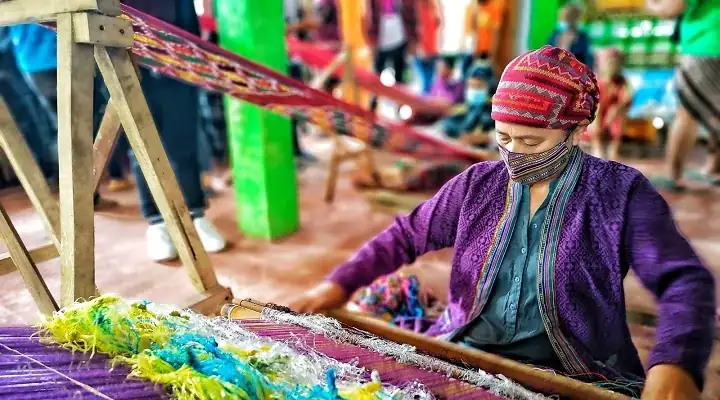
The Yakan Weaving Village in Upper Calarian is the main place to buy authentic textiles. Here, you buy directly from weavers like those at the Tuwas Yakan Weavers cooperative.
Buying at the source ensures that the ₱800 to ₱1,500 per meter price for raw textile goes directly to the maker. You can watch the backstrap looms in action and check the thread count and pattern complexity in person.
The Canelar Barter Trade Center in the city center is more convenient but requires a careful eye. While many stalls sell Yakan accessories like bags (₱300-₱1,500) and wallets, some vendors mix in factory batik or fabrics made by machine.
If you want genuine handwoven Yakan "tennun," ask for "handloom" and check for the slight irregularities of backstrap weaving. Avoid treating Yakan textiles as generic decorative fabric; preserve maker attribution and community context where possible.
How to Commission Custom Yakan Textiles
Commissioning a custom piece is a slow process. A standard Yakan cloth with several colors takes about five full days of weaving for a single meter. Complex patterns like the "Saputangan" are woven from memory without a guide, take much longer to make, and can cost over ₱3,500 for a single headcloth.
To start a commission, visit established makers like Evelinda Otong-Hamja or cooperatives like Angie’s Yakan Handloom. You can choose your color palette and pattern (such as "bunga sama" or "panyis-panyis").
Most weavers require a 50% down payment for threads, with the balance paid upon completion. In 2026, many weavers also accept commissions via Facebook, though visiting in person is the best way to ensure dimensions are correct.
Pricing Guide and Ethical Buying
Pricing reflects the labor involved in Yakan weaving. Expect to pay ₱500 to ₱1,200 for table runners depending on length, and ₱350 to ₱600 for high quality pillowcases.
Smaller items like lanyards and pouches are available for ₱100 to ₱250. Haggling is generally discouraged at the Weaving Village out of respect for the weavers' skill, especially because the price reflects days of loom work rather than souvenir markup.
These pieces are often framed as art rather than used as utility fabric. When buying raw textile by the meter, ask about the "Bunga" (flower) or "Pukull" (fish) motifs to better understand the story behind the piece you are taking home. Motifs like Bunga Sama (python) and Kenna-Kenna (fish) carry deep meaning, and weavers can explain the stories behind the geometric designs.
Logistics and Transport in Zamboanga
Reaching the Yakan Weaving Village from downtown Zamboanga is straightforward. A tricycle ride costs roughly ₱50 to ₱100 for a special trip, or you can take a jeepney bound for Upper Calarian or Labuan for ₱15. The village is about seven kilometers from the city center along the Labuan-Limpapa National Road.
Most shops at both the Village and Canelar operate from 8:00 AM to 5:00 PM daily. If you are on a tight schedule, the Zamboanga International Airport also features a small selection of authentic Yakan goods in the departure lounge, though the variety is much smaller than at the source in Upper Calarian. For the best selection of raw cloth, the village remains the only viable destination; Canelar is more convenient, but Upper Calarian gives buyers direct access to makers.
Local details to know
Yakan communities are strongly associated with Basilan. Zamboanga City serves as a visible market connection for Yakan textiles. Best presented as a cultural commerce stop where buyers can ask about makers, materials, and pattern meanings.
Frequently Asked Questions
How long does a custom Yakan weaving commission take?
A standard cloth one meter long takes about 5 days of weaving time. More complex patterns or larger orders can take several weeks, so it is best to plan your order well in advance of any deadlines.
Is it okay to haggle at the Yakan Weaving Village?
No, haggling is generally discouraged. The prices are set by the weavers to reflect the intensive manual labor and the high cost of quality threads.
What is the most expensive Yakan pattern?
The "Saputangan" is typically the most expensive because it is the most intricate and is woven entirely from the weaver’s memory without a pattern guide. A single piece can cost ₱3,500 or more.