Zamboanga Peninsula / Zamboanga City / Zamboanga City
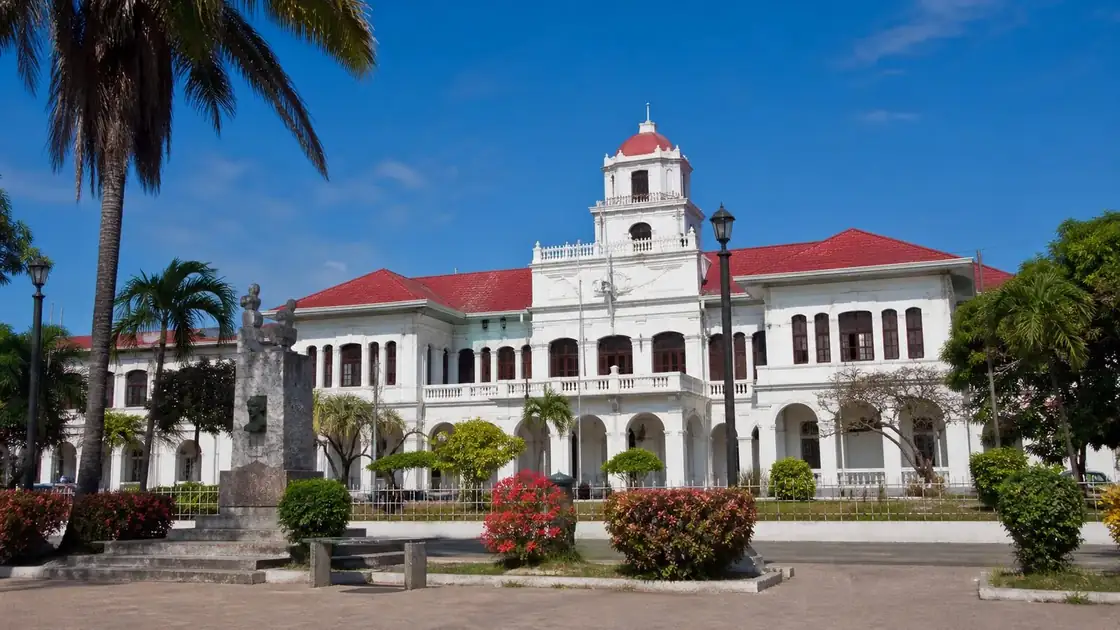
Zamboanga City Hall
Edited by Joshua S Bariñan
Best for
- Heritage landmark
- Zamboanga City
Map address
Place guide
Updated June 2026
Built for the Moro Province
Unlike many city halls built as local town centers, Zamboanga City Hall was designed as a regional powerhouse. Between 1903 and 1913, Zamboanga was the capital of the Moro Province, a vast administrative territory that included most of Mindanao and the Sulu Archipelago.
The building was completed during the term of Governor Tasker Bliss. Its Neo Renaissance design, with wide corridors, high ceilings, and red tiled roofing, was intended to project American administrative authority over the southern islands.
This role it held until the province was replaced by the Department of Mindanao and Sulu. The red tile roof and whitewashed masonry make it the most recognizable silhouette in Zamboanga’s downtown Heritage Zone. All are within a five minute walk.
Pershing, Quezon, and the Historic Balcony
The building’s most significant historical feature is its central balcony overlooking Plaza Rizal. It was from here that figures like General John "Black Jack" Pershing, who served as Governor of the Moro Province, oversaw the city’s development in the early 20th century.
Pershing is credited with much of the urban planning that still defines the surrounding streets. In 1937, President Manuel L. Quezon stood on this same balcony to deliver a speech following the inauguration of Zamboanga as a chartered city.
During World War II, the building’s strategic importance led it to be used as a headquarters for the Japanese Imperial Army before being reclaimed by Allied forces in 1945. These layers of military and political history are baked into the very stones of the facade. It shows the style of early 20th century American administration.
Current Function and Structural Integrity
As of June 2026, Zamboanga City Hall remains a working government building, though it is currently under heightened structural monitoring following the magnitude 7.8 Mindanao earthquake on June 8. While the exterior facade appears intact, interior access for the public is limited as engineers verify the integrity of the masonry that is more than a century old. Visitors can still admire the architecture from Plaza Rizal, but the typical heritage tours inside the session hall are paused.
The Public Information Office (PIO) continues to operate from the site, managing both city communications and the ongoing preservation efforts. As of mid June 2026, the City Hall is being checked for structural safety after the large earthquake on June 8. While the outside looks intact from Rizal Park, visitors cannot go inside yet while engineers finish their work.
You can take photos of the outside, but you usually need a permit for interior shots or professional equipment. City Hall is a working office open 8:00 AM to 5:00 PM.
Navigating the Heritage Zone
The City Hall anchors a compact "Heritage Zone" that is the most walkable part of Zamboanga’s downtown. It is flanked by Plaza Rizal and sits a few blocks away from Fort Pilar and the Zamboanga Cathedral.
The best time for photography is early morning, when the sun illuminates the white facade without the glare of midday. Evenings are also popular when the building is illuminated, particularly during the Zamboanga Hermosa Festival in October.
Entrance to the grounds is free, but visitors should respect the ongoing government work and the current structural safety cordons. Neat casual clothing is traditionally required if you have official business that requires entering the building lobby. Visitors should wear smart casual clothes; avoid slippers or sleeveless shirts. It is near other landmarks like Plaza Pershing, Fort Pilar, and the Santa Isabel Cathedral.
Local details to know
Construction started in 1905 during the American colonial period, and the building was completed in 1907. The building’s continued use after 119 years shows the quality of its original construction from the American period. Its age is part of why the building remains central to the downtown heritage zone.
Frequently Asked Questions
Can I go inside Zamboanga City Hall?
Currently, interior access is restricted due to ongoing structural safety checks following the June 2026 earthquake. Usually, visitors can enter the lobby and view the historic session hall during office hours, but it is best to stay outside for now.
What are the best nearby heritage sites?
The City Hall is part of a heritage cluster that includes Plaza Rizal (directly across), Fort Pilar (5 minutes walk), and the historic Santa Isabel Cathedral.
Is there an entrance fee?
There is no entrance fee to view the building or walk the grounds. It is a public government building and a National Historical Site.