Bangsamoro Autonomous Region in Muslim Mindanao / Basilan / Lamitan
Yakan culture
Best for
- Culture context
- Lamitan
Map address
Why it matters
Yakan culture is important because Basilan is often only known for security issues. The Yakan people are a unique cultural community in western Mindanao. They are famous for bold geometric weaving called tennun. This weaving is tied to maker knowledge, livelihoods, and family history. Patterns like bunga sama, sinalu'an, seputangan, and peneh pitumpu carry meanings from the natural world. Ambalang Ausalin of Lamitan was a National Living Treasure for Yakan tennun. Her family, including Vilma Ausalin, continues the tradition. The Ambalang Ausalin Museum and Gallery opened in June 2024. Weaving, community identity, performances, farming, faith, and trade all make up the story of Lamitan beyond just souvenirs.
Place guide
Tennun is living knowledge
Tennun means something that has been woven. It is the signature textile tradition of the Yakan people of Basilan. Bangsamoro cultural sources describe it through bright colors and geometric patterns. It uses materials like cotton, abaca, and silk. The cloth carries woven knowledge and is a source of livelihood.
Weaving also carries displacement history
Research on Yakan weaving in Zamboanga City links the craft to the 1970s. Conflict pushed some Yakan families from Basilan toward Lamitan and Zamboanga City. Women used their looms to support their families and keep their culture alive. Tennun represents survival, memory, and art.
Patterns carry maker memory
Yakan patterns include named designs like bunga sama, sinalu'an, seputangan, and peneh pitumpu. Motifs come from butterflies, snakes, diamonds, and plants. Ambalang Ausalin of Lamitan was a National Living Treasure for Yakan tennun. Her family, like Vilma Ausalin, continues her work.
Recognition now reaches beyond Basilan
The establishment of the Ambalang Ausalin Museum in June 2024 marked a major milestone in preserving Yakan heritage. Beyond Basilan, Yakan textiles have begun finding their way into international archives, including prestigious university museums in the United States, raising global awareness of the art form.
Festival context belongs with the weaving
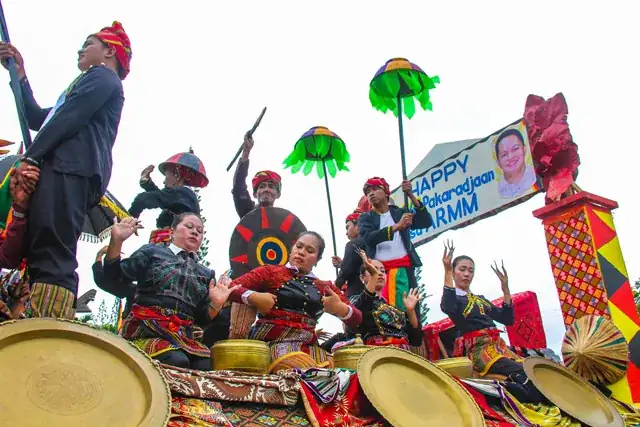
Lami-Lamihan is a Yakan term for merrymaking. The festival began in 1983 and is the major cultural event in Lamitan. In 2025, it opened at the Datu Kalun Shrine. Residents wore hand woven Yakan attire for the parade. The city name Lamitan also comes from Lami-Lamihan. The festival celebrates peace and harmony among the different local communities.
Local context
Tennun Is Living Knowledge
Tennun, meaning something that has been weaved, is the signature textile tradition of the Yakan people of Basilan. BARMM and Bangsamoro cultural sources describe it through bright colors, geometric patterns, and local materials such as cotton, abaca, and silk. The cloth carries woven knowledge and livelihood, not embroidery, costume, or background decoration.
Weaving Also Carries Displacement History
Research on Yakan weaving in Zamboanga City connects the craft to the upheaval of the 1970s, when conflict pushed some Yakan families from Basilan toward Lamitan and Zamboanga City. Women took up their looms again as a way to support families and keep cultural knowledge alive in a new setting, giving tennun a survival, memory, livelihood, and art context at the same time. That is why the textile should be treated as community practice, not just a souvenir category.
Patterns Carry Maker Memory
Yakan pattern knowledge includes named textile forms such as bunga sama, sinalu’an, seputangan, and peneh pitumpu, the cloth with 70 designs. Motifs can draw from butterflies, snakes, diamonds, rice grains, plants, and other forms connected to the natural world. Ambalang Ausalin of Lamitan, a National Living Treasure for Yakan tennun, is central to this page because maker attribution turns the textile from an anonymous object into a living lineage continued by family members such as Vilma Ausalin.
Recognition Now Reaches Beyond Basilan
A milestone for tennun preservation occurred when a Yakan geometric cloth was officially added to the Penn Museum collection in Philadelphia. This acquisition was supported by fourth generation weavers who traveled to conduct hands on workshops and public lectures about the mathematical precision of Yakan patterns. The formal acquisition of a Yakan geometric textile by the Penn Museum in early 2025 was accompanied by led by weavers demonstrations in Philadelphia, documenting the complex tennun technique for international audiences.
Festival Context Belongs With The Weaving
Lami-Lamihan, a Yakan term for merrymaking, began in 1983 under former mayor Wilfrido Furigay and remains Lamitan’s major cultural festival. The 2025 festival opened with rites at Datu Kalun Shrine and included a civic and military parade with residents wearing handwoven Yakan attire.
Local accounts also connect the city name Lamitan to Lami-Lamihan. The festival belongs with Yakan culture, peace and harmony among Yakans, Tausugs, Muslims, Christians, and other local communities rather than costume show framing. Tourism Promotions Board says Lami-Lamihan began in 1983 under former mayor Wilfrido Furigay and presents Yakan traditions through parades and horse race activity.