Davao Region / Davao Oriental / Mati
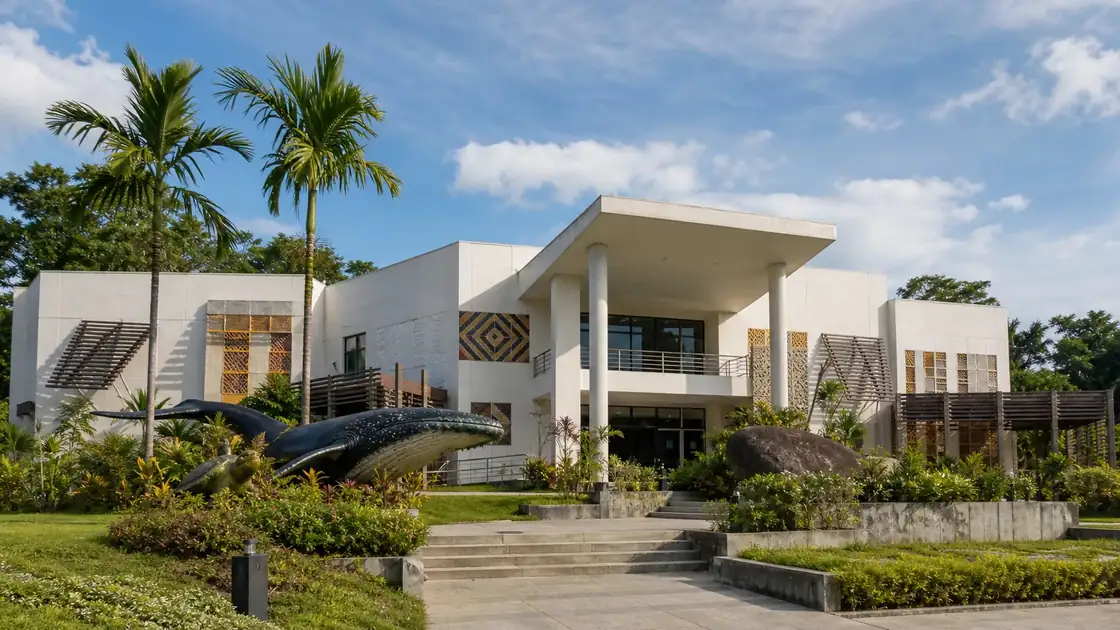
Subangan Museum
Edited by Joshua S Bariñan
Best for
- Museum
- Mati
Map address
Place guide
Updated June 2026
Davor: The 53-Foot Giant of the Pacific
The moment you walk into Subangan Museum, you stand under Davor. The sperm whale skeleton was found washed ashore in Governor Generoso in 2010, weighs nearly 20 metric tons, and gives the museum its strongest opening scene. Standing beneath the ribs of Davor, the scale registers in a way no photograph prepares you for. For most visitors, this is the first stop before heading out to the beaches of Dahican or the waters of Pujada Bay.
Mandaya Dagmay and Cultural Roots
Beyond the marine exhibits, Subangan has galleries on Mandaya and Kaagan culture. The highlight is the Dagmay, a cloth made from abaca fibers. Dagmay is famous for its dyeing technique that uses mud. The threads are soaked in mud to create deep earthy colors.
The museum displays intricate backstrap looms and finished garments that show the complex geometric patterns passed down through generations of Mandaya weavers. You can also find traditional weaponry, brass instruments, and household tools that show how the province's indigenous communities lived among the mountains and rivers long before colonial explorers arrived. Features extensive exhibits of Dagmay, a traditional mud dyed abaca cloth handwoven by the Mandaya people using ancient backstrap loom techniques.
Recovery and Memory: The Pablo Gallery
One of the most moving sections of the museum is dedicated to the memory of Typhoon Pablo (Bopha), which devastated the province in 2012. Using recovered objects, photographs, and survivor testimonies, the gallery documents the destruction of towns like Cateel and the subsequent recovery efforts.
The before and after photos of the province's landscapes make the scale of destruction concrete: the places you visit at Dahican or Mount Hamiguitan today were devastated in 2012. That context changes how you read the rest of the museum.
Houses a moving memorial and educational gallery dedicated to the survivors and victims of the 2012 Typhoon Pablo (Bopha). Includes a second floor gallery dedicated to the Mount Hamiguitan Range Wildlife Sanctuary, a UNESCO World Heritage Site known for its pygmy forest.
2026 Practical Visit Notes
In 2026, the museum remains one of the most accessible cultural stops in Mindanao. It is located at the Provincial Tourism Complex in Barangay Datu Martin Marundan, a short ₱30 to ₱50 tricycle ride from the Mati transport terminal.
The entrance fees are tiered to be inclusive: ₱100 for foreigners, ₱50 for local tourists, and just ₱30 for Davao Oriental residents. The museum is fully air conditioned and open daily from 9:00 AM to 6:00 PM. A thorough visit takes about one to two hours, and it is best to start your Mati itinerary here.
Local details to know
The whale skeleton gives the museum its strongest first impression and frames the wider exhibits on Davao Oriental's Pacific coast. It also gives context before visitors continue to Dahican, Pujada Bay, or Mount Hamiguitan.