Zamboanga Peninsula / Zamboanga del Sur / Pagadian
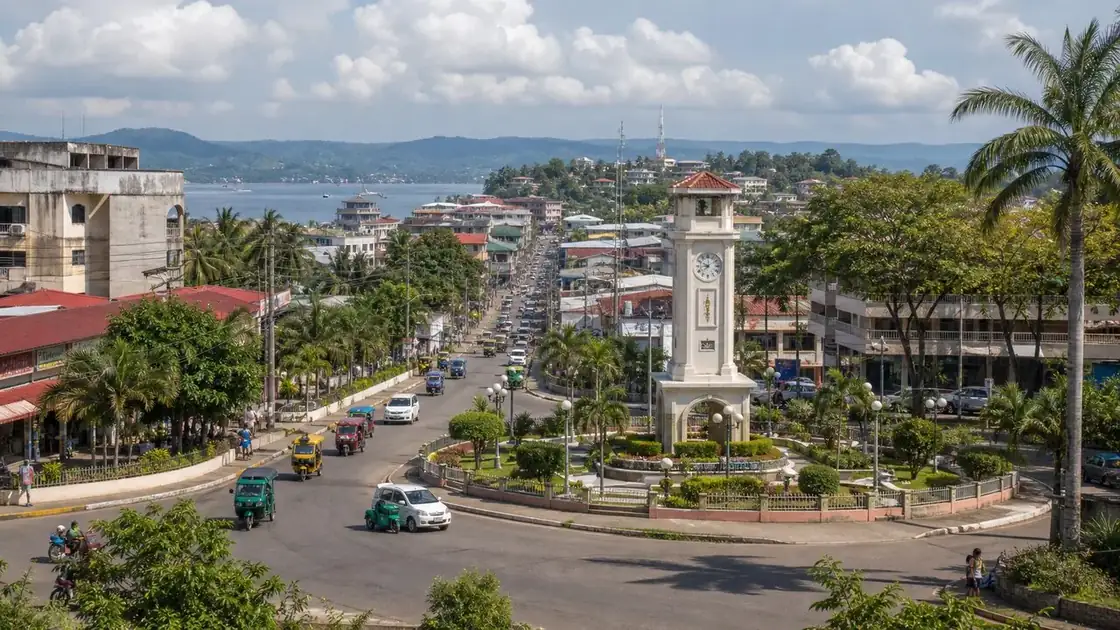
Pagadian city center
Edited by Joshua S Bariñan
Best for
- Civic district
- Pagadian
Map address
Place guide
Updated June 2026
Why the tricycles lean
The city officially brands itself the Home of the 40 Degree Tricycle, and there are around 2,850 registered units. They are built on a Bajaj RE three wheeler base and modified to lean at 25 to 40 degrees so passengers stay comfortable on steep hills. The tilt helps keep the frame balanced, and base fares are usually around ₱15 to ₱25.
Pagadian is built on a series of steep hills rising from Illana Bay, creating a unique urban landscape with roads that have up to a 10 percent incline. The tilt is not aesthetic.
On a steep downhill road, a level sidecar would pitch passengers forward uncomfortably. The lean shifts weight rearward so the frame finds gravitational balance even when fully loaded.
The base fare in older sources was ₱10, but expect ₱15 to ₱25 for short hops in 2025. The best way to experience the bao-bao is a ride up Pajares Avenue toward the Rotunda, which is steep enough to make you understand exactly why the engineering exists.
The Little Hong Kong comparison
The visual is specifically Pajares Avenue, formally called F.S. Fajares Avenue. It runs long and steep from the Rotunda at the hilltop down to Illana Bay, with buildings lining both sides all the way to the waterfront.
Stand at the Rotunda in the early evening looking down the slope toward the bay and the comparison to Hong Kong's harbor and hillside skyline is close enough to be immediately understood. The Rotunda itself is a circular park with gardens and a great view of the city and the bay.
It is free to enter. Horseback riding is available at the top. It is a good place to visit about an hour before sunset, when light comes off Illana Bay at a low angle and the city lights begin to come on below.
Festivals and the Agora market
Pagadian's Pasalamat happens on the third Sunday of January. It includes a boat procession on the bay and ritual dances in the streets, with the fluvial procession carrying Señor Santo Niño de Pagadian out onto Illana Bay from the city wharf the Saturday night before, with the Coast Guard and Philippine Navy deployed for the boats.
The festival week includes the Pasalamat Ritual Dance competition, Miss Regatta pageant, and street dancing. The Megayon Festival runs September 11 to 17, closing on the 17th which is Araw ng Zamboanga del Sur.
It celebrates unity among the Subanon, Bangsamoro, and Christian settler communities. The festival name is derived from the Subanon term for solidarity and unity, reflecting the gathering of Zamboanga del Sur's diverse communities.
The street dancing has three separate categories for each group. The Agora public market is where you find bulad, the dried fish that Pagadian is famous for, brought in from as far as Tawi-Tawi.
The central public market offers a wide variety of local dried fish. Along Pajares Avenue, Mani ni Juan sells flavored peanuts in around 65 combinations including dilis, danggit, and pusit varieties. Satti, grilled beef or chicken skewers in thick spiced peanut sauce with puso hanging rice, is the morning staple of the Zamboanga Peninsula and is widely available throughout the city.
The City with a Structural Lean
The first thing you notice in Pagadian is that the tricycles are tilted. It's the only city in the Philippines where tricycles are built with a permanent structural lean. These are usually 25 to 40 degrees to handle the steep, rolling hills. These 'bao-bao' tricycles aren't a design quirk; they are a direct engineering response to a city built on a slope. If you're coming from the flat streets of Davao or Manila, the incline feels dramatic, but for locals, it's just how the 'Little Hong Kong of the South' moves. Short trips start at a base fare of ₱15. Experiencing a ride up the main avenue highlights the practical engineering of these tilted passenger sidecars on the city's steep inclines, culminating in a beautiful view of Illana Bay from the summit.
When the Bay and Hills Meet
Pagadian is best seen during the dry months from March to June, but the real energy happens during the festivals. The Pasalamat Festival in January is the big one, where the celebration moves from the streets to a fluvial parade on Illana Bay. If you're there in September, the Megayon Festival highlights the mix of Subanen, Bangsamoro, and Christian cultures that make up the Zamboanga del Sur identity. It's a week where the hillside tricycles and the bayfront routines both get a bit more festive.
Market Runs and Bayfront Panoramas
Beyond the tricycles, the heart of the city is the public market near the port. It's where you find the freshest marang and the dried fish that Pagadian is famous for. For a quick orientation, head to the Rotunda View Deck for a view of the bay, or stop by the Plaza Luz Dancing Fountain in the evening when the Capitol Park becomes the city's main social spot.