Caraga / Agusan del Norte / Cabadbaran
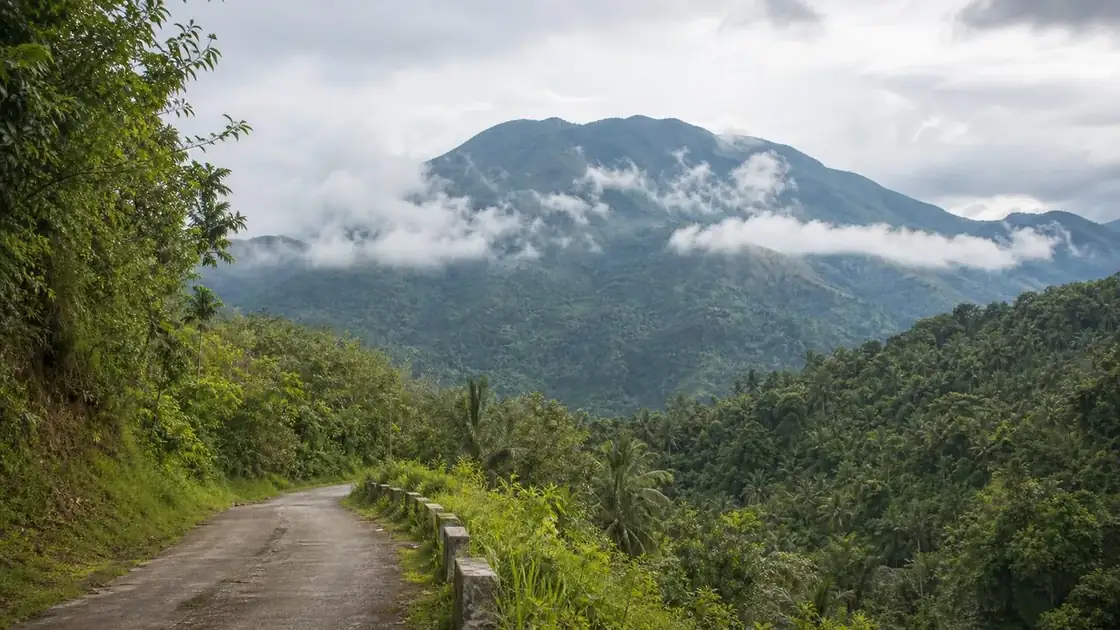
Mount Hilong-Hilong routes
Edited by Joshua S Bariñan
Best for
- Mountain route
- Cabadbaran
Map address
Place guide
Updated June 2026
The Strict Permit and Coordination Process
Because it is a critical watershed and a habitat for the Philippine Eagle, the DENR and the Cabadbaran City Government enforce a strict entry protocol. You must coordinate with the Cabadbaran City Tourism Office at least 2 to 4 weeks before your intended climb.
A formal letter of intent is often required, and you must secure clearance from the local barangays (usually Brgy. Mahaba or Brgy. Puting Bato) and the Mamanwa or Manobo tribal leaders whose ancestral domains you will cross. Always check their official Facebook page for healing periods when the mountain is closed to all visitors. The KBA summary names timber extraction and kaingin as likely pressures around the proposed Cabadbaran-Santiago Natural Park and elsewhere in the IBA.
2026 Mandatory Fees and Staffing
For a safe and legal climb in 2026, you must hire a local guide. The mandatory guide fee is between PHP 800 and PHP 1,200 per day, typically for a group of up to five climbers.
For the standard trek of four days, budget at least PHP 4,000 for the guide. Porters are highly recommended due to the extreme verticality of the trail; they charge around PHP 800 to PHP 1,000 per day for a 15kg load. Environmental and permit fees are relatively low, usually under PHP 500, but the primary cost will be the specialized team required to navigate the unmarked and challenging forest routes.
The Malvar Trail: What to Expect
The Malvar Trail is rated 9/9 in difficulty and is considered one of the toughest major climbs in the Philippines. It requires four days and three nights. The lower sections involve multiple river crossings and dense rainforest. As you ascend, you will hit steep sections where you must pull yourself up using tree roots and vines.
The upper sections are mossy forests with almost constant rain and high humidity. Water is abundant at lower elevations, but carry enough for the final summit push as sources become scarce on the ridge. The mountain is notorious for limatik (leeches), so bring alcohol sprays and wear gaiters.
Endemic Birds and Biodiversity
For birdwatchers and conservationists, Hilong-Hilong is a pilgrimage site. It sits within the Mindanao and Eastern Visayas Endemic Bird Area and is one of the few places where the Philippine Eagle is actively monitored in the wild.
You may also spot the Mindanao bleeding heart pigeon or various endemic hornbills. Because of this biodiversity, noise discipline is strictly enforced on the trail. There is zero mobile signal once you enter the forest canopy, so climbers should use satellite messengers for emergency coordination. The best window for climbing is the dry season from March to May, though rain is possible any time of year in this region.
The Key Biodiversity Areas database lists Mount Hilong-Hilong as a national KBA site. The KBA factsheet records about 3,002 hectares of residual forest, or 58% of the site.
The same factsheet identifies a 120 hectare rattan plantation established by DENR within the residual forest figure, plus about 1,682 hectares of brushland with medium sized trees and 318 hectares of grassland. The factsheet says many threatened and restricted range species of the Mindanao and Eastern Visayas Endemic Bird Area have been recorded on Mount Hilong-Hilong. Those land cover details explain why guides treat the route as a protected watershed, not only a climb.
Why you need local coordination and what you'll actually encounter
Mount Hilong-Hilong is not a casually accessible mountain. Cabadbaran City is the closest urban base, but from there you still need to arrange transport into the upland barangays, confirm trail access with the DENR or local government unit, and secure a guide who knows the current condition of the forest routes. The trails are not maintained for tourists. What exists is used by forest workers, patrol staff, and the occasional birding group.
Access and Practical Notes
The bird records are what draws most serious visitors. The Mindanao and Eastern Visayas Endemic Bird Area includes some species found nowhere else in the world, and Mount Hilong-Hilong sits inside that range. Birding here is rewarding for anyone willing to spend time quietly in residual forest. Dawn is when activity peaks, and reaching the right elevation at the right time means an early start from Cabadbaran, sometimes as early as 3 AM.
Food, Market, and Local Rhythm
The logged and regenerating sections give way to denser forest as you gain elevation, and the transition is noticeable: the bird calls change, the undergrowth thickens, and the light through the canopy changes quality. Bringing rain gear regardless of the morning forecast is important because weather at elevation can shift by mid morning. There's no food or water available beyond what you carry. Cabadbaran City has everything you need for provisioning the night before.
Frequently Asked Questions
Are there leeches on Mount Hilong-Hilong?
Yes, the mountain has a high concentration of limatik (leeches), especially during or after rain. Wear long sleeves, use gaiters, and carry a small spray bottle of alcohol or vinegar.