Davao Region / Davao del Norte / Island Garden City of Samal
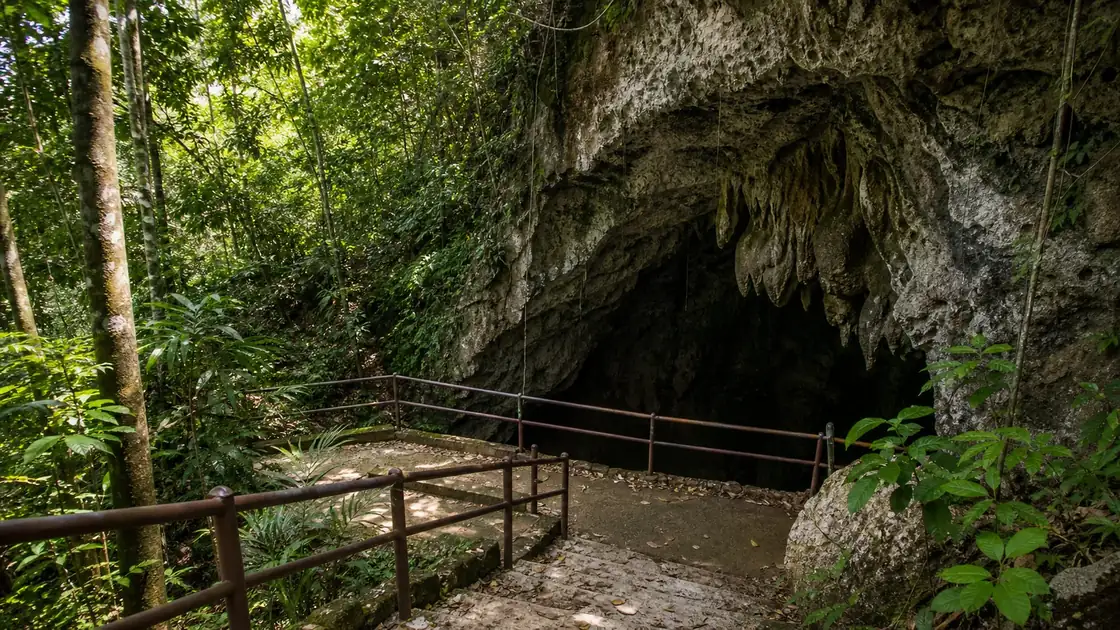
Monfort Bat Sanctuary
Edited by Joshua S Bariñan
Best for
- Wildlife site
- Island Garden City of Samal
Map address
Place guide
Updated June 2026
A World Record in Barangay Tambo
Tucked away in the quiet coastal area of Barangay Tambo, the Monfort Bat Sanctuary is one of Samal Island’s most significant ecological landmarks. It officially holds the Guinness World Record for the Largest Single Colony of Geoffroy’s Rousette Fruit Bats in the world. As of June 2026, the colony has grown to an estimated 2.5 million individuals, packed so tightly within the five cave openings that they cover nearly 75 percent of the interior walls and ceilings, with a density of up to 750 bats per square meter.
The sanctuary is managed by the Monfort Bat Cave & Conservation Foundation, founded by Norma Monfort. Recognized as a Disney Worldwide Conservation Hero, Norma has spent decades protecting this private property from urban development and disturbance.
Unlike many other wildlife sites that prioritize entertainment, the visit here is strictly controlled to ensure the colony remains undisturbed, with viewing conducted from designated platforms outside the cave entrances. Visitor and conservation accounts commonly describe the colony at roughly 1.8 million fruit bats within a single cave system. Visitors view from designated areas outside cave openings rather than freely entering the full cave system.
Pollinators of the Durian Capital
The bats of Monfort are essential to Davao’s agricultural economy. These megabats (*Rousettus amplexicaudatus*) are the primary pollinators of durian trees.
Durian flowers only bloom and are receptive to bats that feed on nectar at night, making these bats essential for the fruit’s production. Without this massive colony, the region’s billion peso durian industry would face immediate collapse.
Beyond durian, the bats forage for fruit and nectar across Samal and Davao City and spread seeds for local forest trees. They navigate using audible clicking sounds, a simpler form of echolocation than the ultrasonic calls that most bat species use.
The Circadian Flight Experience
While the sanctuary is open throughout the day, the most dramatic time to visit is during the late afternoon. Around 5:00 PM to 5:30 PM, the "Circadian Flight" begins.
This is a massive, coordinated emergence where millions of bats spiral out of the cave openings in a "tornado" formation. This nightly exodus for foraging is an impressive sight that can last nearly an hour.
For a deeper experience, special "night viewing" tickets (₱200) are available by appointment for small groups. These tours allow you to observe the colony under low intensity red lights, which do not disturb the bats' sensitive vision. It is during these hours that you can best appreciate the scale of the colony as the air literally hums with the sound of millions of wings beating simultaneously.
Practical Visit Notes 2026
Entrance fees for 2026 are ₱120 for adults and ₱60 for children, with a small ₱5 environmental fee collected by the LGU. One essential tip for first time visitors: bring a face mask or a light cloth to cover your nose.
The concentration of guano (bat droppings) within the caves creates a very strong ammonia scent near the viewing decks, which can be overwhelming for some. Flash photography is strictly prohibited, as it can cause panic within the colony.
The site is a quiet zone, and guides are required for all visitors to explain the conservation rules and the history of the site. Most travelers spend about 45 minutes at the site, making it a perfect pairing with other northern Samal attractions like Hagimit Falls or the nearby beach resorts.
How to Get There from Davao
Getting to the sanctuary from Davao City is a straightforward three step process. First, take a taxi or jeepney to the Sasa Wharf.
Second, board the RORO ferry to Babak Port on Samal Island, a 10 to 15 minute crossing for around ₱12. Finally, hire a habal-habal or tricycle at the Babak terminal; the fare is typically ₱50 to ₱80 per person for the 10 minute ride to Barangay Tambo.
The road to the sanctuary is fully paved and has clear signs. If you are bringing a private vehicle via the ferry, there is a spacious parking area at the sanctuary entrance. Given its location in the Babak district, it is often the first stop for visitors arriving on the island before they head further south to the Kaputian or Peñaplata areas.
Frequently Asked Questions
Why are the Monfort bats important to Davao farms?
They pollinate durian and help spread seeds across Samal and Davao, so the sanctuary is tied to food production as well as wildlife protection.
Is it safe to visit the bat cave?
Yes, it is safe. Visitors view the bats from designated platforms outside the cave openings. However, the strong ammonia smell from guano can be intense, so a face mask is recommended.
What is the best time to see the bats fly?
The best time is between 5:00 PM and 6:00 PM to witness the nightly "Circadian Flight" as the bats emerge from the caves to forage.
Should Monfort be the first or last Samal stop?
It works well as a first northern Samal stop after Babak Port, but late afternoon is better if you want to catch the bat emergence before heading back to Davao.