Zamboanga Peninsula / Zamboanga del Norte / Dipolog
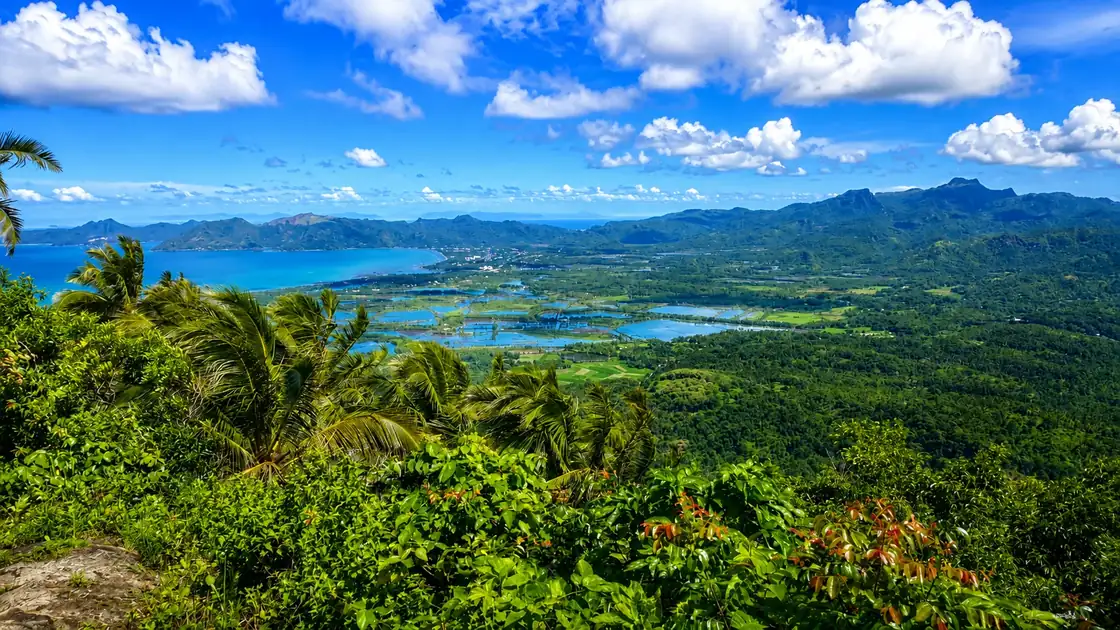
Linabo Peak
Edited by Joshua S Bariñan
Best for
- Highland route
- Dipolog
Map address
Place guide
Updated June 2026
The 3,003 Steps and the Sacrificial Climb
The ascent of Linabo Peak starts in Sitio Dinginan, Barangay Lugdungan, about six kilometers from the Dipolog city center. While the official count is 3,003 steps, the climb is a steep concrete stairway winding through the forest.
For locals, this is the site of the "Katkat Sakripisyo" during Holy Week, where the 14 Stations of the Cross provide natural resting points along the way. The climb is best started at 5:00 AM.
By mid morning, parts of the stairway are in direct sun, making the concrete very hot. Most fit hikers reach the summit in 60 to 90 minutes, but the character of the peak is found at the midway point where a permanent community has taken root.
A typical fit adult takes roughly three hours going up, and the local tourism materials call it 3,003 Steps to Heaven. Expect one and a half to two hours coming down.
Start by 5:30 or 6:00 AM. There is no chapel or shrine building at the summit; the religious element is the 14 Stations of the Cross placed along the stairway on the way up. Sunday mornings draw the most foot traffic, which adds social energy and makes the climb feel less isolated. Weekday mornings are quieter.
The Midway Village and the 1,900 Step School
Around the 1,900th step, the forest opens into a small village away from the noise of Dipolog below. This is home to families who trek these steps daily for their commute.
The most remarkable feature is the Lugdungan Elementary School extension. It is a tiny schoolhouse where students and teachers climb nearly 2,000 steps every morning to reach their desks.
Sari-sari stores in this midway village are a lifeline for hikers, selling cold bottled water, soda, and snacks. The prices are slightly higher than in the city, reflecting the effort required to carry goods up the mountain.
Resting here shows a mountain lifestyle where "going to town" means a descent that would be a workout for most visitors. The summit has a small elementary school serving the barangay community that lives year round on the peak, plus a few small stores selling cold water and snacks.
Small stores exist at the base and at the summit area, but bring at least two liters of your own water anyway. About halfway up the route passes through a small village where families live permanently.
Some residents still use horses to carry goods up the steps. The climb is as much a look at how some Dipolog residents actually live as it is a fitness or religious route.
The Summit: Four Towers and a 360 Degree View
The summit has four massive communication towers, but most people come for the view. On a clear morning, you have a 360 degree view of the Zamboanga del Norte coastline.
To the north, the curve of Dapitan Bay is visible, while the Sulu Sea stretches out to the horizon. You can see the entire grid of Dipolog City and the Galas Seaport from above.
The air at the peak is noticeably cooler and the wind is often strong. It is a quiet spot above the towers. Views on a clear day reach both Dipolog City and Dapitan City, the Zamboanga del Norte coastline, and the Sulu Sea. For those who time their climb for the sunrise, the light hitting the Sulu Sea while the city lights of Dipolog are still flickering below is the reward for the 3,003 step climb.
Practical Logistics and Trailhead Access
To reach the jump off point in Barangay Lugdungan, take a tricycle from the Dipolog bus terminal or city center. Expect to pay ₱50 to ₱100 for a "special trip," as the trailhead is roughly 15 to 20 minutes away and drivers will need to account for the empty return journey.
Habal-habal (motorbikes) are also available and can navigate the final unpaved stretch more easily. There is no entrance fee to climb Linabo Peak, but hikers are expected to keep the trail clean.
Wear sturdy shoes with good grip; while the steps are concrete, they can become dangerously slippery if it has rained recently or if moss has grown in the shaded forest sections. Bringing at least two liters of water is essential for the round trip.
Mid morning heat on the open concrete steps becomes punishing, and descent is dangerous in low light if it has rained because the steps get slippery quickly. A tricycle from the city center costs ₱100 to ₱200 for up to three passengers.
A habal-habal runs ₱50 per person one way or ₱200 or more for a private hire with waiting time. Travel time from the city center is about 15 to 20 minutes. Avoid arriving at the trailhead after midday. There are small stores at the base and top, but it is important to stay hydrated during the climb.
Frequently Asked Questions
How long does it take to climb Linabo Peak?
Most hikers take 1 to 2 hours to reach the summit and about 45 minutes to 1 hour to descend. Your pace will likely depend on how long you stop at the midway village sari sari stores.
Are there really 3,003 steps?
The official count is 3,003, though some hikers count fewer actual concrete steps as parts of the trail near the summit transition to natural rock. Regardless of the exact number, it remains a steep and sustained climb.
Is there food or water available on the trail?
Yes, there are small sari sari stores in the midway village (around step 1,900) that sell bottled water and light snacks, but it is best to carry your own primary supply.
What is the best time to start the climb?
Start at 5:00 AM or 5:30 AM. This allows you to catch the sunrise at the summit and complete the most difficult sections of the climb before the heat becomes intense at 9:00 AM.