SOCCSKSARGEN / South Cotabato
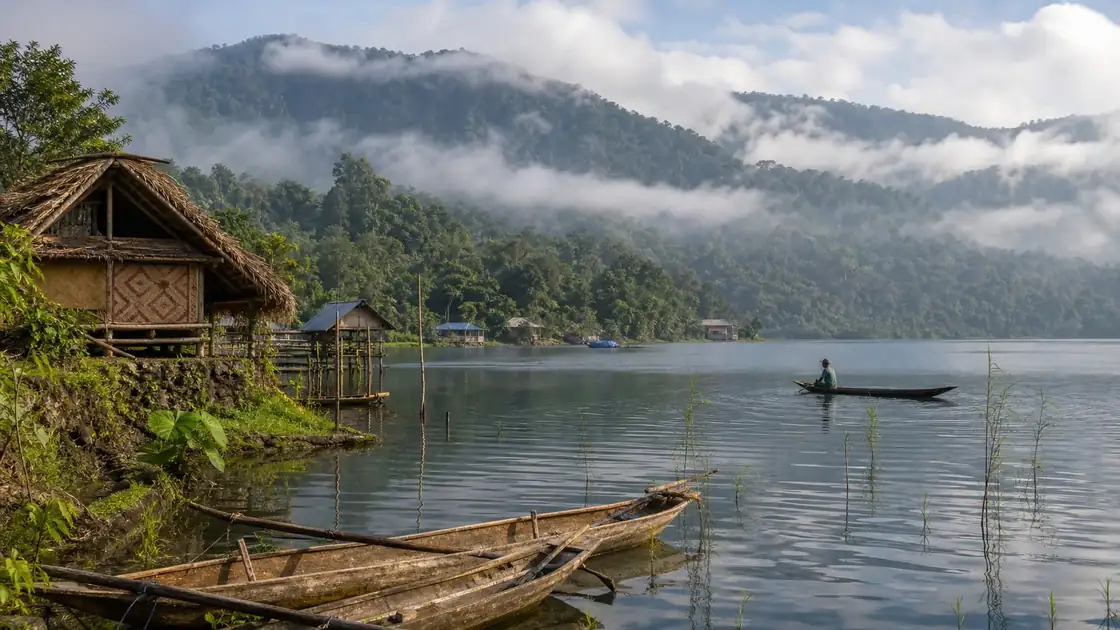
Lake Sebu
Edited by Joshua S Bariñan
Map address
Barangay Poblacion, Lake Sebu, South Cotabato 9512, SOCCSKSARGEN
Place guide
Updated June 2026
The Highest Zipline and the Seven Falls
The Seven Falls Ecopark is the main stop for adrenaline seekers. The zipline consists of two legs (400m and 750m) that soar above the waterfalls.
For 2026, weekday rates are PHP 300 per person, while weekends and holidays are PHP 350. There is a small entrance fee of PHP 20 at the gate.
If you want a photo of your ride, digital packages cost around PHP 350. At the Falls 1 area, you can also rent a traditional T'boli costume for PHP 50 to take photos against the backdrop of the cascades.
The Dawn Lotus and Canoe Tours
To see the lake at its most beautiful, be on the water by 5:30 AM. This is when the pink lotus flowers are in full bloom across the Lotus Garden section of the lake.
A traditional canoe (owong) ride costs between PHP 200 and PHP 300 for a 30 minute tour, fitting 2 to 3 people. By 9:00 AM the heat causes the flowers to close and the window is gone.
For a longer experience, resorts like Punta Isla or Sunrise Garden offer 45 minute lake cruises for PHP 500 to PHP 800, often including a demonstration of T'boli music or a lunch of fresh tilapia on a floating cottage. The lake and surrounding rainforest are associated with T'boli, Ubo, Tiruray, and Manobo communities.
T'nalak Heritage and Weaving Centers
Lake Sebu is the ancestral domain of the T'boli, and the T'nalak cloth is their most sacred export. Visit the Lang Dulay Weaving Center in Barangay Lamdalag to see the process of stripping, dyeing, and weaving abaca fibers into intricate patterns dreamed by the weavers.
Cultural etiquette is critical here: never step on the cloth, and always ask permission before taking photos of the weavers. Another essential stop is the School of Living Tradition managed by Maria Todi, where you can watch brass casting (temwel) and listen to the hegalong lute with two strings.
Donations of PHP 100 to PHP 200 are customary for these demonstrations. The municipality of Lake Sebu was created on November 11, 1982 after previously being a barangay.
2026 Logistics and Getting There
The practical route usually runs through General Santos or Koronadal, then onward by van, hired vehicle, local transport, or habal-habal. The most reliable way to reach Lake Sebu is via General Santos City. Take a van from the Bulaong Terminal directly to Lake Sebu for PHP 150; the trip takes about 2 hours.
The last direct van back to GenSan usually leaves Lake Sebu at 2:00 PM. If you miss it, take a habal-habal to Surallah and then catch a bus to Marbel or GenSan.
Within the town, habal-habal is the only practical transport. A full day tour of all major sites typically costs between PHP 600 and PHP 800 per motorcycle.
The Highland Lake Setting
The first thing to understand is that Lake Sebu is not only a scenic lake stop after Koronadal. It is a municipality, a lake system, and a lived highland landscape where houses, fish cages, farms, forest patches, craft spaces, and visitor routes sit close together.
The cool air reputation can be useful for travelers, but it is a thin reading on its own. The better read is slower: water at dawn, hills around the lake, local transport climbing from the valley, and communities whose work is visible before the tourist activities begin.
T'boli Culture And T'nalak
The strongest cultural reference is T'boli life, but the page works better when it names actual practices instead of using culture as a broad label. Weaving, brass casting, music, oral tradition, fishing, farming, guiding, and food all show different parts of the same place.
T'nalak needs that care most. It is not just patterned cloth for visitors to photograph. The value is in the maker, the abaca process, designs linked to dreams, remembered patterns, and the time women weavers spend turning cultural knowledge into a finished textile.
National Living Treasures
The National Living Treasure names connected to Lake Sebu make the cultural story unusually concrete. Lang Dulay is the public anchor for T'nalak memory, while Barbara Ofong, Bundos Fara, and Rosie Sula widen the frame to weaving from dreams, brass casting, chanting, and oral tradition.
That recognition changes the center of gravity. The important detail is not that visitors can buy or watch something cultural; it is that named masters and their lineages keep knowledge alive in a municipality where heritage is also daily livelihood.
Falls, Lotus, Lake Food
Seven Falls brings the adventure crowd, especially for the zipline, but it is only one side of the trip. The more balanced visit leaves room for the quieter lake edge, craft stops, family food places, and the transport rhythm between the town center, resorts, waterfalls, and lakeshore.
The best lake hours are early. Lotus viewing depends on morning timing, and the lake feels different before the day traffic and restaurant rhythm take over.
Food is another way the lake becomes practical instead of pretty. Tilapia connects the view to floating cages and household income, while local meals such as pastil or nilagpang add a more grounded read of where visitors are eating.
Festivals, Watershed, And Travel
T'nalak Festival in Koronadal and Helobung Festival in Lake Sebu give two different entry points into South Cotabato cultural life. Koronadal gives the provincial stage; Lake Sebu gives the local setting where weaving, basketry, brasswork, music, oral tradition, and dance remain closer to home.
A rushed day trip can work, but an overnight gives the lake a better chance: early lotus viewing, cooler weather, and enough time to see more than the waterfall stop. Lake Sebu covers about 361 hectares and sits at roughly 1,000 meters above sea level in the South Cotabato highlands. Lake Sebu is recognized as an important watershed landscape for South Cotabato and nearby agricultural areas.
Local details to know
Sebu means lake in the T'boli language, making the English place name a doubled lake reference. T'nalak is woven from abaca fiber by T'boli women using designs associated with dream traditions and Fu Dalu, the spirit or deity of weaving. The Seven Falls zipline route is one of the area's signature activities, passing above several falls in two ride segments.
Visiting Lake Sebu: T'boli Culture and the Seven Falls
Lake Sebu is a crater lake in the highlands of South Cotabato, roughly 44 kilometers from Koronadal, at an elevation of about 1,000 meters. It is the heartland of T'boli culture and the primary place to experience t'nalak weaving, traditional T'boli music, and T'boli beadwork. The Hikong Alo, Hikong Bente, and the full Seven Falls chain on the Alunan River are the most visited waterfall series in the area. A zipline across one of the falls (Hikong Bente) is a popular activity. The T'boli communities hold the Seslong Festival in early October, a harvest and thanksgiving celebration with traditional rituals and music. Best Time to Visit: November through April for drier road conditions and cooler highland weather. Avoid July through October when rains can make the mountain roads to Lake Sebu muddy. How to Get There: From Koronadal, take a van or jeepney to Surallah (about 40 minutes), then transfer to a habal-habal or another van to Lake Sebu town proper (about 30 more minutes).
Frequently Asked Questions
What is the best time to see the lotus flowers?
Be at the lake between 5:30 AM and 8:00 AM. The flowers close once the sun gets too high, usually by 9:00 AM.
Is there an entrance fee for the T'boli weaving centers?
Most weaving centers do not have a fixed entrance fee but rely on donations or the sale of their products. A donation of PHP 100 per person is a respectful gesture for the weavers' time.