Zamboanga Peninsula / Zamboanga City / Zamboanga City
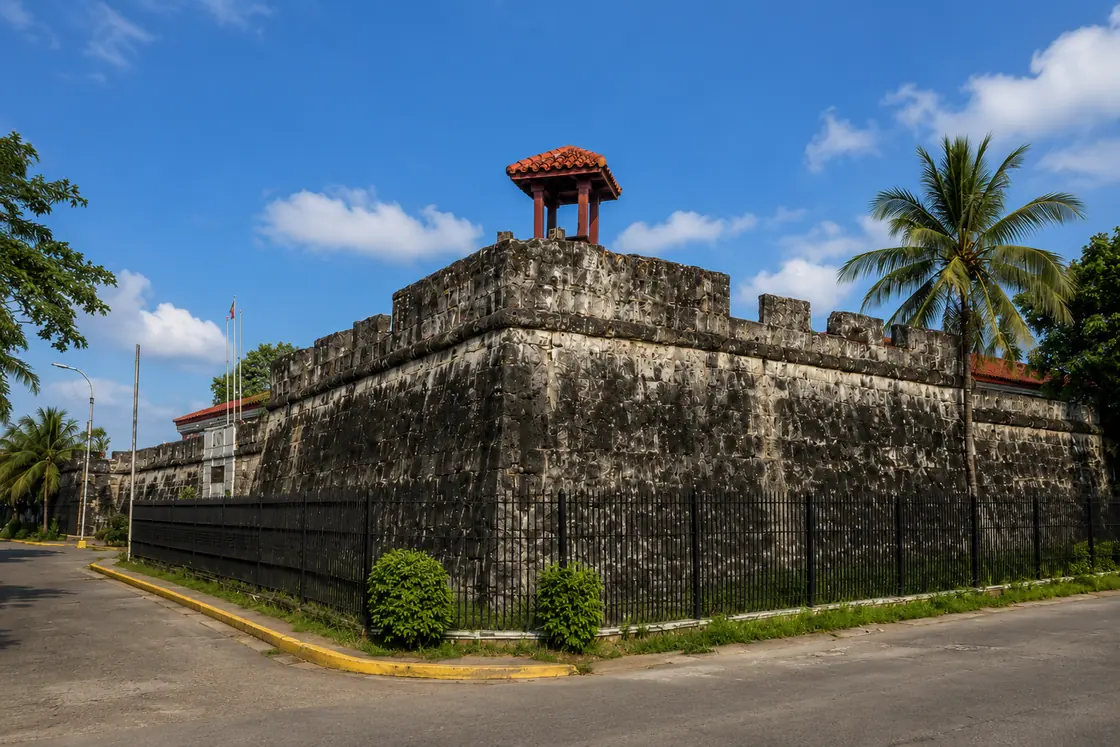
Fort Pilar
Edited by Joshua S Bariñan
Best for
- Heritage landmark
- Zamboanga City
Map address
Place guide
Updated June 2026
A Fortress of Stone and Faith
Fort Pilar, originally named Real Fuerte de San José, was built by the Spanish in 1635 to defend Zamboanga against attacks from pirates and rival colonial powers. Its massive stone walls and bastions were constructed from coral rock and local bricks, forming a square fortress that has survived centuries of conflict, including Dutch attacks and British bombardment.
Over time, the fort’s military role became inseparable from its spiritual identity, as the eastern wall was transformed into an outdoor shrine. The fort is the anchor of Zamboanga’s Chavacano identity.
For locals, it is not just a monument but a living part of the city’s daily rhythm. You will often see residents stopping by the shrine for a quick prayer or light a candle before heading to work or the nearby Paseo del Mar.
The Shrine and the Miraculous Lady
The most visited part of the fort is the outdoor Shrine of Nuestra Señora del Pilar. The relief of the Virgin Mary, located on the eastern wall, was reportedly placed there in 1734.
Devotees believe the image has protected the city from tsunamis and invasions for generations. The atmosphere here is one of quiet devotion, with rows of pews facing the wall where continuous candle lighting and prayer take place.
The shrine is open to the public even when the museum is closed, making it a reliable stop for a quiet moment at any time of day. The October Feast of Our Lady of the Pillar keeps the fort active as a religious site, not only a heritage marker.
National Museum and Historical Memory
Inside the fort’s walls, the National Museum of the Philippines operates a branch in the restored barracks, with galleries on maritime history and ethnographic culture.
A highlight of the collection is the artifacts recovered from the Griffin, an 18th century British East India Company ship that sank in the nearby Sulu Sea. The museum is open from Monday to Saturday, 8:00 AM to 5:00 PM.
Beyond the artifacts, the museum allows you to walk through the interior courtyards and climb parts of the bastions, providing a tactical perspective of how the fort controlled the Zamboanga roadstead. Note that large bags and helmets must be left at the baggage counter at the entrance. The museum component covers archaeological, ethnographic, and historical material tied to Zamboanga and western and southern Mindanao communities.
The 1899 Surrender and Vicente Alvarez
The most significant historical event at the fort occurred on May 18, 1899. General Vicente Alvarez, a Zamboangueño revolutionary leader, led a successful assault that forced the surrender of the last Spanish garrison in Zamboanga.
This victory marked the end of over three centuries of Spanish rule in the region. Following the surrender, Alvarez was proclaimed the first and only President of the Republic of Zamboanga, an independent state that existed briefly before the American occupation.
Alvarez is a local hero who united different groups like Zamboangueños, Subanens, and Muslims. His leadership at Fort Pilar is a point of local pride and is part of Zamboanga’s annual celebrations. This story shows that the fort is not just a Spanish relic, but a site of Philippine revolutionary victory.
Practical Visit Notes
The best time to visit Fort Pilar is between 3:00 PM and 5:00 PM. This allows you enough time to tour the museum before it closes, and then catch the sunset over the Basilan Strait from the fort’s exterior walls.
The lighting on the coral stones during the "golden hour" is exceptional for photography. Most visitors spend about 45 minutes to an hour there if they include the museum galleries.
The fort is located right next to Paseo del Mar, Zamboanga’s main waterfront park. After your visit, you can walk a few steps to the park’s many stalls and restaurants.
It is highly recommended to try the Knickerbocker, Zamboanga’s famous fruit and ice cream dessert, while enjoying the sea breeze. The area is easily accessible via tricycle from any point in the city center for a standard fare of around ₱30 to ₱50 depending on the distance.
- Rebuilt
- 1718 (current coral stone structure)
- Entrance Fee
- ₱20 (Adults), ₱10 (Students/Seniors)
Frequently Asked Questions
Is there an entrance fee for Fort Pilar?
There is no fee to visit the outdoor shrine. However, entering the museum galleries inside the fort costs ₱20 for adults and ₱10 for students, seniors, and persons with disabilities.
When is the Mass schedule at the shrine?
Daily morning Mass is at 6:00 AM. Evening Masses are held at 5:30 PM on weekdays, and at 5:00 PM and 6:30 PM on Saturdays and Sundays.