Davao Region / Davao Oriental / Mati
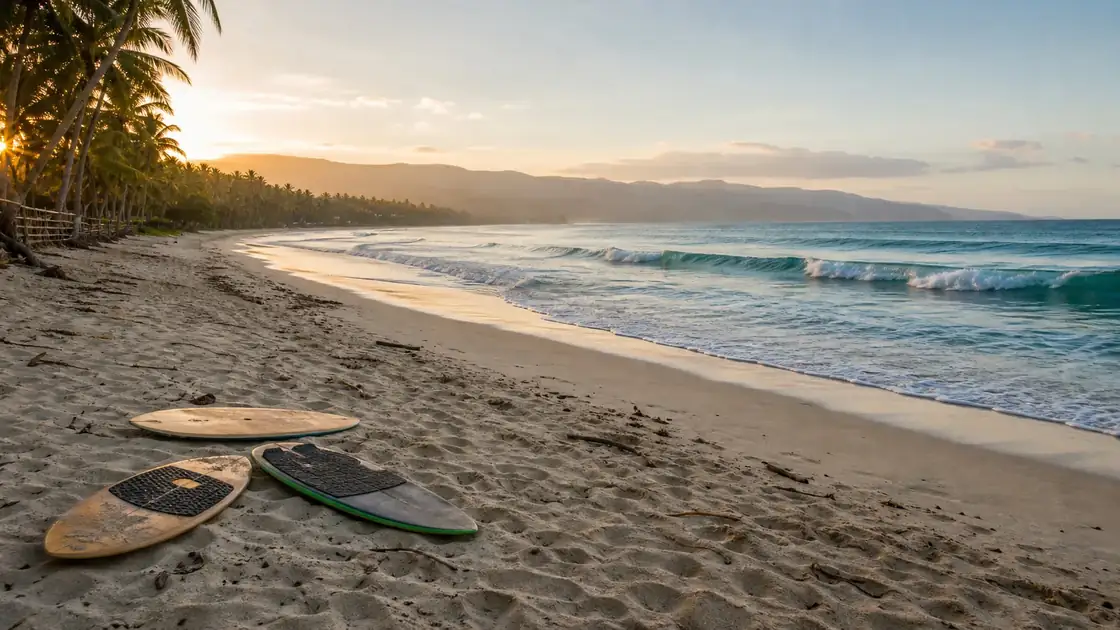
Dahican Beach
Edited by Joshua S Bariñan
Best for
- Beach and skimboarding area
- Mati
Map address
Barangay Dahican, Mati City, Davao Oriental 8200, Davao Region
Place guide
Updated June 2026
A Pacific Facing Coastal Giant
Unlike the protected waters of the Davao Gulf, Dahican faces the open ocean, which means real Pacific swell and consistent surf throughout the Amihan season. The waves here have built a genuine board sports culture that draws visitors from across the region.
The beach has several sections. The northern end, near Menzi Beach Park, is for picnics and swimming.
The central stretch is home to the Amihan sa Dahican team and is where locals go to surf and skim. Even as it becomes more popular, Dahican stays quiet and simple compared to resorts in Siargao or Boracay.
The Amihan Boys and Board Culture
The beach features a long, shallow wave runup zone made for fast skimming. This culture was pioneered and is still led by the Amihan sa Dahican team, founded by Jun Plaza.
The Amihan Boys are the primary instructors and guardians of the beach. If you are looking for lessons, seek out local champions like Winston Plaza or Mark Jude Balgua, who are known for their "No Vices" policy and commitment to local youth development.
Surfing and skimboarding lessons in 2026 remain very accessible. A one hour surfing session with a local instructor, board rental, and basic training typically costs ₱400 to ₱500.
Skimboarding lessons are slightly cheaper, ranging from ₱300 to ₱400 per hour. If you already know the ropes, you can rent a surfboard for ₱200 to ₱300 per hour, or a skimboard for ₱100 to ₱200.
A day tour entrance fee usually costs ₱100 per person which gives you access to the main shoreline areas.
June is great for calmer water and skimboarding if you want a break from the bigger Amihan swells. As of June 2026 the airport terminal is finished but commercial daily flights are still in a limited testing phase.
Pawikan Sanctuary and Conservation
Dahican is also a critical Pawikan (Sea Turtle) Sanctuary. The shoreline is a documented nesting ground for several species, including the massive leatherback and the hawksbill turtle.
The Amihan team doubles as conservationists, patrolling the beach at night to protect nesting mothers and ensuring that hatchlings make it safely to the water. As a visitor, you are expected to follow strict environmental guidelines.
Bright lights and loud music are discouraged on the beach after dark during nesting season, and the "Leave No Trace" principle is strictly enforced. Seeing a turtle release at dawn is something most visitors do not forget.
Dahican is one of the few places where active board sports and sea turtle conservation genuinely share the same beach. Visitors should avoid disturbing any marked nesting areas.
Camping and Overnight Stays
For travelers on a budget, Dahican is one of the easier beaches in Mindanao for camping. At the Amihan sa Dahican base, you can pitch your own tent for a maintenance fee of ₱50 to ₱100 per night.
If you didn’t bring your own gear, sturdier tents with mats and pillows can be rented for ₱300 to ₱500 per night. Several resorts also allow hammock pitching for around ₱50, giving you a simple Pacific coast stay.
If you prefer more comfort, Dahican Surf Resort and Menzi Beach Park offer air conditioned rooms and established cottages. Entrance fees for day tours range from ₱50 to ₱100, though these are often waived if you are staying overnight.
Regardless of where you stay, expect a "chill and grill" evening where local fresh seafood and conversations with the surfing community are the primary entertainment. Small air conditioned cottages for four people start at ₱1,800 while larger kubo rooms for groups can go up to ₱6,000.
Practical Visit Notes 2026
Reaching Dahican from Davao City is a 3 to 4 hour journey. Passenger vans from the Ecoland Terminal or G-Mall cost approximately ₱300 to ₱350.
Once you arrive at the Mati City terminal, you can hire a habal-habal (motorcycle taxi) to Dahican for ₱50 to ₱100 depending on your luggage and the distance to your resort. Cash is absolute king in Dahican.
While a few higher end resorts might accept cards, almost all surf shops, local eateries, and instructors operate on cash. Mobile signals are generally good along the coast, but it is best to have your logistics arranged before sunset, as the beach gets very dark and quiet.
Dahican pairs perfectly with a stop at the Sleeping Dinosaur viewpoint and a visit to the Subangan Museum for a complete Mati itinerary. Vans from Davao International Airport to Mati cost about ₱350 and the trip takes roughly three to four hours.
- Season
- Amihan (October to March)
- Length
- 7 kilometers of white sand
Frequently Asked Questions
Is Dahican Beach safe for swimming?
While beautiful, Dahican faces the open Pacific and can have very strong undercurrents and large waves. Always check with local lifeguards or the Amihan team before heading into the water, especially if you are not an experienced swimmer.