Caraga / Agusan del Norte / Butuan
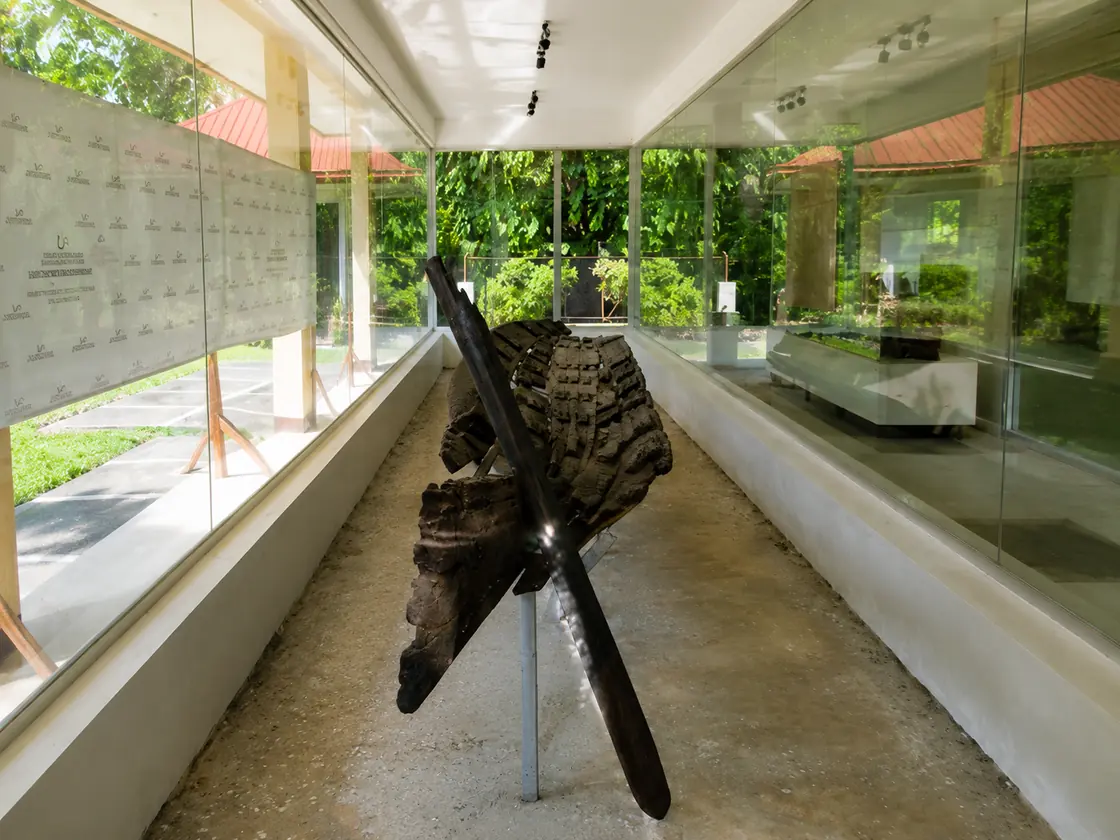
Balangay Shrine Museum
Edited by Joshua S Bariñan
Best for
- Museum
- Butuan
Map address
6th Street, Sitio Ambangan, Barangay Libertad, Butuan City, Agusan del Norte 8600, Caraga
Place guide
Updated June 2026
Boats Found In The River Sediments
The Balangay Shrine Museum in Butuan City houses one of the most important archaeological discoveries in Philippine history: ancient plank built boats found in the riverine sediments of Butuan Bay beginning in 1976. The discovery changed how precolonial Philippine maritime culture is understood because it gave physical evidence of sophisticated boatbuilding and interisland trade long before European contact.
Boatbuilding And Trade
Balangay boats were built from planks joined with dowels and lashings rather than nails. The Butuan examples place the city inside the wider Maritime Southeast Asian and Austronesian boatbuilding world.
Gold artifacts, Chinese ceramics, and other foreign goods found in related deposits strengthen the case for Butuan as an active precolonial trade center. Butuan balangay finds include very early examples and later specimens dated across the first and second millennium CE.
What Visitors See at the Excavation Site
The museum was built around the excavation pits rather than turning the boats into detached gallery objects. That matters because visitors are looking at material still tied to the sediment layers and ground where the boats were found.
The oldest commonly cited specimen is dated around 320 CE. Reading the boat in place makes the construction method easier to understand: planks, wooden dowels, and lashings forming a watercraft tradition shared across Maritime Southeast Asia.
Why It Belongs With Butuan Routes
The shrine is strongest when paired with the National Museum Butuan, the Agusan River corridor, and Banza Church Ruins. Together they show Butuan as a riverside trading center long before it became a modern Caraga service city.
Chinese ceramics, gold, and later written trade references give the balangay story a wider frame: Butuan was not isolated. It was part of regional exchange networks that connected river settlements, sea routes, and foreign trade before Spanish rule.