Wildlife
Rescued Philippine Eagle Sawaga Dalwangan Dies as a Monkey Attack Story Falls Apart
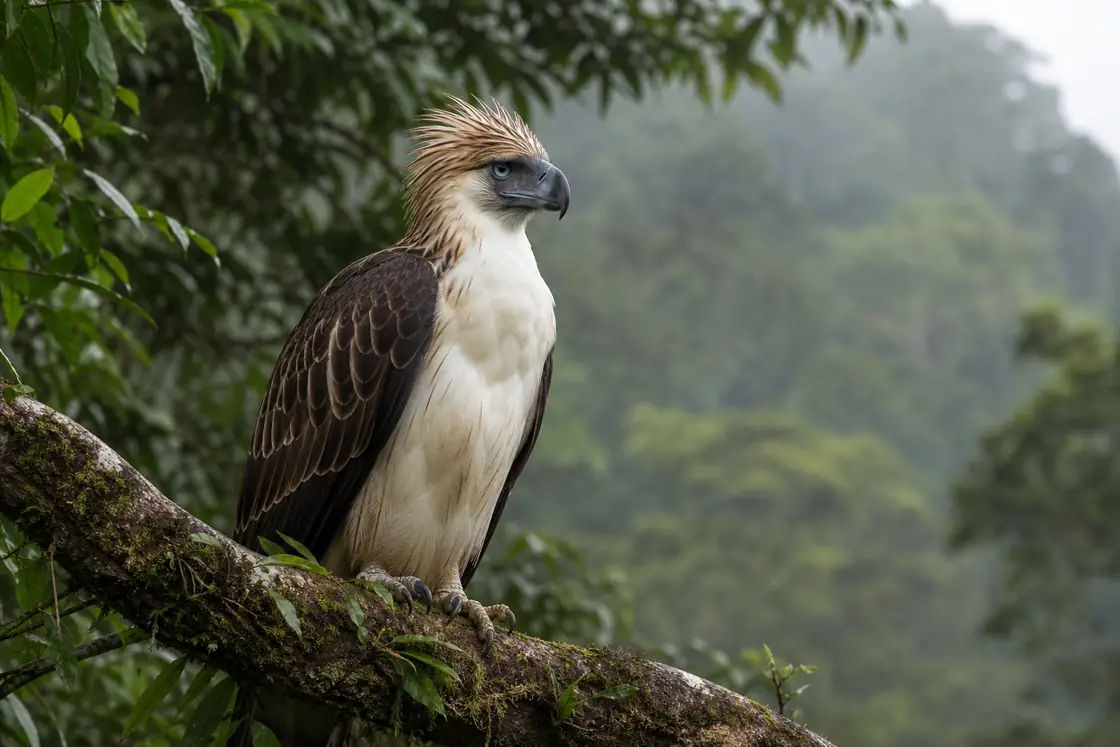
A rescued Philippine Eagle named Sawaga Dalwangan died on July 18 at the Philippine Eagle Center in Davao City, two weeks after villagers found her weak and wounded on a Bukidnon forest floor. The Philippine Eagle Foundation announced her death on Facebook and released necropsy findings that cast doubt on the widely shared account of a monkey attack, pointing instead to airgun pellets and days spent unable to move on the ground. The environment department is now investigating a possible wildlife crime.
Quick Answer
A necropsy found no sign of the monkey attack described at her rescue. It showed she had been shot with an airgun and left down on the ground for days, though the foundation says the pellets alone did not kill her and the exact cause is still being tested.
How Sawaga Dalwangan was found
A resident gathering passion fruit near the Sawaga River in Barangay Dalwangan, Malaybalay City, Bukidnon, found the eagle on the forest floor on July 3. Marvin Linoy said the bird was caked in mud, trembling, and too weak to fly. He wrapped it in his jacket and called for help, and members of the Daraghuyan Ancestral Domain Indigenous Political Structure and the Inhandig Tribal Multi Purpose Cooperative carried it out of the forest. They handed it to the Department of Environment and Natural Resources and the city government of Malaybalay the same day.
The rescuers named the adult female Sawaga Dalwangan, after the river and the barangay where she was found. She was about five years old and belonged to a species listed as critically endangered, with only a few hundred breeding pairs left in the wild. The forest where she fell sits inside the Mount Kitanglad Range Natural Park, one of the oldest documented nesting grounds for the national bird, tracked by researchers since 1986.
The account that did not hold up
Linoy first told rescuers he heard a loud commotion and found the eagle surrounded by monkeys, and that he barked like a dog to scare them off after mistaking the bird for a wild chicken. That story spread quickly as the foundation posted recovery updates and thousands of people followed her progress online.
Veterinarians later questioned it. When the Philippine Eagle Foundation examined her more closely, they found no fresh external trauma and no internal bleeding of the kind a recent attack would leave. They found instead an advanced maggot infestation and severe dehydration, signs she had been down on the ground for several days before anyone reached her. Radiographs showed two airgun pellets lodged in her body, one in a wing and one in her left thigh, evidence she had been shot at more than once.
Moved to Davao, then lost
On July 16 the foundation moved her to an isolation and rehabilitation unit at the Philippine Eagle Center in Barangay Malagos, Davao City, after tests cleared her of avian influenza and Newcastle disease. A checkup before the transfer, at a veterinary clinic run by Bayani Vandenbroeck, turned up a fresh pellet entry wound on the left thigh.
For a short stretch she seemed to be turning a corner. The foundation said she grew stronger and more alert, ate on her own, and behaved normally, preening and responding to treatment. On the morning of July 18 she suffered seizures and died despite emergency care. She had been in human hands for just over two weeks.
What the necropsy found
An initial necropsy removed one pellet from the damaged wing and left the second in the thigh, where cutting it out carried more risk than leaving it. Dr. Jayson Ibanez, the foundation's director of operations, said the pellets by themselves did not kill her. The examination also found a thickened, unusually firm heart, an enlarged liver, and a stomach stretched and packed with compacted fur from past meals.
None of those findings yet explains the seizures. The foundation said the cause of death stays open until histopathology and further laboratory work are done, and that it will release one consolidated report once the results are complete.
A shooting the government is investigating
The pellets turned a rescue story into a possible crime. The environment department is investigating with the Philippine National Police and the National Bureau of Investigation to determine whether the Wildlife Resources Conservation and Protection Act was broken. Killing or harming a Philippine Eagle carries prison time and fines under that law.
The foundation framed her death as a warning. It said her rescue was not wasted because her case will sharpen the care given to other eagles, and it repeated that shooting and trapping remain the steady threats facing the species. It thanked the people who followed her recovery and asked the public to help stop the hunting that leaves birds like her on the forest floor.