Environment
UNESCO Evaluators Assess Mount Apo in Davao for Global Geopark Status
August 21, 2026 · Joshua S Bariñan
Two UNESCO evaluators spent five days in Davao and Cotabato assessing Mount Apo's bid to become a UNESCO Global Geopark. The mission ran from August 16 to 20 and covered conservation, education, and community programs. If approved, Mount Apo would be the second site in the Philippines to earn the title after Bohol, with a decision expected in June 2027.
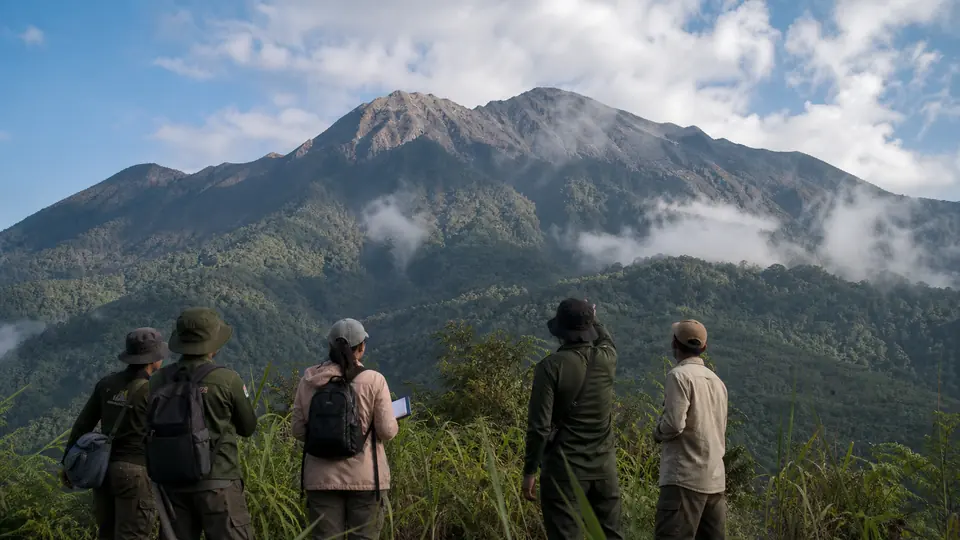
Two UNESCO evaluators reviewed Mount Apo's bid for Global Geopark status during a five day mission in Davao and Cotabato. A decision on whether it becomes the country's second geopark after Bohol may come in June 2027.
The evaluation mission
Two evaluators from UNESCO arrived in Davao City on August 16 to review the bid of Mount Apo to be recognized as a Global Geopark. The assessors were Guy Martini of France and Chenggong Zhang of China, sent to run a five day validation on the ground.
They checked the self evaluation document and application put together by the Department of Environment and Natural Resources regional offices for Davao and Soccsksargen. The papers cover conservation of the mountain, education work, and community led development around the park.
The mission opened with a stakeholders dialogue at a Davao City hotel and ran until August 20. It fell in the same week as the Kadayawan Festival, the city's yearly harvest celebration.
What the evaluators looked at
The two person team met members of the Bagobo Klata community before traveling to Digos City and Santa Cruz in Davao del Sur to meet Bagobo Tagabawa and Obu Manobo families. The visits were meant to check how indigenous communities take part in caring for the mountain.
The itinerary also took in local schools, community based eco tourism sites such as the Lake Agco hot springs, and the geothermal production field on the mountain run by a private energy firm. The mix reflects the geopark idea, which ties together geology, living culture, and local livelihoods.
Officials of the Mount Apo Natural Park presented the formal bid to secure the title. The mountain is the highest peak in the country, and the national park was closed to climbers from June to August, a period that overlapped with the review.
What the title means and what comes next
A UNESCO Global Geopark is an area with geological features of international value that is managed together with education and sustainable local development. As of July 2026 there were 241 such geoparks in 51 countries, and the Philippines has only one so far, in Bohol.
If Mount Apo passes, it would be the second site in the country to hold the title. Fourteen new applications entered the review process worldwide in 2026.
The evaluators will write a report that member states of the UNESCO geoparks program will study. A decision could be announced in June 2027 if the mountain qualifies. The status is not permanent and is reviewed every four years.
Why communities are part of the assessment
The field mission was not limited to the mountain's rocks, springs, and volcanic landscape. Meetings with Bagobo Klata, Bagobo Tagabawa, and Obu Manobo communities were central because the geopark model asks how people understand, protect, and benefit from a place. Traditional knowledge, local stewardship, education, and livelihoods are considered alongside the scientific importance of geological features.
That is why the evaluators visited schools and community based tourism sites as well as the geothermal field. A successful application must show that geological heritage is explained to residents and visitors, that conservation has practical local support, and that tourism or other economic activity is managed without undermining the landscape. The review therefore tests governance across communities and agencies, not only the quality of a single protected area plan.
Mount Apo crosses administrative and cultural boundaries in Davao and Cotabato. The application prepared by environment offices in Davao and Soccsksargen has to present those different areas as one coherent territory with shared standards. The five day visit gave the evaluators a way to compare the written application with conditions and programs on the ground.
What recognition would and would not change
A UNESCO Global Geopark designation would add international recognition, but it would not replace Philippine environmental law or local management. Existing rules for the Mount Apo Natural Park, including seasonal closures and conservation restrictions, would continue to come from national and local authorities. The designation is designed to connect protection with education and sustainable development rather than create a new sovereign or separately administered territory.
The four year review cycle also means approval would begin an ongoing obligation. Managers would need to keep documenting conservation, public education, community participation, and the condition of important sites. If the 2027 decision is favorable, Mount Apo would join Bohol as the country's second geopark and become a Philippine example of how geological heritage can be managed across several local jurisdictions.
Sources and verification
Reader response
- Views
- 3
- Shares
- 0
- Rating
- Not rated
- Comments
- 0