Power supply
Why the Mindanao Power Grid Kept Hitting Red Alert in September
September 24, 2026 · Joshua S Bariñan
The Mindanao grid ran through repeated red and yellow alerts in the first half of September, with rotational outages in the Zamboanga Peninsula and the Bangsamoro region on the worst days. The cause was not one failure but a long list of generating plants out of service, including two large coal units, which stripped hundreds of megawatts from a system with little spare capacity.
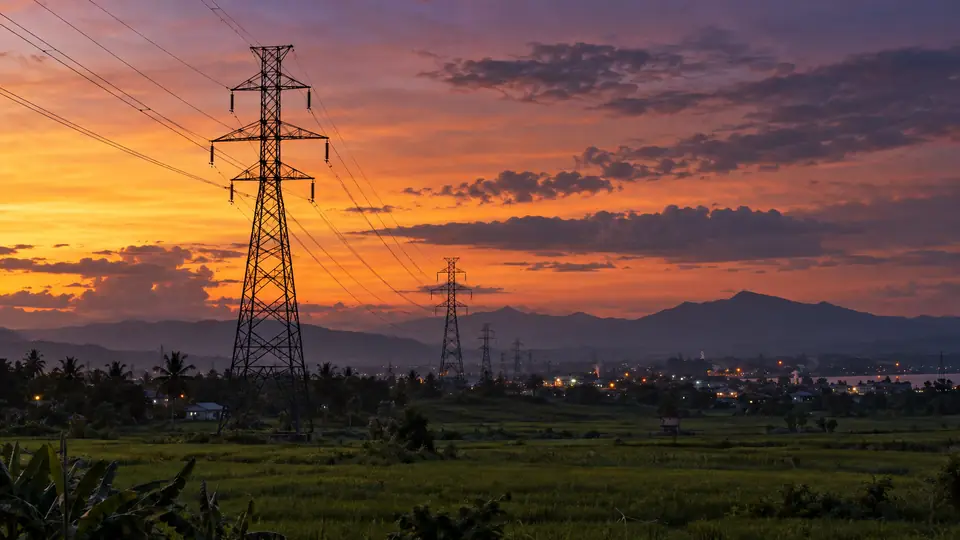
A red alert means available supply cannot cover demand plus the reserve the grid must hold, so distribution utilities rotate outages. Mindanao hit that point several times in early September because more than 20 generating units were unavailable.
What the alerts meant in practice
The National Grid Corporation of the Philippines raises a yellow alert when the operating margin is too thin to absorb another unplanned outage, and a red alert when supply cannot meet demand together with the reserve the system must hold. Under a red alert, distribution utilities cut power to blocks of customers on a rotating schedule.
That is what happened on September 2, when utilities in the Zamboanga Peninsula and the Bangsamoro region ran rotational interruptions during the afternoon and evening peaks. On September 4 the sudden shutdown of several plants produced rotating outages in other areas as well.
Davao Light and Power Company said it was tracking the situation and had activated measures to limit the effect on customers, while warning that interruptions could still happen. Distribution utilities publish their own schedules once the grid operator declares a red alert.
Grid spokesperson Bambi Capulong pointed to demand as part of the answer, saying consumers shifting heavy use away from the afternoon and evening peaks help keep the margin from closing.
How thin the margins were
The numbers moved day to day but stayed close. On September 1 the grid had 2,555 megawatts available against a projected peak of 2,450. By September 2 available capacity had fallen to 2,526 megawatts while the peak forecast rose to 2,545, a gap of 19 megawatts that pushed parts of the day into red alert.
September 3 was tighter still, with 2,480 megawatts available against a projected 2,546 and a red alert running from noon to 9 in the evening. On September 4 the forecast peak reached about 2,592 megawatts against 2,549 available, and the red alert covered 1 to 9 in the evening.
Conditions eased and returned. September 5 and September 10 brought yellow alerts only. September 8 went back to red in the afternoon and evening, with 2,673 megawatts available against a 2,639 megawatt peak. By September 11 the grid had 2,652 megawatts against a 2,545 megawatt forecast, enough for a yellow alert but not for comfort.
A margin of a few dozen megawatts on a system this size means a single large unit tripping can move the grid from stable to short within minutes.
The plants behind the shortfall
Two large coal units drove most of the gap. GNPK 1 and GNPK 2, along with TSI 2, were named in the grid operator's advisories through the first week of the month, with the forced outages dating from late August.
The rest of the shortfall came from a backlog. Alongside the units that failed in September, the grid operator counted plants that had been out since August, July, June and January, one out since 2025 and one out since 2024. Seven more were running below their rated output.
The total unavailable capacity moved with the count, reported at 617.7 megawatts on September 5, 763.6 megawatts on September 8 and 841.6 megawatts at the tightest point in the first week. More than 20 units were out of service at once during the month.
None of that capacity is lost permanently, but restoring a coal unit after a forced outage takes days to weeks, which is why the alerts repeated rather than passed.
What transmission can and cannot fix
The grid operator said on September 18 that it is targeting completion of six transmission projects worth 23.5 billion pesos this year. Spokesperson Cynthia Alabanza said those lines will not by themselves settle the supply problem, because the system can only move power that has actually been generated.
Transmission still shapes how a shortage spreads. The operator cited limited power imports from Mindanao as a factor in the Visayas alerts during the same period, since the two grids are linked by the Mindanao Visayas interconnection and draw on each other when reserves allow.
For September, the operator said transmission rates would be lower because ancillary service charges had declined, a small offset for customers during a month of interruptions.
What is in the supply pipeline
New capacity is coming from wind in Caraga. The first phase of the Caraga wind power project, rated at 36 megawatts and spread across Surigao City, San Francisco, Malimono, Sison, Placer and Mainit in Surigao del Norte, carries target dates in the second half of 2026 on the energy department's indicative list.
A second phase of the same size is listed for Jabonga in Agusan del Norte in 2029, and a 100 megawatt project at Mainit is targeted for late 2029, still working through the grid impact study stage.
Those additions are small next to the units currently out of service, and none of them changes the position this month. Until the coal units return and the derated plants recover their output, the grid stays close to its limit during the afternoon and evening peaks.
Households and businesses can check their own distribution utility for rotation schedules, which are set locally once an alert is raised rather than by the grid operator.