Kadayawan Festival
Kadayawan 2026: Davao's Harvest Festival, Its Origins, and This Year's Events
August 9, 2026 · Joshua S Bariñan
Kadayawan is Davao City's biggest yearly celebration, a thanksgiving for the harvest and for the eleven Indigenous and Moro groups whose cultures shaped the city. It grew from tribal rites in the foothills of Mount Apo into a civic festival that now anchors the city's tourism calendar every August. This year the city widened the program to 26 events on a 68 million peso budget, compressed it into about two weeks, and set the street dance and floral float parade for August 16.
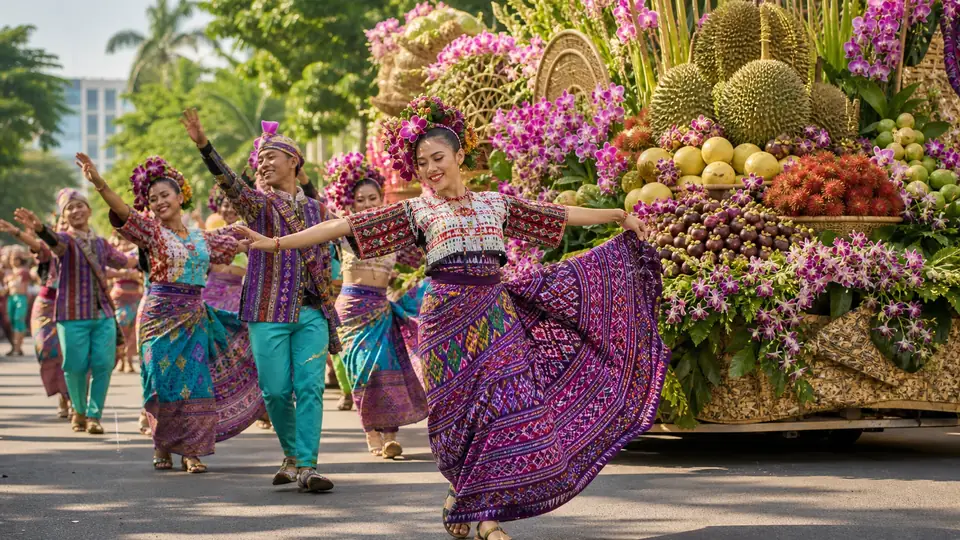
Sunday, August 16 is the key visitor date because Davao stages both signature parades that day. The broader 26-event program is concentrated around the August 14 city holiday and the long festival weekend.
What Kadayawan means and why Davao celebrates it
Kadayawan is Davao City's largest annual celebration, held every third week of August. The name comes from the Mandaya word madayaw, rooted in dayaw, which means good, valuable, or beautiful. At its core it is a thanksgiving for the harvest, for nature, and for the mix of cultures that share the city.
The festival honors Davao's eleven ethnolinguistic groups, five Lumad and six Moro, whose traditions sit at the center of the celebration. It is often called the King of Festivals in the Philippines and counts among the largest nonreligious festivals in the country, drawing visitors from across Mindanao and beyond.
Two images anchor it: flowers and fruit. Orchids and the city's durian harvest run through the floats, markets, and trade fairs, tying the modern event back to the farming roots it came from.
Where the festival came from
Long before it had a name, communities living in the foothills of Mount Apo held thanksgiving rites after a good harvest. Groups such as the Ata, the Bagobo, and the Mandaya offered fresh produce, livestock, and flowers to Manama, the supreme being in their belief, in gratitude for what the land gave.
Those rites were bound to the land and the seasons, and they brought the tribes together once the harvest was in. That gathering later shaped the idea of a shared city festival. Even the name Davao is traced by local accounts to daba daba, a word for fire, from the tribes who converged at the foot of the mountain.
How Kadayawan grew into a city festival
The shift from village rite to civic event began in 1970, when Mayor Elias Lopez, a Bagobo leader, encouraged the city's tribes to bring their thanksgiving rituals into a public celebration.
In 1986, in the last stretch of the martial law years, the city ran the festival under the name Apo Duwaling, a word built from three local symbols: Mount Apo, the durian, and the waling waling orchid. The aim then was to steady and unite a tense city.
The festival took its current name in 1988 under Mayor Rodrigo Duterte, who called it Kadayawan sa Dabaw. In 1995 he set it on firmer ground through an executive order that made it an official annual event.
The roster of honored tribes also changed over time. For years the city counted ten groups, until it formally recognized the Iranun in 2015, bringing the number to eleven. A festival theme built around ten tribes had to be corrected once the count was settled.
Recent editions kept the cultural core while the crowds grew. The 2025 festival, themed around culture and abundance, filled its grand weekend from August 15 to 17 and drew 206,506 visitors, with eleven tribal houses set up at the Kadayawan Village in Magsaysay Park.
What is happening at Kadayawan 2026
This year's festival carries the theme We are one, KadayaONE, and the city has widened it. The budget rose to 68 million pesos from 60 million the year before, and the number of events grew from 16 to 26. Organizers also tightened the calendar into a run of about two weeks rather than spreading it across the whole month.
The government declared August 14 a special holiday in Davao City through a proclamation signed in late July, creating a long Great Kadayawan Weekend from August 14 to 16. The opening stretch began earlier, with a thanksgiving Mass on August 6 and, on August 7, the Subang Sinugdanan ug Panagtagbo, a boat parade and reenactment of the peaceful meeting of the eleven groups.
The most watched events, the Indak Indak street dance and the Pamulak floral float parade, come with a new venue and bigger prizes this year. The street dance moves to the Davao Coastal Road, and the prize pot for Indak Indak reached 8 million pesos, with 1.5 million pesos for the open category winner, 1 million pesos for the top school entry, and 1 million pesos for the winning Pamulak float.
New events widen where the festival happens. Kadayawan All Over the City brings competitions and cultural displays into hotels, restaurants, and other private venues, and a new short film competition, Salida Kadayawan, opens the celebration to digital artists. Two heritage events, Tunog Kadayawan for music and Sayaw Kadayawan for dance, return this year as full competitions.
The city is preparing for a bigger turnout. Its tourism office set a target of about 250,000 arrivals for the season, higher than the previous year, backed by an agriculture and floriculture trade fair, night markets, a citywide sale through August, and a light display projected onto City Hall.
Sources and verification
Reader response
- Views
- 19
- Shares
- 0
- Rating
- Not rated
- Comments
- 0