Local economy
Davao Region's Poorest Households Still Face the Country's Highest Inflation at 11.7 Percent
October 9, 2026 · Joshua S Bariñan
The Philippine Statistics Authority's September 2026 report on prices paid by the poorest 30 percent of households puts the Davao Region level with Western Visayas at the top of all 18 regions. The figure is a small step down from August, when Davao stood alone at the top, but it remains far above the national rate for low income families and comes as power and fuel bills in the region keep climbing.
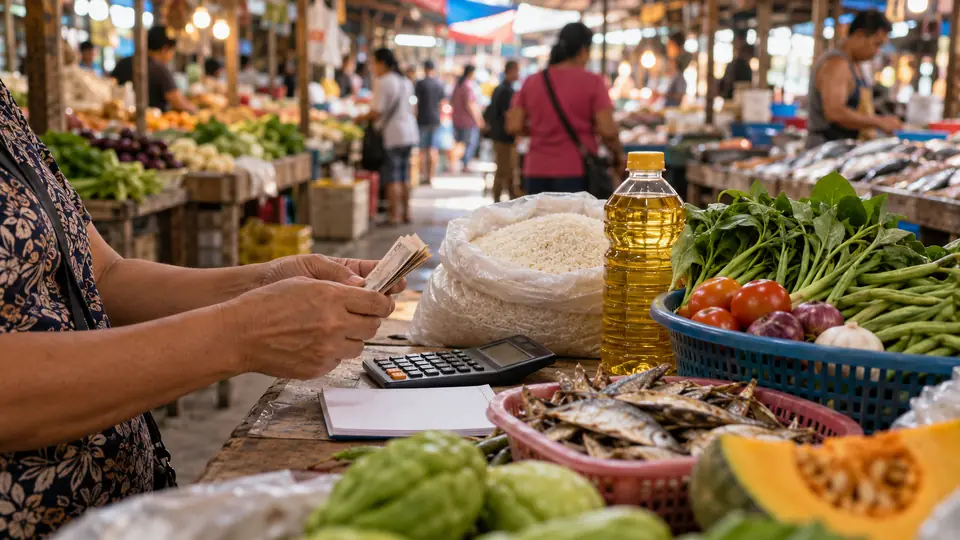
Inflation for the Davao Region's bottom 30 percent income households was 11.7 percent in September 2026, down from 12.1 percent in August but still tied for the highest in the country. Rice has been the main driver, with food making up almost two thirds of the region's low income inflation.
What the September numbers show
The PSA released its national summary for bottom 30 percent income households on October 6, 2026. Inflation for this group rose to 9.0 percent nationwide in September from 8.2 percent in August, lifting the January to September average to 6.5 percent. Eleven regions outside the National Capital Region posted faster inflation than the month before.
Two regions shared the highest rate: Western Visayas and the Davao Region, both at 11.7 percent. For Davao that is an easing from the 12.1 percent recorded in August, when it led every other region by more than a full percentage point. For Western Visayas it is a jump from 10.7 percent, which is why the two now sit together.
Food did most of the work at the national level. The food and non alcoholic beverages index for poor households rose 9.4 percent year on year in September, and food alone rose 9.8 percent, up from 8.3 percent in August. Housing, water, electricity, gas, and other fuels was the second largest contributor.
The PSA Davao Region office has not yet published its own September breakdown. It has scheduled an online report on the region's September inflation for Tuesday, October 13, 2026, at 1:30 in the afternoon, which will carry the provincial figures and the commodity detail that the national release does not include.
Why Davao's poorest are hit harder than the national average
The most recent regional detail comes from the August report. Food and non alcoholic beverages inflation for the region's bottom 30 percent reached 13.8 percent that month and accounted for 64.2 percent of the group's overall inflation, or 7.8 percentage points of the 12.1 percent total. Housing and utilities ran at 16.2 percent and transport at 13 percent.
Rice was the single biggest pressure. Rice inflation for poor households in the region accelerated to 31.2 percent in August from 27.6 percent in July. Cereals and cereal products, which include rice, corn, flour, and bread, contributed 71.7 percent of food inflation. Vegetables, tubers, plantains, and pulses rose 29.6 percent, corn 29.5 percent, and fish and seafood 13.7 percent.
The pain is uneven across the region. Davao Occidental recorded the highest August rate for poor households at 15.3 percent, followed by Davao del Sur at 13.9 percent and Davao del Norte at 13.4 percent. Davao City itself posted 8.2 percent, down from 8.5 percent in July, roughly in line with the national figure for the group at the time.
The swing from a year earlier is stark. In August 2025 the same regional index was falling at 2.5 percent, and the region closed 2025 with negative inflation for poor households as cereal prices dropped. The January to August 2026 average had already reached 9.0 percent.
Power and fuel costs add to the squeeze
Electricity has been moving the same direction. Davao Light and Power Company set its residential rate for the September 11 to October 10 billing period at P13.24 per kilowatt hour, up P0.34 from P12.90 the month before and the highest of the year. The utility blamed higher Wholesale Electricity Spot Market prices and tight supply in Mindanao during periods of high demand. The rate for the next billing cycle has not been announced.
Two measures soften the bill. The Energy Regulatory Commission ordered a secondary price cap in the Visayas and Mindanao grids retroactive to August, and it allowed Davao Light to spread part of its generation charges in equal installments from August to December. Disconnections for unpaid bills stay suspended through the October billing period under Executive Order 110.
Fuel prices remain elevated. The Department of Energy Mindanao Field Office dashboard for September 29 to October 5 put regular gasoline at an average of P86.81 per liter across the Davao Region and diesel at P94.92. In Davao City, regular gasoline averaged P86.45, diesel P94.75, and kerosene P116.59. Davao Occidental had the highest premium gasoline average among the provinces at P93.42.
How this compares with the rest of the country
Headline inflation for all households rose to 7.2 percent nationally in September from 6.1 percent in August, matching the April 2026 peak and the fastest pace since March 2023. National Statistician Claire Dennis Mapa said 11 of 13 commodity groups and 16 of 18 regions saw prices accelerate, a breadth he described as rare.
Rice inflation for all households nationwide rose to 20.3 percent from 19.4 percent. Transport ran at 14.6 percent and housing and utilities at 8.4 percent. Core inflation, which strips out food and energy, reached 4.7 percent, its highest since October 2023. Among regions, the Bangsamoro Autonomous Region in Muslim Mindanao had the highest headline rate at 9.7 percent.
The Davao Region's headline rate for all households was 8.9 percent in August, up from 8.4 percent in July, with Davao de Oro the highest province at 10.8 percent. Whether the September regional headline figure tracked the national jump will be known on October 13.
What is being done and what to watch
National agencies have responded with supply side steps. Economy Secretary Arsenio Balisacan listed the suspension of excise taxes on liquefied petroleum gas and kerosene, the wider electricity price cap for the Visayas and Mindanao, toll waivers for agricultural haulers, more palay storage, and cloud seeding in drought affected areas as the government's current tools.
The next risk for Davao's food prices is weather. PAGASA's September 23 advisory expects the current strong El Niño to become very strong before the end of 2026 and to last into the first half of 2027, with rainfall in Davao City projected to fall from November. Reduced harvests of rice, corn, and vegetables would hit the same items already driving low income inflation in the region.
Households tracking their own costs should watch the October 13 PSA XI release for the provincial numbers, Davao Light's advisory for the October 11 to November 10 rate, and the weekly DOE fuel dashboard.
Sources and verification
Reader response
- Views
- 1
- Shares
- 0
- Rating
- Not rated
- Comments
- 0