Air quality
Haze From Indonesia Fires Reaches Davao, Prompting a Health Advisory
October 28, 2026 · Joshua S Bariñan
Smoke drifting from land fires in Indonesia settled over parts of Mindanao through early September, and conditions in Davao City worsened rather than cleared. An air monitoring station in Calinan measured fine particle levels in the very unhealthy range at noon on September 7, up from the unhealthy for sensitive groups readings of the previous week. The City Health Office told residents to stay indoors, keep windows and doors closed, and wear a fitted N95 or KN95 mask outdoors. The fires behind the haze have burned more than 202,000 hectares in Indonesia this year, and forecasters warned the smoke could linger because Indonesia's rains are not expected until later in the year. The smoke returned in the third week of September, when readings across the Zamboanga Peninsula and Northern Mindanao fell into the worst bands on the scale and the Davao Region again reached levels unsafe for sensitive groups. A third wave in late October pushed Digos and Calinan into the acutely unhealthy range, the worst readings of the year.
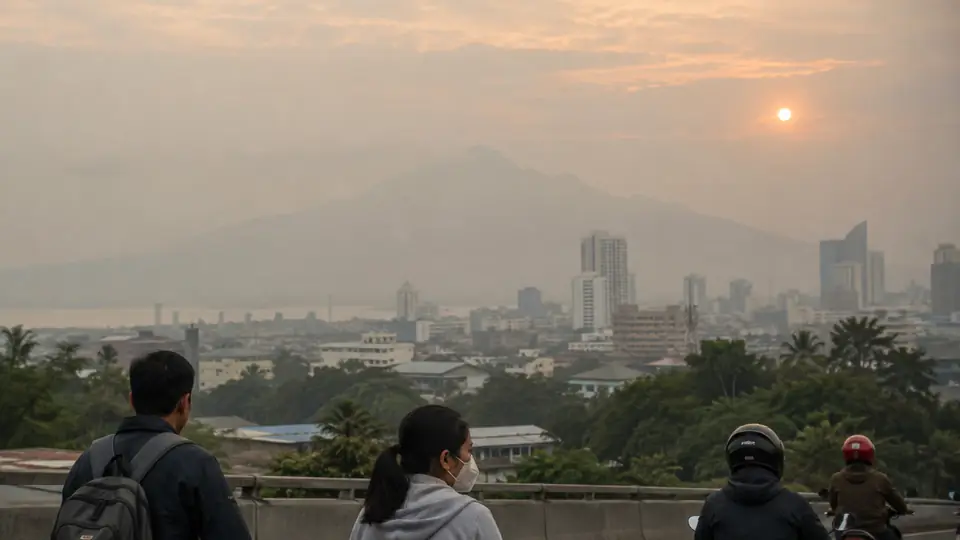
Treat the smoke as a real health risk rather than a hazy sky. Check the latest EMB reading for your area and cut back on outdoor time whenever it lands in the unhealthy range or worse.
What the advisory says
As the haze thickened over Davao City in early September, the City Health Office told residents to take the smoke seriously. District health physician Dr. Jeannie Marie Salmasan advised the public to stay indoors when air quality is poor, keep windows and doors closed, and avoid outdoor activity, with pregnant women, senior citizens, young children, and people with heart or lung conditions most at risk. Those who need to go outside were told to wear a properly fitted N95 or KN95 mask, since cloth and surgical masks give little protection against fine particles.
The office warned that haze can irritate the eyes, nose, and throat, trigger coughing and asthma, and worsen existing heart and lung conditions. Salmasan urged residents to follow the guidance but not to panic, noting that even people without symptoms can be affected. Officials also flagged reduced visibility on the roads as a safety concern while the smoke lingers.
Where the smoke came from and why
Agencies traced the haze to forest and peat fires in Indonesia, on the islands of Sumatra and Borneo, which have been burning through a long dry spell tied to a developing El Nino. Indonesian officials say most of the fires were set on purpose to clear land for farming and other uses, not sparked by nature. The country's forestry ministry recorded more than 202,000 hectares burned from January to July, an area roughly three times the size of Singapore.
Much of the land that burned is drained peatland, which catches fire easily and can smolder underground for weeks, producing haze long after the flames are out. The state weather service said a strong dry southwest monsoon, the season locals call habagat, carried the smoke across hundreds of kilometers of sea and spread it over parts of Mindanao, the Visayas, and Luzon.
How bad it got across the region
The readings climbed through the first week of September. The monitoring station in Calinan, which had sat in the unhealthy for sensitive groups band from late August, reached the very unhealthy level at noon on September 7, with fine particle readings near 157 on the air quality index. At that level the bureau said people with heart or breathing problems should stay indoors and rest, postpone unnecessary trips, and limit the use of vehicles.
Elsewhere the effect stayed uneven. A station in Digos, Davao del Sur had earlier registered fair air and one in Malita, Davao Occidental measured good, while the sharpest numbers in the country came from the Visayas, where Metro Cebu held at very unhealthy air for days and Cebu City suspended classes. Officials said the smoke moved in patches rather than settling evenly, so local readings could swing from one day to the next.
The second wave in late September
Air across the region cleared for about a week in the middle of the month, then worsened again. On September 19 and 20 the environment bureau reported unhealthy air at several stations, with the Zamboanga Peninsula in the acutely unhealthy band, the worst on the scale, and Northern Mindanao at very unhealthy. Leyte in Eastern Visayas sat at unhealthy for sensitive groups.
The health department, citing the Office of Civil Defense, listed the areas under watch as Negros Occidental, Negros Oriental, Siquijor, Cebu, Bohol, and every province in Mindanao. The civil defense office repeated the advice to wear an N95 mask outdoors wherever the smoke had settled. Koronadal City in South Cotabato was among the places with the poorest readings over that weekend.
By Monday, September 21, parts of the Davao Region were back at levels unsafe for sensitive groups. The regional office of the environment bureau measured coarse particle readings of 75.8 at the Calinan station and 54.2 at Digos, both in the fair band, and 49.9 at Malita, in the good band, while Tagum stayed within levels safe for everyone. The bureau said the numbers were outside the usual trend for those sites and traced the smoke to fires in Kalimantan and South Papua.
How long it may last, and the late October spike
The outlook is less hopeful than it looked at the start of the month. Forecasters had flagged a chance of relief in early September if rain returned or the wind shifted, but the haze thickened instead. Indonesia's own weather agency does not expect the rains that usually douse the fires in Sumatra and Kalimantan to arrive until November or December, and Indonesian officials have called September the peak of the fire season.
That leaves air quality in the region likely to rise and fall with the wind for weeks. Residents were told to base decisions on the latest local readings rather than the look of the sky alone, since fine particles can stay high even when visibility seems to recover. People with asthma or heart and lung conditions were advised to keep medication on hand and seek care if symptoms worsen.
The haze came back in late October with the worst readings of the year. On Saturday, October 24, the EMB station in Digos City hit a PM2.5 air quality index of 246.2, the highest reading of the month, and three of the four Davao Region stations were in the acutely unhealthy range. On Sunday morning, October 25, Calinan, the only station in Davao City, reached 234.7. For both stations EMB issued its strongest advisory of the month, calling the air significantly harmful and telling people with heart or respiratory conditions to stay indoors and put off nonessential travel.
By the 7 a.m. update on Monday, October 26, Digos was back to unhealthy for sensitive groups at 105.5, while Tagum, Malita and Calinan were fair at 92.5, 82 and 83. A SunStar Davao review of the bureau's twice a day updates found that at least one of the four stations logged unhealthy for sensitive groups or worse on 11 days since October 1, including every day from October 22 to 26. Some stations were offline on several days for maintenance, calibration or system errors.
EMB Davao blamed the spike on smoke from fires in Kalimantan and South Papua and, citing the Copernicus fire emission watch and wind forecasts, said transport across the sea is expected to continue, with the intensity depending on wind direction, dispersion, rainfall and the fires themselves. The City Health Office has been resharing its September 10 advisory on N95 masks and staying indoors, and the Department of Health regional office said in September that it had stepped up surveillance of respiratory illness and had logged no case attributed to the haze.
On Tuesday, October 27, the haze was thick enough to blur the high rise buildings of Bajada in a SunStar Davao photograph, and the outlets Mindanao Live checked had not published new station readings for October 27 or 28 by the time this update was written. As of October 28 Davao City had issued no advisory on classes. Cebu is further along. Governor Pamela Baricuatro met mayors, pediatric pulmonologists, DepEd, EMB and DOH on October 20 to agree on thresholds, with the doctors recommending protective measures once the index reaches about 90 to 100, and a proposed Cebu City guideline discussed on October 15 would suspend classes automatically above 200 and leave private schools to decide between 151 and 200. Neither rule had been adopted.
Sources and verification
Reader response
- Views
- 33
- Shares
- 0
- Rating
- 5.0/5 from 1 rating
- Comments
- 0