Landmark and infrastructure
Davao's KJC King Dome Opens as the World's Largest Indoor Arena
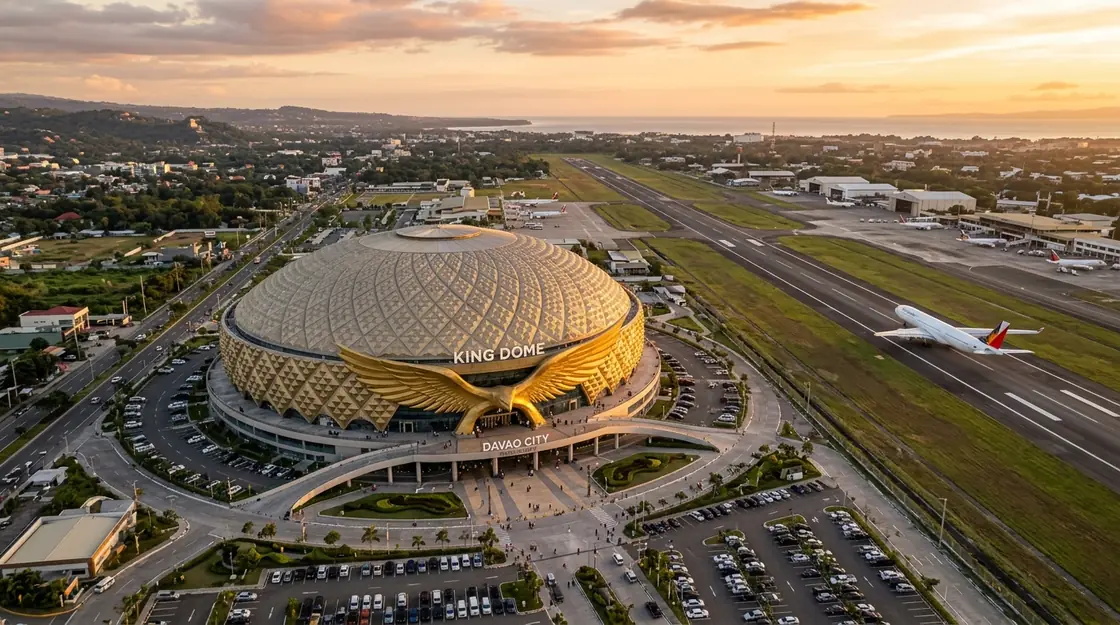
The KJC King Dome, a 75,000 seat arena beside the airport in Davao City, formally opened on September 1, 2026. With that capacity it passes the 55,000 seat Philippine Arena in Bocaue, Bulacan as the largest indoor arena in the world. The building took 14 years to finish, cost about 13 billion pesos, and was built by the Kingdom of Jesus Christ church through its company ACQ Solomonic Builders Development Corporation. It opened while the church founder, Pastor Apollo Quiboloy, remained in detention on criminal charges.
Quick Answer
The KJC King Dome opened on September 1, 2026, featuring an official maximum indoor setup for 75,000 spectators.
A new record for Davao
The KJC King Dome opened to the public on September 1, 2026, on a site along Carlos P. Garcia Highway in the Sasa area of Davao City, next to Francisco Bangoy International Airport. The opening fell on the same day as the 41st founding anniversary of the church that built it, the Kingdom of Jesus Christ.
Local reports put the opening day crowd at around 80,000, most of them church members who traveled from across the country and abroad, with Davao City Mayor Sebastian Duterte and city councilors among the guests. The arena's headline number is its seating: 75,000, which the owners and several trade publications describe as the largest indoor arena capacity in the world.
How it compares to the Philippine Arena
Until now the record for the largest indoor arena sat in Luzon. The Philippine Arena in Bocaue, Bulacan, built by the Iglesia ni Cristo and opened in 2014, seats about 55,000 people and held the title for more than a decade.
At 75,000 seats, the Davao arena is roughly 20,000 seats larger. Both are church projects rather than government or private sports developments, and both were designed to gather very large congregations under one roof, which is why their capacities run well past a typical stadium or concert hall.
The engineering behind the dome
The floor area covers about 5.84 hectares, which the builders compare to roughly 117 basketball courts. The roof spans about 2.5 hectares and was built with six layers of insulation and waterproofing, one reason the owners have given for the long construction time.
Because the site sits next to the airport, the builders dug about 9 meters into the ground so the structure would stay within an average elevation of 64 meters above sea level and clear flight path limits. That sunken approach echoes the old Staples Center, now the Crypto.com Arena, in Los Angeles. The dome was also designed to resist earthquakes.
Much of the interior fit out came through a partnership signed in 2018 with the Chinese firm Dafeng, based in Zhejiang, which supplied the lighting, seating, curtain wall, and stage machinery. A retractable roof was proposed at one point but was turned down.
Budget, builder, and timeline
The project broke ground on September 3, 2012, and took about 14 years to reach its opening. Project management was handled by ACQ Solomonic Builders Development Corporation, a company under the Kingdom of Jesus Christ.
The cost grew over that span. It was first projected at around 6 billion pesos and rose to about 13 billion pesos, which the builders blamed on delays, including trouble shipping materials in from Vietnam and China. The dome is the centerpiece of a wider complex of about 18 hectares that is planned to include a hotel with 150 rooms, a museum, a water park, and commercial space, and it is meant to host concerts and religious gatherings.
The church and its detained founder
The Kingdom of Jesus Christ was founded by Pastor Apollo Quiboloy, and the dome opened while he was in custody. He was arrested in September 2024 and, as of late August 2026, remained detained at the Pasig City Jail over a non bailable qualified human trafficking charge, with a separate child abuse case also pending.
He is also the subject of a United States extradition request tied to charges that include child sex trafficking, fraud, and money laundering, which he denies. As of late August 2026 the Department of Justice said it was still reviewing the request. The opening of the arena went ahead without him present.