Agriculture
Bangsamoro Cooperatives Train in Japan on Cacao
September 30, 2026 · Joshua S Bariñan
Two farmer cooperatives from Maguindanao del Norte and Lanao del Sur completed a Japan funded training program that taught them how to turn cacao beans into chocolate. The program is part of a broader effort by Bangsamoro agriculture officials and the Japan International Cooperation Agency to grow the region's cacao processing industry beyond raw bean sales.
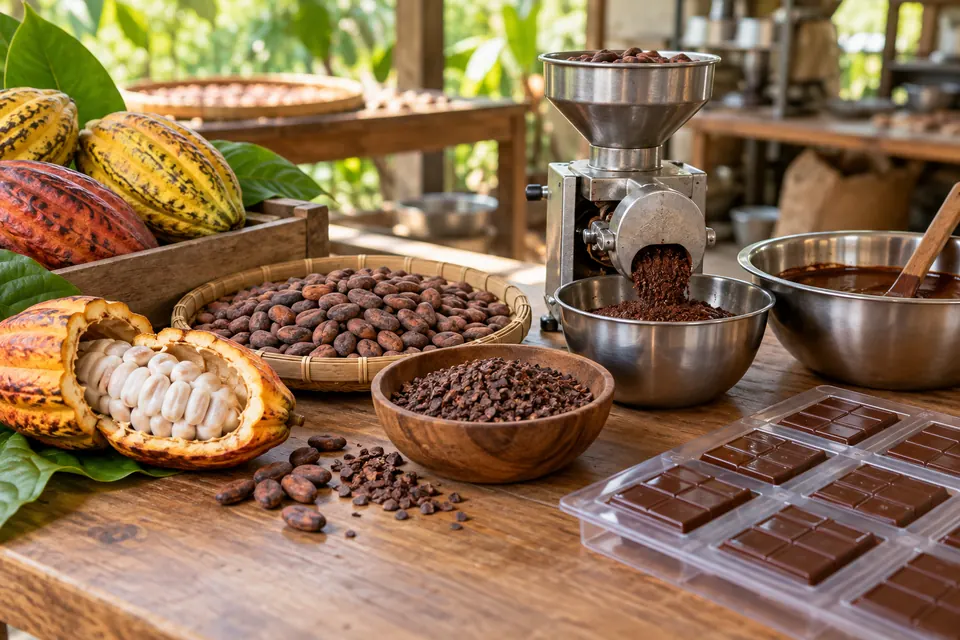
The overseas program is intended to help two farmer groups retain more of cacao's value inside the Bangsamoro region. Their next test is securing the equipment and facilities needed to use the new processing skills at home.
Two Cooperatives, One Week in Japan
Two Bangsamoro cooperatives, the Al Noor Salam Agriculture Cooperative of Maguindanao del Norte and the Kamapiyaan sa Tagoranao Marketing Cooperative of Lanao del Sur, spent a week training in Japan to learn how to turn raw cacao beans into finished chocolate.
The program ran from September 6 to 12 and was organized by the Ministry of Agriculture, Fisheries and Agrarian Reform, known as MAFAR, with funding from the Japan International Cooperation Agency and instruction from Hiroshima University.
Training took place at the Asahi Chocolate Factory in Hiroshima, with additional visits to agricultural cooperatives and chocolate businesses in Hiroshima and Tokyo.
What the Cooperatives Learned
Participants studied every step of chocolate production, including roasting, winnowing, grinding, tempering, cooling and ageing.
MAFAR said the visits let cooperative representatives examine equipment and business practices that could be adapted once they return to their home provinces.
The goal is to move cooperatives beyond selling raw or lightly processed beans and toward producing finished chocolate products that sell for more.
Why Cacao Matters to BARMM Farmers
BARMM produced 80.66 metric tons of cacao in 2022, according to MAFAR figures, equal to about 0.77 percent of national output.
Lanao del Sur accounted for most of that volume at 57.78 metric tons, followed by Maguindanao at 3.60 metric tons and Tawi Tawi at 1.46 metric tons.
Those numbers show how small the region's processed cacao sector still is, which is part of why officials are pushing cooperatives toward higher value products rather than raw bean sales.
The cacao push also builds on wider cooperative organizing in the region. In late June, fifteen partner cooperatives across BARMM met in Cotabato City with the farmer groups PAKISAMA, the Asian Farmers Association and AgriCOOPh to plan commodity hubs for cacao alongside rice, dairy, coconut and vegetables.
Part of a Bigger Japan BARMM Partnership
The cacao training adds to a long running relationship between JICA and the Bangsamoro region. In February, JICA turned over a new dormitory and 153 pieces of training equipment to a technical education center in Sultan Kudarat, Maguindanao del Norte, part of a 1.8 billion yen infrastructure package for formerly conflict affected communities.
JICA representative Baba Takashi said at that handover the new dormitory gives trainees a safe space to study and build their careers, while Bangsamoro education minister Mohagher Iqbal said the project shows peace being built rather than only discussed.
Earlier JICA supported training sent other Bangsamoro residents to Japan for entrepreneurship and industrial promotion courses, part of what the agency describes as capacity building tied to the region's peace process.
Those earlier programs ran through the Capacity Development Project for Bangsamoro, which sent participants to a Training of Trainers course in 2023 and follow up sessions at the JICA Kansai Center in Osaka in 2024. JICA has said the approach is meant to respect how Bangsamoro communities already work rather than import methods wholesale.
What Cooperative Members Still Face
MAFAR said the two cooperatives committed to apply what they learned, but acknowledged they still face challenges with facilities and equipment back home.
ANSAC representative Bai Hadiyah Maika Sema and MAFAR chief agriculturist Datu Hamsur Zaid took part in organizing the training, according to the ministry, though neither has released a detailed plan yet for scaling processing capacity in their home cooperatives.
Readers who want to track progress should watch for MAFAR follow up on equipment support for the two cooperatives and any move to expand the training to other BARMM cacao growing areas.
The June cooperative conference in Cotabato City also set an action plan window for 2026 and 2027 that includes a food procurement project backed by the European Union and the German government through GIZ, which could bring more outside funding into cacao and other commodity work across the region.
Sources and verification
Reader response
- Views
- 1
- Shares
- 0
- Rating
- Not rated
- Comments
- 0